



Story by Tichaona Kurewa
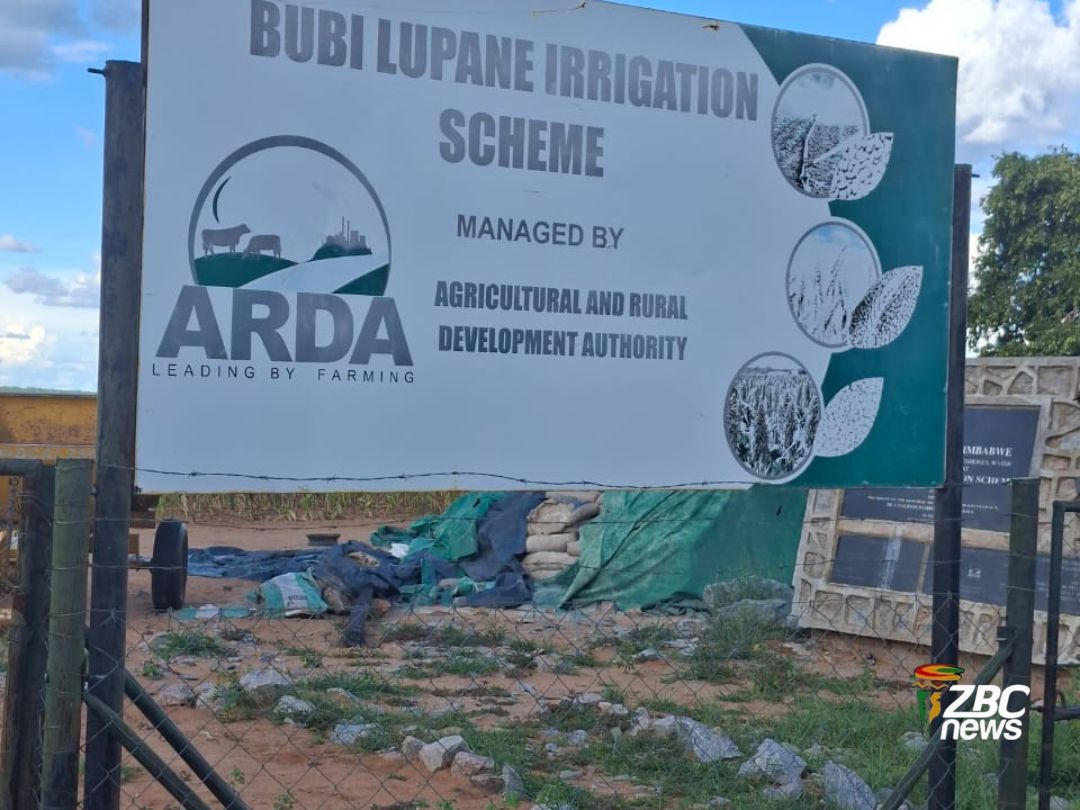
THE spilling of the Bubi-Lupane Dam has raised hopes for a strong winter wheat season in Matabeleland North Province, with farmers and authorities expecting improved irrigation at the Bubi-Lupane Irrigation Scheme.
Zimbabwe has set an ambitious target of producing at least 662 000 tonnes of winter wheat in the 2026 cropping season as part of efforts to strengthen grain self-sufficiency and build strategic reserves.
The recent spill, only the second since the dam was commissioned in 2012, following a similar occurrence in 2024 is expected to sustain irrigation farming in Lupane District and support national wheat production goals.
Water from the dam feeds the Bubi-Lupane Irrigation Scheme, regarded as a flagship agricultural project in the province.
Stakeholder Relations Officer at the Zimbabwe National Water Authority, Mr Tsungirirai Shoriwa, said the development improves water security for communities and farming operations that rely on the dam.
“The spilling of the dam is a very positive development, as it strengthens the water security position for Lupane town, Bubi-Lupane irrigation scheme and surrounding communities who rely on the dam for their water requirements,” Mr Shoriwa said.
Farmers at the irrigation scheme say the increased water levels have boosted confidence ahead of the winter planting period.
Vice Chairperson of the Bubi-Lupane Irrigation Scheme, Mr Viosy Nxumalo, said the development provides a favourable outlook for wheat production.
“The filling of Bubi-Lupane dam gives us hope as farmers, as this will enable us to run operations smoothly at our irrigation scheme. With this water, our 2026 winter wheat season is bright. We will plant early and are already targeting over four tonnes per hectare,” he said.
Local authorities expect the improved water supply to drive agricultural growth and household incomes across the district.
Chief Executive Officer of Kusile Rural District Council, Mr Hadebe, said the irrigation scheme currently supports 90 families cultivating about 180 hectares, with plans underway to expand the project to 400 hectares.
“The filling of Bubi-Lupane Dam is important for economic development in our district, particularly for the Bubi-Lupane irrigation project. Currently, 90 families use 180 hectares, which is being extended to 400 hectares. More communities will benefit with increased water for irrigation and better crop prospects,” he said.
District Development Coordinator for Lupane, Ms Ennety Sithole, said the improved water levels will strengthen food production in the district.
“Once there is water, they will even be able to irrigate their crop, and the upcoming winter season will have a lot of wheat, and our farmers will be in a position to grow the winter wheat crop, which they will be able to sell and get some cash for their households,” Ms Sithole said.
She added that increased production would also help build national grain reserves and improve food security.
According to the Zimbabwe National Water Authority, the country’s major dams are averaging about 92.3 percent capacity following a strong rainy season.
Among the reservoirs already at full capacity are Tugwi-Mukosi Dam and Lake Mutirikwi.
Other dams, including Seke Dam, Upper Insiza Dam, Harava Dam, Masembura Dam and Arcadia Dam are also spilling, while only a handful of major reservoirs remain below the 50 percent mark.
Officials say the strong water levels provide a solid foundation for Zimbabwe’s winter wheat programme and could expand irrigation farming in drought-prone regions.

