



Story by Gay Matambo
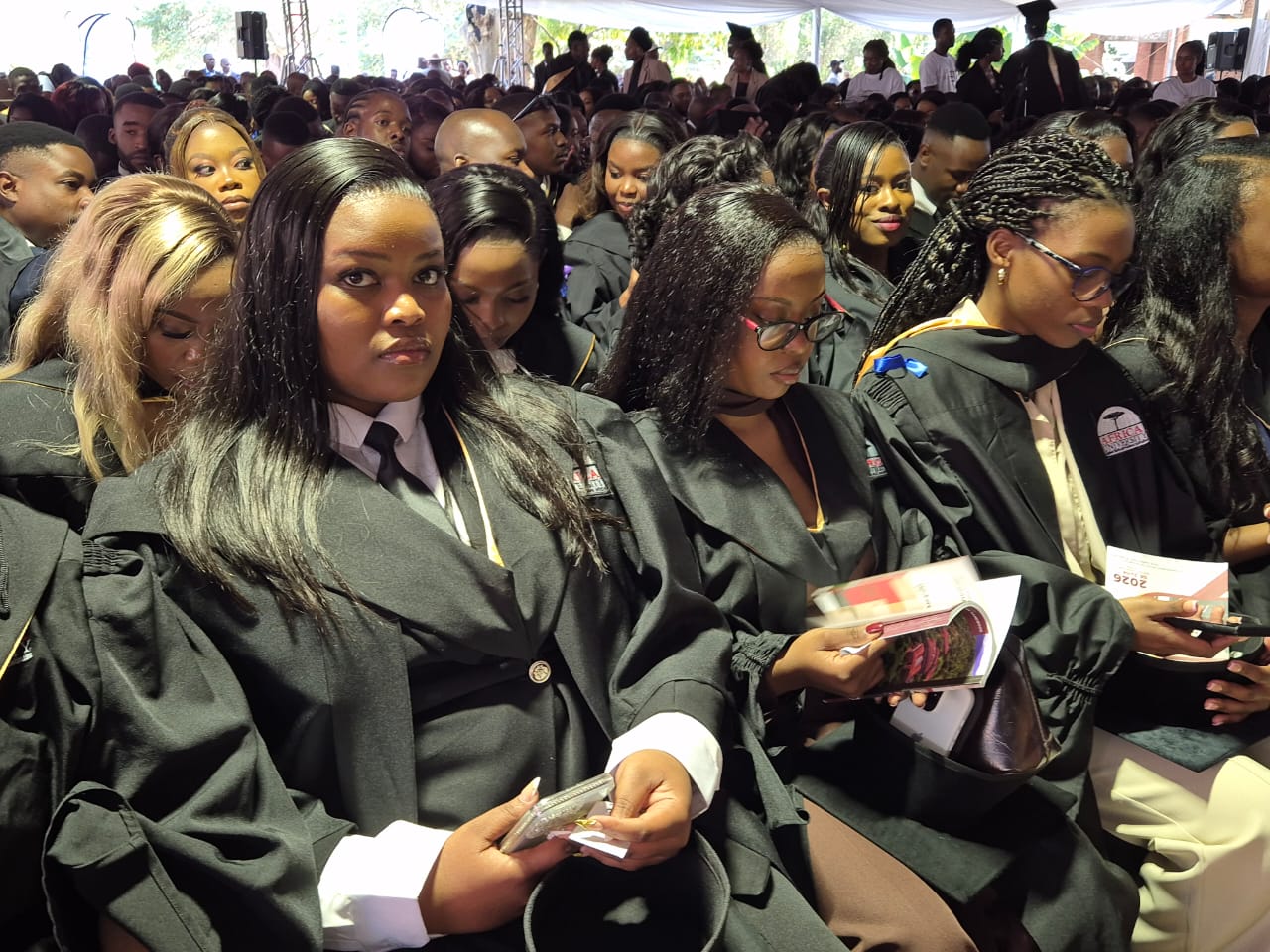
TERTIARY education institutions have been commended for advancing gender inclusion and equity, with women accounting for the majority of graduates at Africa University’s graduation ceremony held in Mutare this Saturday.
More than 54 percent of the graduating class at the United Methodist Church-affiliated pan-African institution were women, a development hailed by education stakeholders as a significant milestone in promoting female participation in higher education and leadership.
The achievement comes as the African Union’s Agenda 2063 continues to prioritise the elimination of gender disparities across all levels of education.
“The numbers we are seeing today are not an accident; they are the result of conscious, deliberate policy designs aimed at correcting historical gender imbalances. When you empower an African woman with high-level skills, you directly empower a community, a nation, and the entire continent,” Africa University Vice Chancellor Professor Peter Mageto said.
The Zimbabwe Council for Higher Education (ZIMCHE) said the milestone reflects growing efforts by tertiary institutions to create inclusive learning environments while maintaining academic excellence.
“As ZIMCHE, we commend private institutions like Africa University for creating inclusive, forward-thinking academic pathways. True transformation under our national Education 5.0 framework requires that we harness the intellect of all our people.
“However, as we celebrate this numerical milestone, our mandate remains to ensure that this equity is matched by rigorous quality assurance, ensuring these exceptional women graduate with globally competitive, industrialising skills that drive tangible socio-economic production,” Chief Executive Officer of the Zimbabwe Council for Higher Education, Professor Kuzvinetsa Peter Dzvimbo said.
Female graduates expressed confidence in their ability to contribute to Africa’s development through innovation, entrepreneurship and leadership.
“We are not just graduating to seek employment; we have been trained in innovation hubs to be the creators of new industries, the designers of modern public policies, and the architects of an independent continent. The future of Africa is being written today, and its authors are women,” a female graduand said.

