



Story by Abigirl Tembo
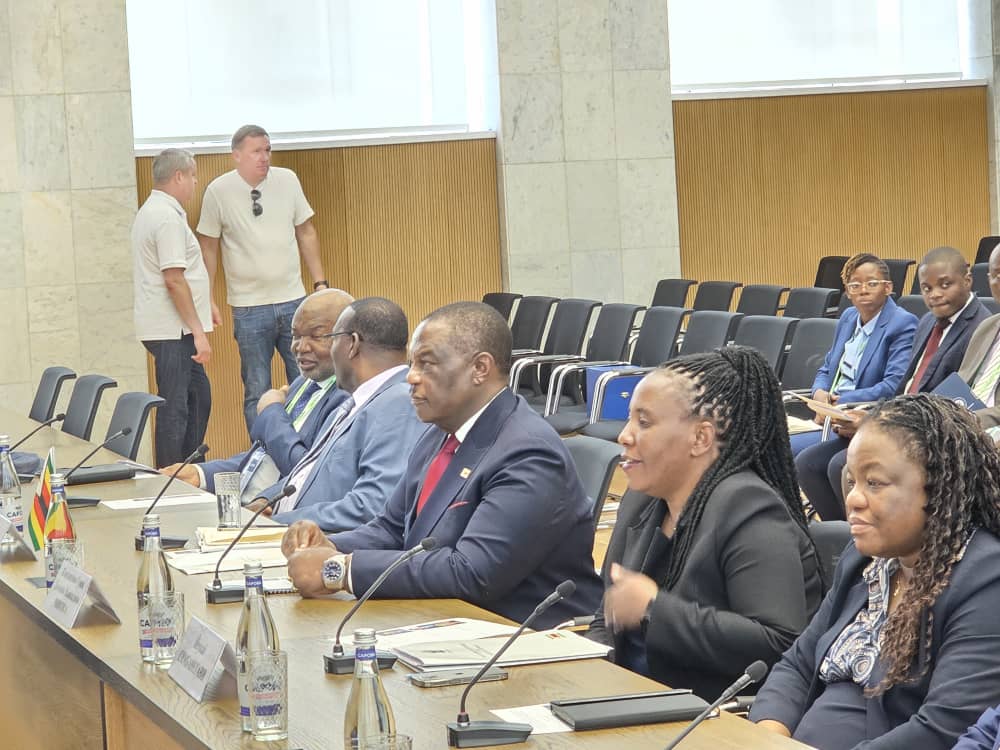
VICE President General (Rtd) Dr Constantino Chiwenga has intensified Zimbabwe’s engagement with Russia after high-level meetings with regional and nuclear energy leaders in Nizhny Novgorod aimed at strengthening cooperation in technology, industrial development and energy modernisation.
On the sidelines of the CIPR International Technology Conference, the Vice President had an opportunity to lay flowers at the Eternal Flame Monument in honour of fallen Russian soldiers, in a gesture symbolising friendship and growing diplomatic ties between Harare and Moscow.
From the monument, he proceeded to bilateral discussions with Nizhny Novgorod Region Governor Mr Gleb Nikitin, who highlighted the region’s advancements in technology, innovation and industrial manufacturing while expressing readiness to deepen cooperation with Zimbabwe.
“We are one of the leading education centres in Russia, with 11 universities, 118 educational branches and more than 100 000 students, including over 7 000 foreign students. Even under sanctions, our region remains one of Russia’s leading IT hubs and currently ranks fifth in the country in industrial software development. We have more than 2 000 ICT companies, over 3 500 ICT entrepreneurs and around 40 000 ICT specialists driving innovation and industrial growth in our region. Our region has established partnerships with 33 partner regions across 18 countries, and we remain committed to deepening cooperation with Zimbabwe, particularly in human capital development, energy, technology and peaceful nuclear energy cooperation.”
Vice President Chiwenga emphasised Zimbabwe’s commitment to strengthening cooperation with Russia in digital infrastructure, industrial technologies, innovation and skills development as the country accelerates its modernisation and industrialisation agenda under the National Development Strategy Two.
“We perceive the Russian Federation as a strategic partner in our developmental journey. Your expertise in metallurgy, engineering, and advanced technologies aligns seamlessly with Zimbabwe’s ambition of technologically led economic growth. Zimbabwe already maintains robust trade relations with BRICS members, exporting tobacco, horticultural produce, and minerals. Russia, as a key BRICS player, presents significant potential for expanding these synergies and enhancing industrial collaboration. Allow me to give an overview of the key sectors that offer immense potential for strategic collaboration and investment.”
He also called on Russian companies to invest in Zimbabwe, highlighting opportunities in mining, agriculture, energy, manufacturing and technology as government continues positioning the country as an attractive investment destination.
“Zimbabwe invites Russian companies to establish joint ventures in mining, agriculture, manufacturing, and technology through its Special Economic Zones and Export Processing Points. Positioned as a gateway to both its domestic market and the wider African continent through the African Continental Free Trade Area, Zimbabwe offers direct access to a market of over 1.4 billion people. The African Continental Free Trade Area provides Russian investors with preferential access across Africa, featuring reduced tariffs and harmonised trade rules. Zimbabwe’s Special Economic Zones policy is strategically aligned with this framework, ensuring investments are profitable locally and regionally scalable.”
The Vice President’s engagements in Russia also come at a time when African countries are increasingly seeking technological self-sufficiency and stronger participation in the Fourth Industrial Revolution through partnerships in artificial intelligence, digital infrastructure and advanced industrial systems.
Zimbabwe is expected to continue engaging Russian technology firms, investors and innovation specialists on possible partnerships in cybersecurity, smart agriculture, e-government systems, energy infrastructure and mineral beneficiation.

