



Story by Patience Nyagato
ZIMBABWE has officially opened its pavilion at the prestigious Venice Biennale, placing the country’s culture, identity and creative economy firmly before a global audience.
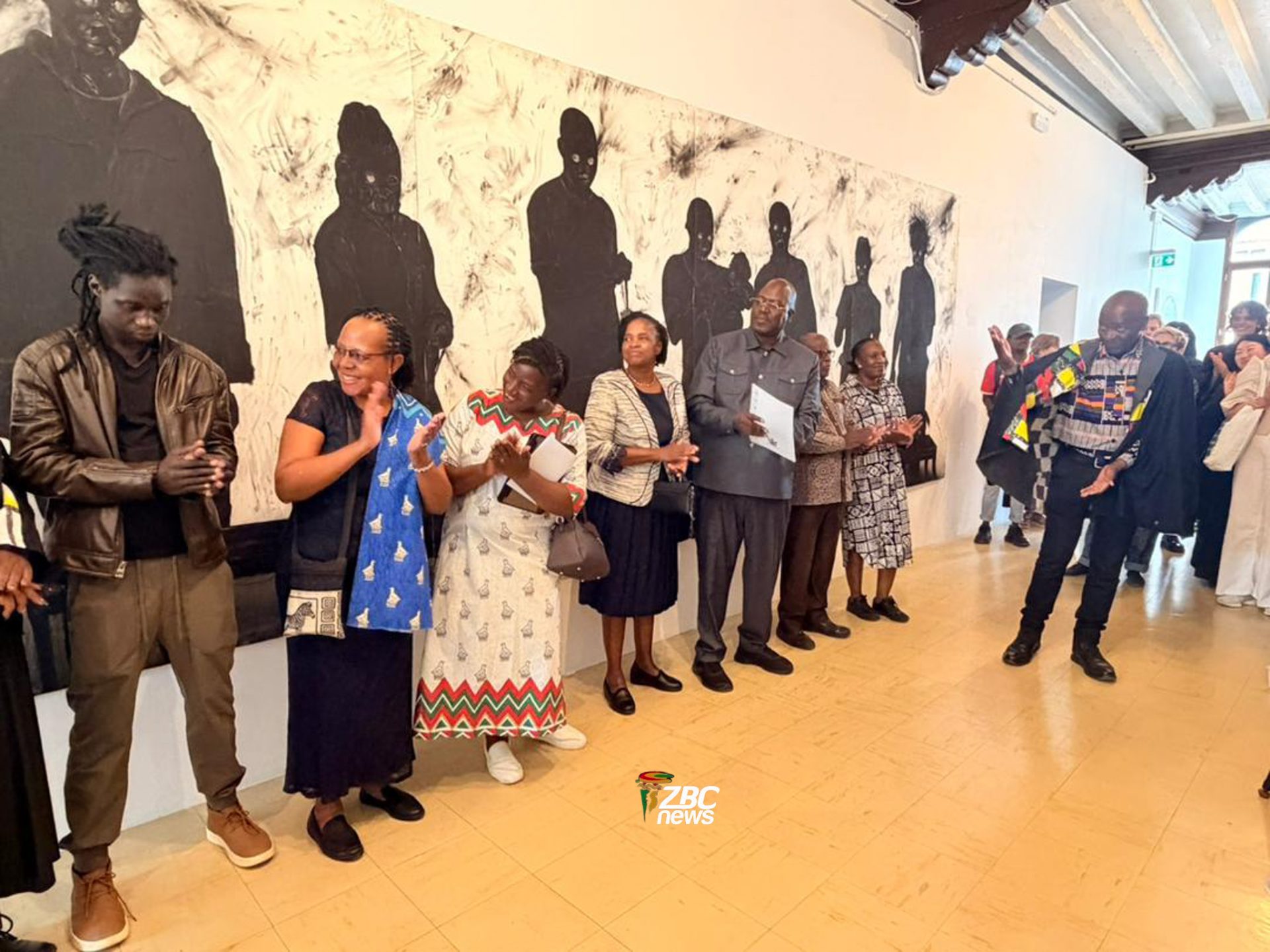
Hundreds of visitors streamed through the exhibition spaces in Venice on Friday evening as Zimbabwe unveiled works by five local artists whose exhibitions explore the country’s evolving artistic expression, history and identity.
The opening transformed the Zimbabwe Pavilion into more than an art exhibition. It became a statement of national identity, cultural diplomacy and economic ambition, with government and arts stakeholders positioning culture as a strategic pillar of development.
Permanent Secretary in the Ministry of Sports, Recreation, Arts and Culture, Mr Nicholas Moyo said Zimbabwe’s participation reflects deliberate government policy aimed at promoting culture as a tool for national pride and international influence.
“The government of Zimbabwe’s support of the pavilion is not a gesture. It is a policy position. It reflects the government’s recognition that culture is central to national identity, national pride, as well as the soft power for a sovereign nation in the 21st century.”
Inside the pavilion, visitors moved slowly between installations, paintings and contemporary exhibits carrying distinctly Zimbabwean narratives. Conversations echoed across the galleries as international guests immersed themselves in stories shaped by heritage, memory and modern African identity.
National Gallery of Zimbabwe Board Chairperson, Retired Justice Maphios Cheda said stronger partnerships between the public and private sectors are becoming essential in turning the arts into a viable economic industry.
“We encourage more people to participate in the art sector and regard it as business and an industry.”
This year’s pavilion is being supported by Higherlife Foundation through its Legacy Pillar. Joanna Masiiwa said preserving Zimbabwe’s cultural memory while empowering future generations remains central to the initiative.
“The museum is the history of the people, and the artists are continuously writing this narrative across cultures and languages.”
For Zimbabwean artist Michele Mathison, who previously exhibited at the Zimbabwe Pavilion in 2013, the Biennale remains one of the most significant platforms in global contemporary art.
“This is what they call the Olympic Games of the art world. It is an incredibly special opportunity to show your work to a very, very large audience.”
Zimbabwe’s participation at the Venice Biennale comes as the country intensifies efforts to grow its creative economy and expand cultural diplomacy on the international stage.
As crowds continue to pour into the pavilion, Zimbabwean stories, identities and artistic voices are finding renewed resonance far beyond the country’s borders.

