



Story by Abigirl Tembo, Health editor
SOUTHERN African Development Community (SADC) has begun crucial discussions on strengthening health financing as reduced donor support threatens healthcare systems across the region.
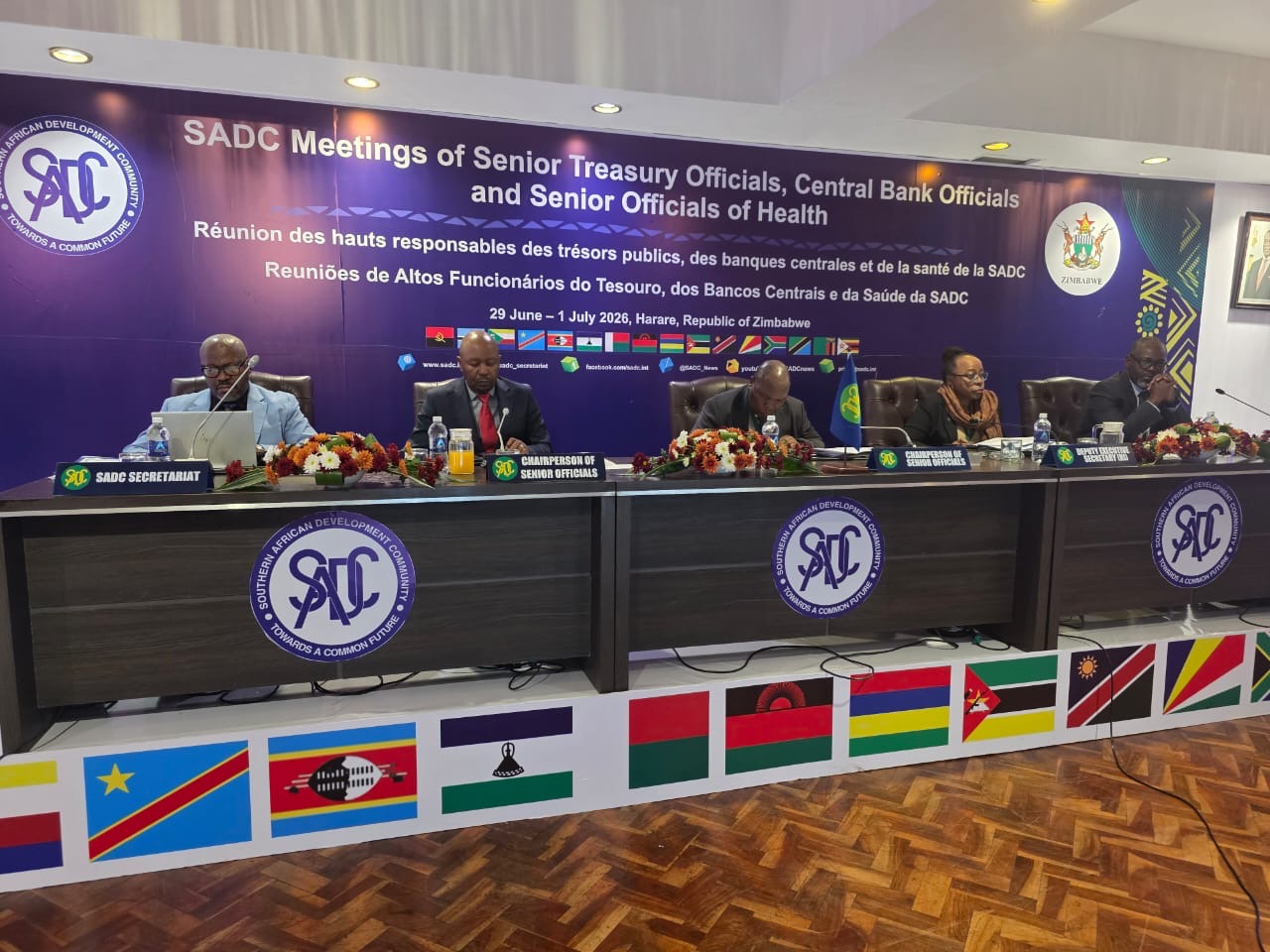
Senior Treasury and Health officials from member states are meeting in Harare to craft recommendations that will guide ministers on strategies to bridge an estimated US$10 billion health financing gap.
As donor funding continues to decline, SADC countries are exploring sustainable ways to finance healthcare and protect gains made in HIV, maternal and child health, and disease preparedness. Senior Treasury and Health officials meeting in Harare are developing recommendations that will guide ministers later this week.
“As global development financing continues to decline, it is becoming increasingly important that we turn to domestic investment in health. I say investment because health should not only be viewed as a social service, but also as a strategic investment that supports economic growth and development.
Investing in resilient health systems reduces the economic burden of disease, particularly on the most vulnerable households and individuals, while contributing to a healthier and more productive workforce. Accordingly, the agenda before you provides an opportunity to consider practical measures that will help scale up health financing. These include innovative financing approaches such as debt-to-health swaps; regional pooled procurement mechanisms to improve access to affordable, essential medicines; and support for local pharmaceutical manufacturing to strengthen regional supply chains and reduce dependence on external markets.
We expect that your deliberations will contribute to the development of a common regional approach to health financing and the attainment of universal health coverage,” SADC Deputy Executive Secretary for Regional Integration, Ms Angèle Makombo N’Tumba said.
“Our economies across the region continue to grapple with persistent imbalances and, in many cases, high levels of debt that continue to weigh on economic performance. We face climate-induced shocks, constrained fiscal space, tightening global financial conditions, and ongoing geopolitical uncertainties, while at the same time striving to accelerate sustainable and inclusive economic growth.
“The work before us and the outcomes of our deliberations will significantly enhance ministerial engagement and inform decision-making. We must therefore ensure that our discussions are rigorous, evidence-based, forward-looking, and aligned with our regional priorities for integration and development,” Chief Director, Economic Affairs Directorate, Ministry of Finance and Economic Development, Mr Joseph Mverecha said.
Officially opening the meeting, the Permanent Secretary in the Ministry of Health and Child Care, Dr Aspect Maunganidze, said bringing together the finance and health sectors demonstrates the importance of jointly shaping the future of health financing in Southern Africa.
“Our Ministers will meet later this week, and the decisions they take will be informed by the quality of the technical work undertaken.
The recommendations made during the meeting will shape the Ministerial Outcome Statement and ultimately influence the future trajectory of health financing in the Southern African region.
The global health financing landscape is changing rapidly, and we are meeting at a critical and defining moment. The burden of disease continues to grow, climate-related threats are increasing, demographic pressures are mounting, and emerging health risks know no borders. At the same time, the gap between our health needs and the resources available to finance them continues to widen.
We often speak about creating fiscal space for health, as though there is some hidden room within our Ministries of Finance waiting to be unlocked. However, we all know it is not that simple. Creating fiscal space requires innovation and, above all, collaboration.
The question before us is both practical and urgent: How do we expand fiscal space for health in a sustainable manner?
There is no single solution. Over the coming days, experts will discuss strengthening domestic resource mobilisation, prioritising investment in health, improving public financial management systems, enhancing efficiency, leveraging innovative financing mechanisms, including blended finance and strategic partnerships and developing progressive and sustainable health financing models,” he said.
The recommendations from the senior officials’ meeting will inform the Joint Ministerial Meeting taking place later this week, where ministers are expected to adopt a Ministerial Outcome Statement and the SADC Health Financing Strategic Action Framework, setting the course for a more sustainable and self-reliant regional health financing architecture.

