



Story by Kenias Chivuzhe
SMALLHOLDER farmers in Seke District are optimistic of recording a good harvest of traditional grains following continued training and support aimed at strengthening climate resilience.
As climate change continues to disrupt farming patterns across the country, many farmers who have embraced traditional grains as a mitigation measure against erratic rainfall are expecting improved yields this season.
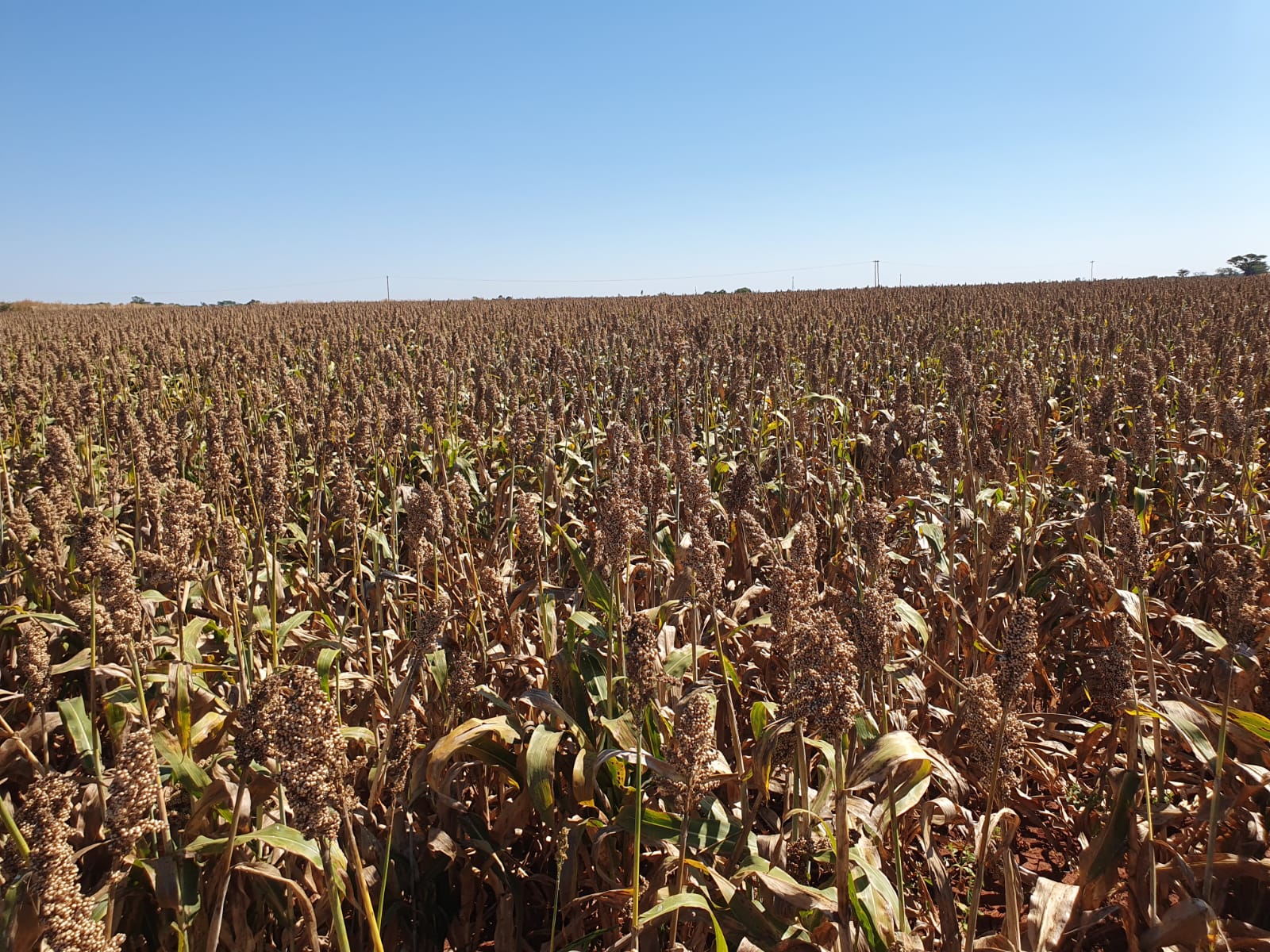
Among them is Martin Matsa, a farmer in Seke District who has ventured into sorghum production alongside many other growers embracing traditional grains farming.
“We planted this crop in December, while some of the fields were planted in January. We have 30 hectares under the crop in four different blocks. This particular field was planted on January 20 this year. We used five bags of fertiliser, which cost about US$150, and about 10 kilogrammes of seed costing around US$15 per hectare. Sorghum can be grown with limited inputs.”
Agriculture experts have been impressed by the crop quality.
Agronomist Mr Blessing Hatidane said sorghum remains a viable crop due to its low input requirements and favourable yields.
“One can plant between five and 10 kilogrammes of sorghum seed per hectare. Four to five bags of Compound D fertiliser are required per hectare. The expected yield ranges between one-and-a-half tonnes and two tonnes per hectare, which is a good return,” he said.
Agriculture Extension Worker for Tsholotsho, Mr Elisha Bepete, said the Pfumvudza/Intwasa programme continues to improve traditional grain production in dry regions.
“The Pfumvudza programme is increasing our traditional grain yields in Tsholotsho. Tsholotsho is a dry area where traditional grains perform better than maize,” he said.
Chief Executive Officer of Tocek Investments (Zadzamatura), Dr Daniel Myers, said commercial farmers have an important role in producing quality seed for distribution to farmers across different ecological regions.
“Today, we are holding a sorghum field day here at a crop grown by a commercial farmer. We want commercial farmers to produce quality seed that can be distributed to farmers across the country in different ecological zones. It is important for farmers to plant with the first rains so that the crop matures before the peak bird-breeding period in February.”
Seke District Agriculture Extension Worker, Mr Hardson Mutsvangwa, said government has intensified efforts to help farmers combat migratory birds, which remain one of the major threats to sorghum production.
“We have observed that due to climate change, maize yields are declining while traditional grains are performing better because of their high tolerance to dry conditions. Traditional grains also have nutritional and health benefits. Government has put in place mechanisms to control migratory birds and pests. We encourage farmers to use various bird-scaring methods, including ringing bells and approved chemical methods.”
Experts say traditional grains are becoming increasingly important in addressing the effects of climate change due to their resilience to extreme weather conditions and erratic rainfall patterns.

