



Story by Oleen Ndori
AS climate change continues to heighten the risk of environmental disasters, Zimbabwe has intensified efforts to combat veld fires through coordinated prevention strategies and awareness campaigns.
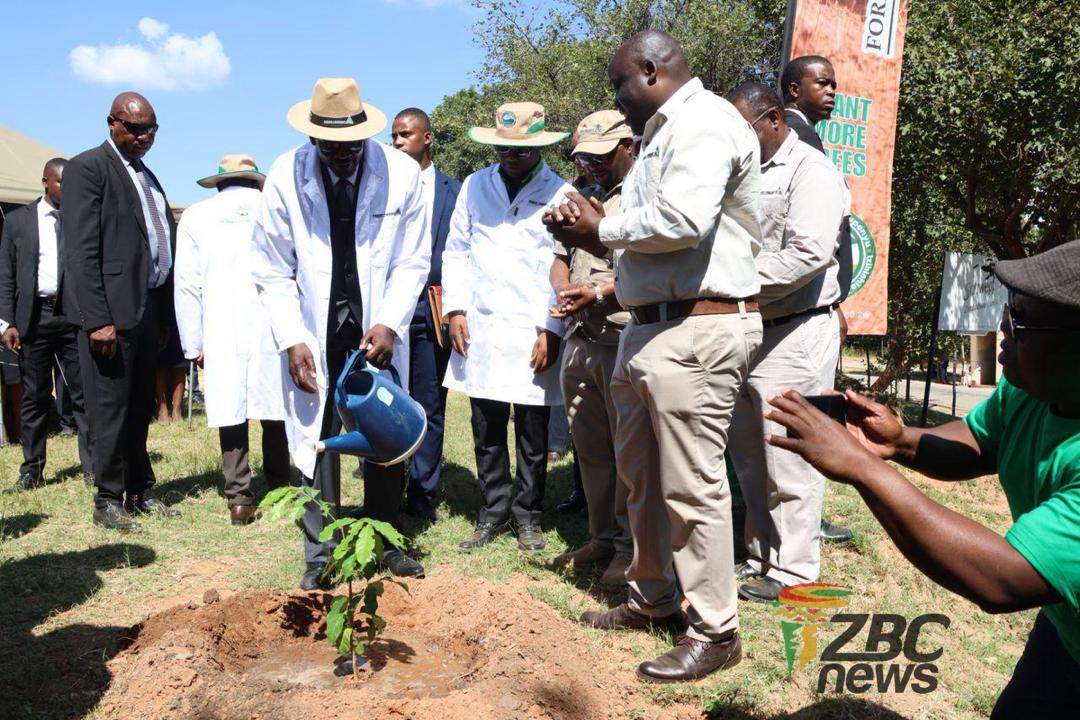
Goromonzi High School in Mashonaland East Province this Wednesday hosted the joint 2026 National Fire Week commemorations and the launch of the Integrated Fire Management Project.
Held under the theme, “Prevent, Protect, Preserve: Combating Veld Fires Together,” the event brought together government officials, traditional leaders, environmental experts, regional representatives and development partners in a united effort to safeguard the environment from the devastating effects of veld fires.
The commemorations featured tree-planting activities, veld fire management demonstrations and exhibitions showcasing strategies aimed at reducing fire outbreaks and protecting livelihoods.
Mashonaland East Minister of State for Provincial Affairs and Devolution, Advocate Itayi Ndudzo, said veld fires continue to pose a serious threat to communities and the environment.
“Veld fires continue to threaten livelihoods, agriculture and biodiversity, hence the need for communities, government and stakeholders to work together in protecting the environment,” he said.
The Minister of Environment, Climate and Wildlife, Dr Evelyn Ndlovu, stressed the importance of collective action and public awareness in combating veld fires.
“The fight against veld fires requires collective responsibility and increased awareness, especially among communities living in fire-prone areas,” she noted.
Food and Agriculture Organisation (FAO) Country Representative, Dr Patrice Talla, highlighted that the Integrated Fire Management Project will enhance Zimbabwe’s capacity to prevent and respond to veld fires.
“The Integrated Fire Management Project will strengthen Zimbabwe’s capacity in fire prevention, preparedness and sustainable environmental management,” he said.
Vice President Colonel (Rtd) Dr Kembo Mohadi officially launched the Integrated Fire Management Project, which is expected to strengthen the country’s disaster preparedness and environmental protection systems.
Speaking during the launch, Vice President Mohadi revealed that the Environmental Management Agency (EMA) has already conducted a nationwide fire risk assessment ahead of the 2026 fire season.
“The assessment indicates that 41.93 percent of the country is at high risk, 31.95 percent at medium risk, and 11.69 percent at extreme risk of veld fires. Provinces along the Highveld, namely Mashonaland West, Mashonaland East, Mashonaland Central, Manicaland and Midlands, remain the most susceptible to veld fires,” he said.
He added that favourable rainfall received this year has resulted in abundant biomass, increasing fuel loads that could trigger severe fire outbreaks during the peak dry and windy months if not properly managed.
Vice President Mohadi noted that Goromonzi District remains one of the worst-affected areas in Mashonaland East Province and is classified as an extreme-risk zone in the 2026 fire risk prediction model.
“In 2024, the district recorded 16 433 hectares burnt, ranking it the second worst-affected district in the province. In 2025, it recorded 14 449 hectares burnt, marking a slight decrease in the area destroyed by fires,” he said.
He warned that areas previously classified as medium risk are now falling into the extreme-risk category, underscoring the urgent need for coordinated action.
“This is not a time for complacency. It is a time for heightened vigilance and coordinated action,” he said.
Vice President Mohadi also reaffirmed Government’s zero-tolerance stance on uncontrolled veld fires.
“Government’s position is clear; we have a zero-tolerance policy towards uncontrolled veld fires. Law enforcement will be strengthened and surveillance increased. Those who deliberately start fires, whether for poaching, land clearing or malice, will face the full wrath of the law,” he noted.
He called for increased community participation and support from development partners in strengthening fire prevention and response systems.
“We must empower communities with knowledge, fire-fighting equipment and early warning systems. The government cannot win this battle alone. Traditional leaders, school heads, rural district councils, farmers, transport operators and every citizen must play their part,” he added.
With more than 40 percent of the country at risk of veld fires, authorities say the initiative is critical in promoting community involvement, strengthening early response systems and preserving Zimbabwe’s natural resources for future generations.

