



Story by Tichaona Kurewa
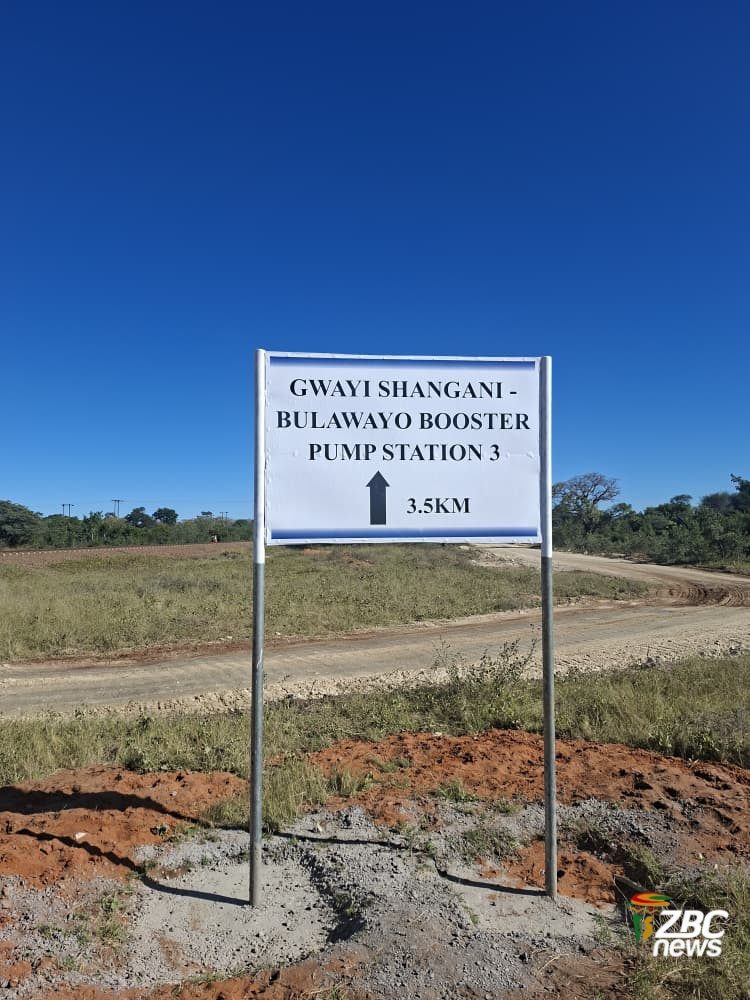
CONSTRUCTION of ancillary infrastructure linked to the Gwayi-Shangani Lake project is gathering pace, with works at Booster Pump Station Three in Tsholotsho District on course for completion by the end of the year.
The pump station forms part of the wider Gwayi-Shangani-Bulawayo water conveyance system, which includes a 250-kilometre pipeline and five strategically positioned booster stations designed to transport water from the lake to Bulawayo.
The long-awaited Gwayi-Shangani project, first proposed in 1912, gained momentum under the Second Republic through a domestic resource mobilisation programme aimed at addressing water shortages and unlocking economic opportunities in Matabeleland North Province.
Resident Engineer for Gwayi-Shangani Bulawayo Pump Station Three, Engineer Noel Muzanenhamo said major works at the site were nearing completion.
“Construction of the brick pressure tank is now 98 percent complete, while the pump house is at 60 percent completion. After finishing work at this site, we will move to another site at Sawmills. All the works are expected to be completed this year,” he said.
The five booster stations are spread across Matabeleland North Province, with Pump Station One located at Cross Mabale in Hwange District, Pump Stations Two and Three in Tsholotsho District, Pump Station Four at Sawmills, and Pump Station Five in Nyamandlovu, Umguza District.
The project is also generating employment for surrounding communities, with 70 local workers currently engaged by the contractor at Pump Station Three.
Chief Mabhikwa said the development is expected to transform livelihoods in the dry region through improved water access and agricultural activity.
“We are grateful for this project as it will bring water to this area, which is generally a dry region. This will surely lead to the establishment of a green belt that will provide livelihoods for the community,” he said.
The Gwayi-Shangani Lake project remains one of Zimbabwe’s flagship infrastructure developments, targeting improved water security for Bulawayo and surrounding communities while supporting long-term economic growth in the region.

