



Story by Owen Mandovha
ANALYSTS say Government’s policy measure compelling gold producers to pay royalties in physical gold is yielding positive results, with national gold reserves rising by more than 300 percent to over four tonnes in just two years.
The development has been credited with strengthening the local ZiG currency and improving overall macroeconomic stability.
Under the Second Republic, the Reserve Bank of Zimbabwe has moved away from quasi-fiscal activities, refocusing on its core central banking mandate. This includes building foreign currency reserves to support import cover and underpin the stability of the ZiG currency.
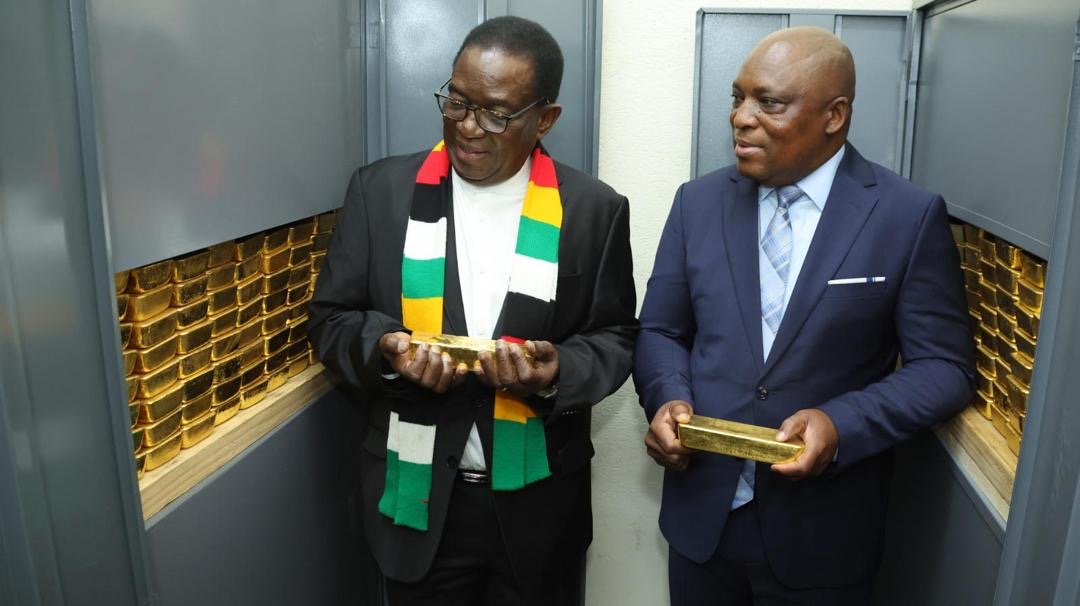
When President Dr Emmerson Mnangagwa toured vaults containing gold bars on Monday, it was presented as evidence of a successful policy shift.
Gold reserves have reportedly increased from just over one tonne in April 2024 to 4.4 tonnes as of this week.
“The reserves have grown faster than expected and create the fundamentals required for the economy in terms of providing import cover, which has now doubled to more than 1.5 months. The roadmap to dollarisation is now within reach. Zimbabwe, in a short space of time, has achieved a lot under the new dispensation,” said Africa Economic Development Strategies executive director, Professor Gift Mugano.
Other economists say the current reserve position now provides assurance that the central bank has the capacity to buy all ZiG in circulation several times over, indicating strong backing for the local currency.
Economic analyst Mr Malone Gwadu said the audited gold reserves demonstrate credibility and market confidence.
“We are talking of gold bars which have been audited by external auditors, and this gives assurance to the market that the central bank has the capacity to intervene and meets one key condition precedent for the use of a mono-currency,” he said.
Economist Mr Persistence Gwanyanya added that the reserves further strengthen economic stability.
“This further cements our economic position to stomach any market needs but most importantly to maintain inflation at acceptable levels, which provides a huge impetus to the exchange rate. The total amount of ZiG in circulation divided by the reserves gives a stronger exchange rate position,” he said.
With 4.4 tonnes of gold reserves, Zimbabwe now ranks 11th in Africa. Analysts say continued accumulation could help meet conditions for full de-dollarisation and move the country closer to what they describe as currency sovereignty.

