



Story by Providence Maraneli
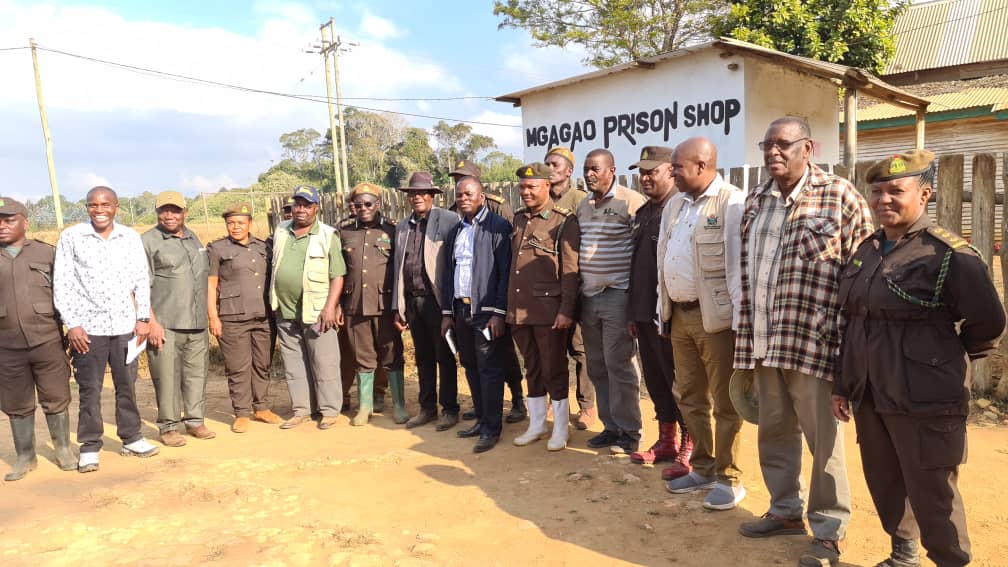
WAR veterans have been impressed by the Second Republic’s dedication to preserving the legacy of Zimbabwe’s liberation struggle by immortalising historic sites such as Morogoro and Mgagao in Tanzania.
Describing the road to independence as long, treacherous, and often deadly, the war veterans, many of whom arrived at these camps as teenagers in the late 1960s, reflected on the harrowing experiences that shaped their journey.
“We started this camp in 1969, after we had closed the Itumbi in Mbeya, and I was an instructor, and I trained quite a number of notable cadres. Vice President General (Retired) Constantine Chiwenga was here, Perrence Shiri was here, Zimondi was here, Chihuri was here. This was the iconic home for ZANLA. It gave birth to a complete force that overwhelmed Smith,” ZANLA, Colonel (Rtd) Joel Sumuel Muzhamba said.
“This was the mother of ZANLA forces camps, at one point all the leaders of ZANU we housed here, and it is where the Mgagao declaration was done . We are grateful to the government for giving us an opportunity to revisit our camps , which carry a lot of history,” ZANLA ,Major General (Rtd) Gibson Mashingaidze said.
Mgagao was not the only iconic camp of the liberation struggle with Morogoro also playing a pivotal role, producing highly skilled and disciplined soldiers who were instrumental in the fight for Zimbabwe’s independence.
“This is where ZIPRA was born. We were a few groups of about 28, but this was the foundation of the struggle; those who trained here were now moved for further training . I remember people like Commander Mangena passed through here, so this was the stem,” ZIPRA, Colonel (Rtd)Watson Twoboy Tshipa said.
“I taught military engineering here, and I am so grateful that the government remembers this area for the role it played in the liberation,” ZIPRA, Lieutenant Colonel (Rtd) Binoni Benjamini Dube said.
“You see that mountain? We called it Toi Toi because that’s where we were running. The training was hard, but because we were given political orientation, we managed,” ZIPRA, Major (Rtd) Oliver Hikwa said.
As part of a broader initiative to preserve liberation history, the Second Republic is working on establishing museums and shrines at liberation sites such as Mboma and Malanje in Angola, as well as Morogoro, Mgagao, Bagamoyo, Nachingwea, and Kongwa in Tanzania.

