



Story by Abigirl Tembo
ZIMBABWE has launched advanced neuromodulation services, introducing specialised brain stimulation procedures previously unavailable in the country as Government intensifies efforts to modernise the national health sector under Vision 2030.
The Neuromodulation Arise Programme places Zimbabwe among a select group of African countries now offering advanced therapies such as Deep Brain Stimulation (DBS) for neurological and psychiatric conditions including Parkinson’s disease, epilepsy, dystonia, chronic pain and essential tremors.
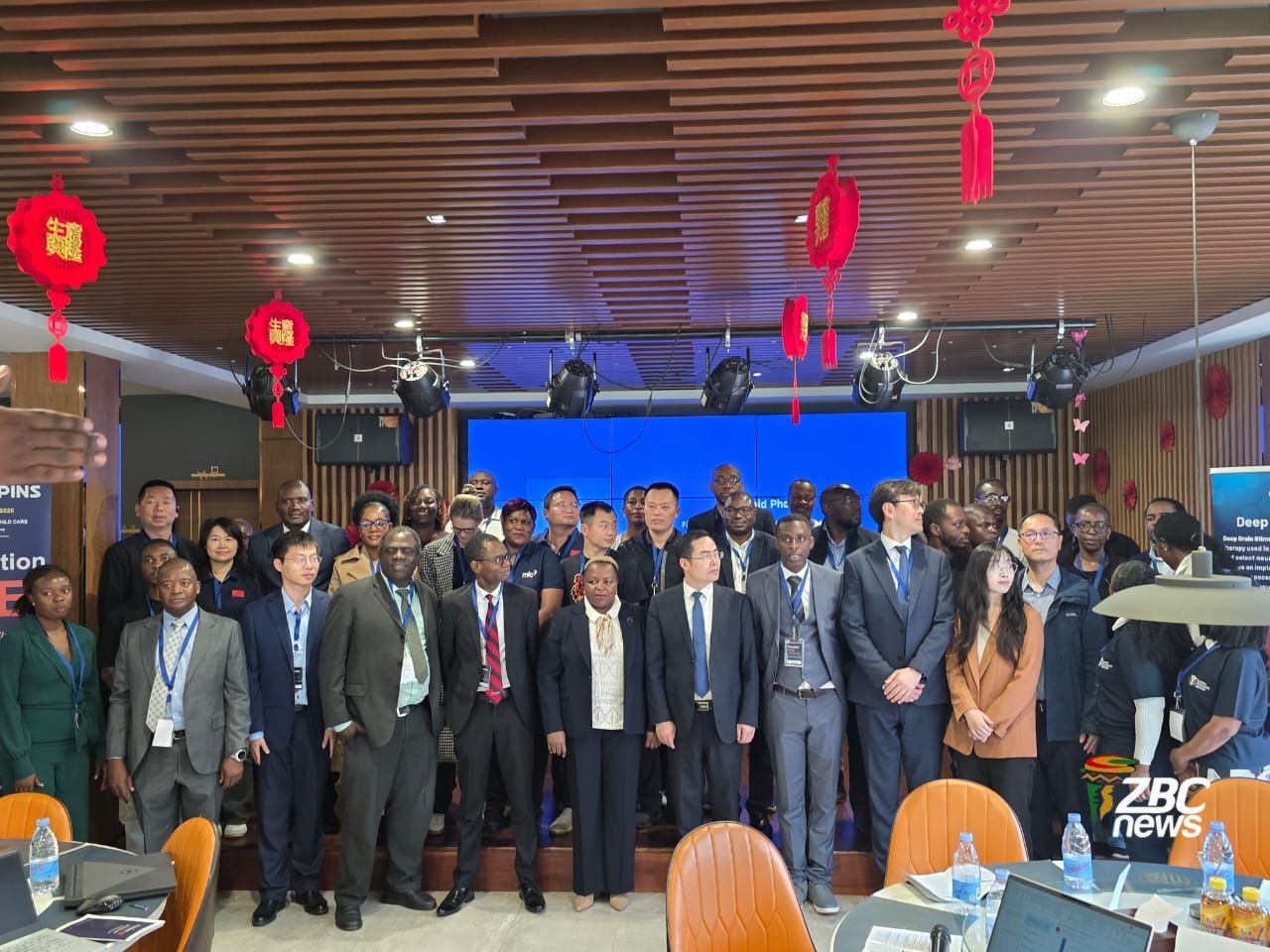
The initiative is being implemented through collaboration between Zimbabwean neurological specialists, Chinese medical experts and the China–Africa Hospital Alliance.
Chief Medical Officer at the Parirenyatwa Group of Hospitals, Dr Tsitsi Magure described the development as a major milestone in Zimbabwe’s drive towards a modern and self-reliant health system.
“For long, conditions such as Parkinson’s disease, dystonia, essential tremor, and chronic pain have meant, for many of our citizens, a slow and painful decline or an expensive journey abroad that only a fortunate few could ever contemplate,” she said.
“Today, we say plainly that that era is ending.”
Dr Magure said the introduction of neuromodulation and Deep Brain Stimulation places Zimbabwe among a small number of countries on the continent capable of offering such advanced treatment locally.
“It is a remarkable achievement, and one that every Zimbabwean should take pride in. These are not isolated events. They are the fruit of a deliberate Government initiative to bring world-class services home,” she said.
Lead Coordinator of the Neuromodulation Joint Working Group under the China–Africa Hospital Alliance, Mr Li Chong said the partnership reflects growing cooperation between Zimbabwe and China in specialised healthcare services, skills transfer and technology exchange.
“So the main goal is to try to have a more concrete collaboration with African healthcare, not only for the hospital, but also including industry, technology and standards,” he said.
“In Africa, this is the first time for us to enter Zimbabwe and enter Africa. Globally, we have penetrated into 20 countries. In China, we have been leading.”
Mr Li Chong said neuromodulation technology is mainly used to treat refractory neurological and psychiatric disorders including epilepsy, movement disorders, depression and obsessive-compulsive disorder.
Neurosurgeon Dr Nathaniel Zimani said the programme marks the introduction of a highly specialised treatment previously accessible only in Europe, America and a few African countries such as South Africa.
“We managed to do the first case, which we call deep brain stimulation. What it is, we put a wire in the middle of the brain to try and control certain parts so that you do not shake,” he said.
“This is quite an advancement in terms of treatment.”
Dr Zimani said the procedures will also assist patients suffering from chronic pain, urinary disorders, faecal incontinence and movement disorders who may not qualify for open surgery.
Zimbabwe Association of Neurological Surgeons representative, Dr Aaron Musara said the launch follows two years of specialised training for local medical teams.
“It is a surgery which has not been available all along, but we are happy that the equipment has come through and over the past two years our colleagues have been training in how to do this operation,” he said.
“This procedure will be available at Parirenyatwa Group of Hospitals.”
Authorities say plans are already underway to expand neuromodulation services into the public health sector as Zimbabwe pushes ahead with efforts to deliver advanced and life-changing healthcare services locally.

