



Story by Peter Chivhima
OUTGOING Chief Justice Luke Malaba has retired after more than four decades of service in Zimbabwe’s justice system, ending a tenure defined by major judicial reforms, court modernisation and efforts to strengthen access to justice and constitutional governance.
Chief Justice Malaba officially leaves office at midnight this Thursday after serving nine years as head of the Judicial Service Commission since 2017, in line with the Constitution of Zimbabwe’s mandatory retirement age provisions.
This Thursday, he presided over his final sitting at the Constitutional Court, drawing the curtain on a judicial career spanning more than 40 years.
In his farewell remarks, Chief Justice Malaba reflected on the responsibility of judicial office and the importance of safeguarding constitutionalism, judicial independence and the rule of law.
“We are given a typical need for the spectrum of constitutional understanding, which states that judicial careers are ones in which I have had the opportunity to serve. I am honoured, and I reflect on this moment of service. Nothing in this context can be as comforting and satisfying as the realisation that one has been entrusted by the people into the hands of the judicial institution, with the necessary intelligence, competence, and faith in the ideals of justice.
“Any speech that reflects on this experience must also reflect on the dignity of service and the ethical demands of the judicial role. We must also understand that there are challenges that deny the dignity of the Constitution, challenges that undermine the rule of law, judicial independence, and the unity of purpose and unwavering commitment to justice. The judicial office belongs to the constitutional order and to the people in whose name justice is exercised. The objectives of constitutional democracy cannot be fulfilled without reference to the proper functioning of the judiciary,” he said.
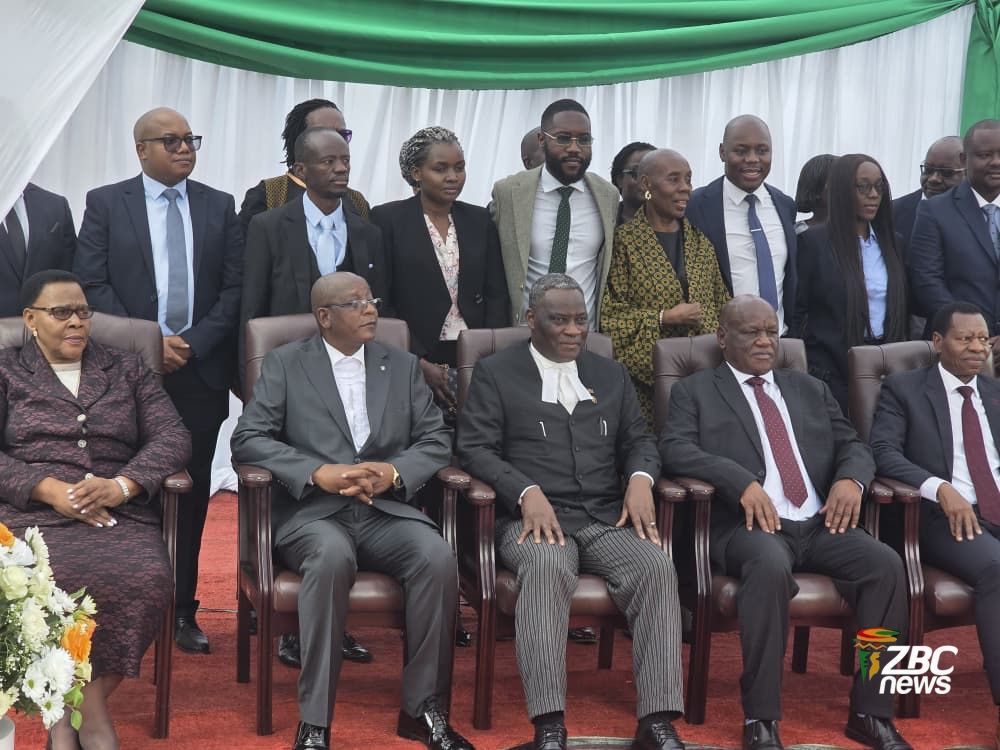
The farewell ceremony was attended by sitting and retired judges, legal practitioners, government officials and regional judicial leaders, who paid tribute to his contribution to Zimbabwe’s justice delivery system.
Supreme Court judge, Justice Antonia Guvava, praised his leadership and commitment to transforming the judiciary.
“On behalf of the judges, I want to thank you for the role you played in our day-to-day work. During your time, the Judicial Service Commission has witnessed a remarkable transformation,” she said.
Minister of Justice, Legal and Parliamentary Affairs, Honourable Ziyambi Ziyambi, said Chief Justice Malaba led reforms that modernised court administration and enhanced public confidence in the justice system.
“Justice remains a pillar for the people, and under the leadership of Chief Justice Malaba, important reforms were introduced, particularly the digitalisation of the justice delivery system. These reforms transformed court administration and improved access to justice through modern technology. The introduction of the Integrated Electronic Case Management System enhanced efficiency, transparency, and responsiveness within the judiciary.
“The reforms also simplified court procedures, making justice more accessible to ordinary citizens and helping to reduce legal disputes caused by procedural complexities. On behalf of the people, we express our appreciation for his unwavering dedication and commitment to transforming the justice system. His leadership strengthened constitutional institutions and promoted public confidence in the judiciary,” the Minister said.
Prosecutor General, Justice Loice Matanda-Moyo, said the reforms introduced during Chief Justice Malaba’s tenure strengthened accountability and efficiency across the justice sector.
“The justice system has continued to evolve in line with constitutional principles, ensuring efficiency and respect for the rule of law. We acknowledge the contributions of the Honourable Chief Justice Luke Malaba, whose leadership strengthened the judiciary and promoted accountability within the justice system. Significant reforms were introduced to improve access to justice and enhance transparency. These included efforts to modernise court processes and ensure that cases are handled more efficiently by prosecutors, magistrates, and investigators working together to uphold justice.
“The principle that ‘justice delayed is justice denied’ remained central to these reforms. All justice sector actors were encouraged to improve coordination and ensure the timely delivery of justice while maintaining fairness and integrity. Although challenges remained, the reforms laid a strong foundation for a more effective and responsive justice system. The aim was to build a legal ecosystem that supports constitutional governance and protects the rights of all citizens,” she said.
The ceremony was also attended by Namibia’s Chief Justice Peter Shivute, Malawi’s Chief Justice Rizine Mzikamanda and COMESA Chief Executive Officer Dr Willard Mwemba.
Chief Justice Malaba served Zimbabwe in several capacities within the justice system, rising through the ranks from prosecutor to the country’s highest judicial office.
During his tenure, the Judicial Service Commission recorded key milestones, including the construction of courthouses across the country, simplification of court rules, the rollout of the Integrated Electronic Case Management System and the establishment of the Judicial Training Institute of Zimbabwe.

