



Story by Abigirl Tembo, Health Editor
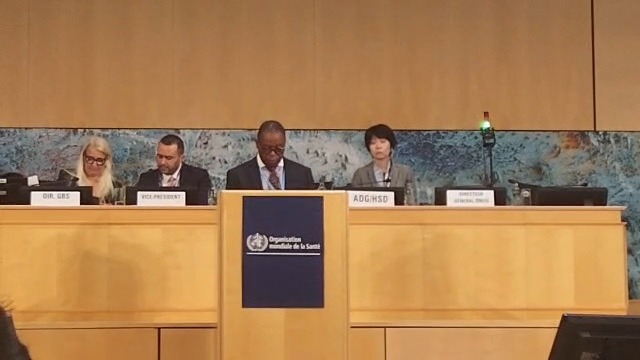
THE 79th World Health Assembly in Geneva, Switzerland, has concluded with member states intensifying discussions on global health reforms, pandemic preparedness, sustainable financing and the strengthening of national health systems.
Held under the theme, “Reshaping Global Health: A Shared Responsibility,” the Assembly came at a critical time for the World Health Organization amid ongoing institutional reforms, emerging public health threats and changing global financing dynamics following the withdrawal of the United States from the organisation.
Current health emergencies, including Ebola outbreaks in the Democratic Republic of the Congo and Uganda, also dominated discussions during the high-level meeting.
Zimbabwe’s delegation was led by Health and Child Care Minister Douglas Mombeshora, who participated in ministerial engagements and side events focusing on health systems strengthening, disease control, pharmaceutical cooperation, climate and health, and sustainable health financing.
One of the major issues debated during the Assembly was the need for predictable and sustainable funding for the WHO, with member states calling for increased domestic resource mobilisation through higher national health budget allocations, ring-fenced health taxes and National Health Insurance Schemes.
The Assembly adopted several landmark resolutions, including the Global Action Plan on Antimicrobial Resistance for 2026–2036, which aims to reduce bacterial antimicrobial resistance-related deaths by 10 percent by 2030.
Member states also agreed to continue negotiations on the Pathogen Access and Benefit-Sharing Annex under the broader WHO Pandemic Agreement to ensure equitable access to vaccines, medicines and other medical countermeasures during future pandemics and health emergencies.
Additional resolutions focused on stroke prevention and rehabilitation, radiation and health protection, smart pharmacovigilance systems, equitable access to precision medicine, and the integration of emergency, critical and operative care into national healthcare systems.
Zimbabwe also marked the successful completion of the tenure of Permanent Secretary for Health and Child Care Aspect Maunganidze as Chairperson of the WHO Programme, Budget and Administration Committee.
Addressing the WHO Executive Board, Dr Maunganidze called on member states to strengthen financial commitments towards the organisation, stressing that a strong and effective WHO depends on predictable and adequate funding.
He also commended WHO staff for their resilience and professionalism during a period characterised by institutional reforms, staffing reductions and operational challenges.
Zimbabwe says its participation at WHA79 reflects the country’s continued commitment to universal health coverage, multilateral cooperation and stronger healthcare systems while contributing to global health governance.

