



Story by Providence Maraneli
THE International Organisation for Migration (IOM) and the National AIDS Council (NAC) have intensified efforts to curb HIV transmission among migrants and vulnerable groups in Beitbridge as Zimbabwe pushes towards ending AIDS by 2030.
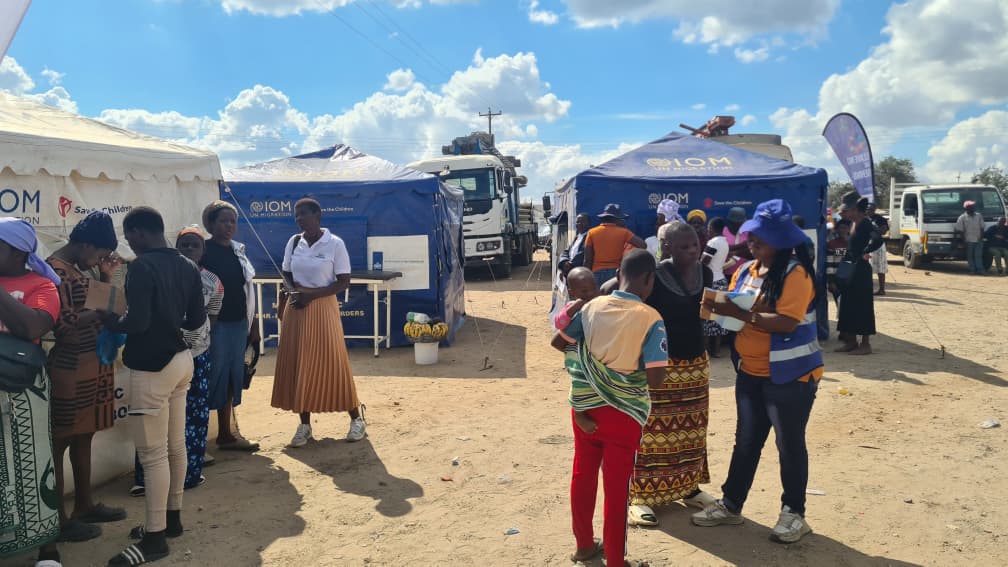
Operating under the theme “HIV Knows No Borders”, the programme is targeting migrants, commercial sex workers and vulnerable young people along the busy Beitbridge migration corridor, where population mobility continues to complicate access to healthcare services.
Beitbridge’s strategic position as a major transit point between Zimbabwe and South Africa has created unique public health challenges, with many migrants using undesignated crossing points and avoiding health facilities due to fears linked to their migration status.
To bridge the gap, IOM and NAC have rolled out mobile clinic services and community outreach programmes aimed at improving access to HIV testing, family planning and other essential health services.
Residents and beneficiaries have welcomed the intervention, saying it is helping vulnerable groups access healthcare services that would otherwise remain beyond reach.
“We are happy that we are getting these services for free because sometimes it is difficult to access clinics given our migration status,” said one beneficiary.
Another resident said the mobile health facilities were playing a critical role in the fight against HIV and AIDS.
“The mobile clinic has come in handy, and I think we can end AIDS,” the beneficiary said.
Others said the initiative was also improving access to reproductive health services.
“We are getting family planning services, HIV testing and other services,” another beneficiary noted.
Officials implementing the programme say the intervention is strategically focused on communities most exposed to HIV risks due to migration patterns and socio-economic vulnerabilities.
IOM Beitbridge Coordinator, Mr Nhamo Muleya said the programme is concentrating on both the migration corridor and urban settlements in Beitbridge.
“In Beitbridge, our programming is along the migration corridor and in Beitbridge urban, where we are trying to improve access to critical health services for the targeted population. We have a mobile clinic, and we work through a pool of community behaviour change agents,” he said.
Beitbridge District AIDS Coordinator, Mr Edward Mlaudzi said migration dynamics continue to fuel risky behaviours that expose people to HIV infection.
“People come with the intention to go to South Africa, and when they fail to cross, they engage in various activities which put them at risk. For us to reach the goal of ending HIV by 2030, we need to target migrants, and the programme has been successful. We have ten community agents dotted along the corridor,” he said.
Despite progress made in the national HIV response, Beitbridge remains one of the country’s high-burden districts, with HIV prevalence estimated at slightly above 14 percent.
Health authorities believe targeted interventions focusing on mobile and hard-to-reach populations will be critical in sustaining gains towards achieving the national target of ending AIDS as a public health threat by 2030.

