



Story by Yolanda Moyo
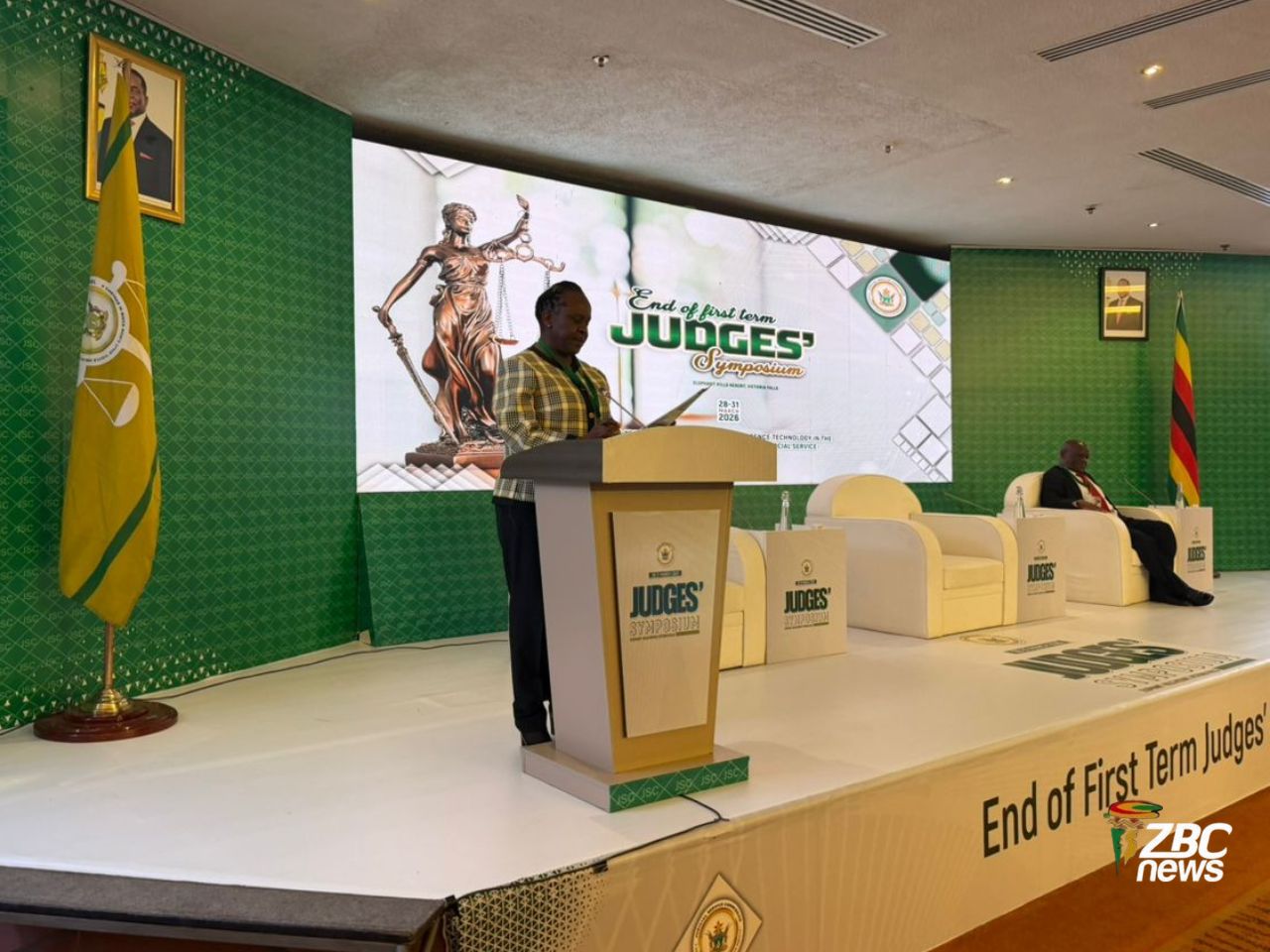
JUDGES and legal experts are examining how artificial intelligence (AI) can transform Zimbabwe’s courts at the end-of-term symposium currently underway in Victoria Falls.
The event, organised by the Judicial Service Commission (JSC), brings together the nation’s top legal minds and international specialists to debate integrating AI and other digital tools into court processes, moving Zimbabwe closer to a high-tech, efficient justice system.
Chief Justice Luke Malaba cautioned that technological progress must enhance access to justice without undermining the rule of law.
“We are at a crossroads where the promise of technology must be calibrated against the primacy of justice itself. Advancements must strengthen, not supplant, the human element that is essential to judicial reasoning,” he said.
Central to the digital shift is the Integrated Electronic Case Management System (IECMS), which has begun addressing traditional backlogs and paper-heavy filing processes.
JSC Secretary Mr Walter Chikwana explained that the commission is now preparing to integrate AI to assist with legal research and case tracking.
“The transition through the IECMS has laid the foundation. Now, we are aligning our processes to include AI that can assist in legal research and case tracking. This will significantly reduce the time a litigant waits for a resolution. It is about changing the speed of justice, making it more accessible to the ordinary Zimbabwean,” he said.
Adding an international perspective, Ethiopia’s Chief Justice Tewodros Meheret Kebede highlighted how technology has modernised court administration and service delivery in his country.
“Technology enabled us to make justice more accessible, efficient and inclusive without relinquishing the core values that make our courts credible. We are able to reduce travel burdens on citizens, standardise records, and ensure that every filing, every hearing participation, carries the same evidentiary weight, whether in person or through secure digital channels,” he said.
Zimbabwe’s discussions coincide with the recent launch of its National Artificial Intelligence Strategy (2026-2030), which provides a framework for ethical, human-centred AI in public service, including the judiciary. The strategy aligns with the courts’ goal of balancing innovation with fundamental legal principles.

