



Story by Abigirl Tembo, Health Editor
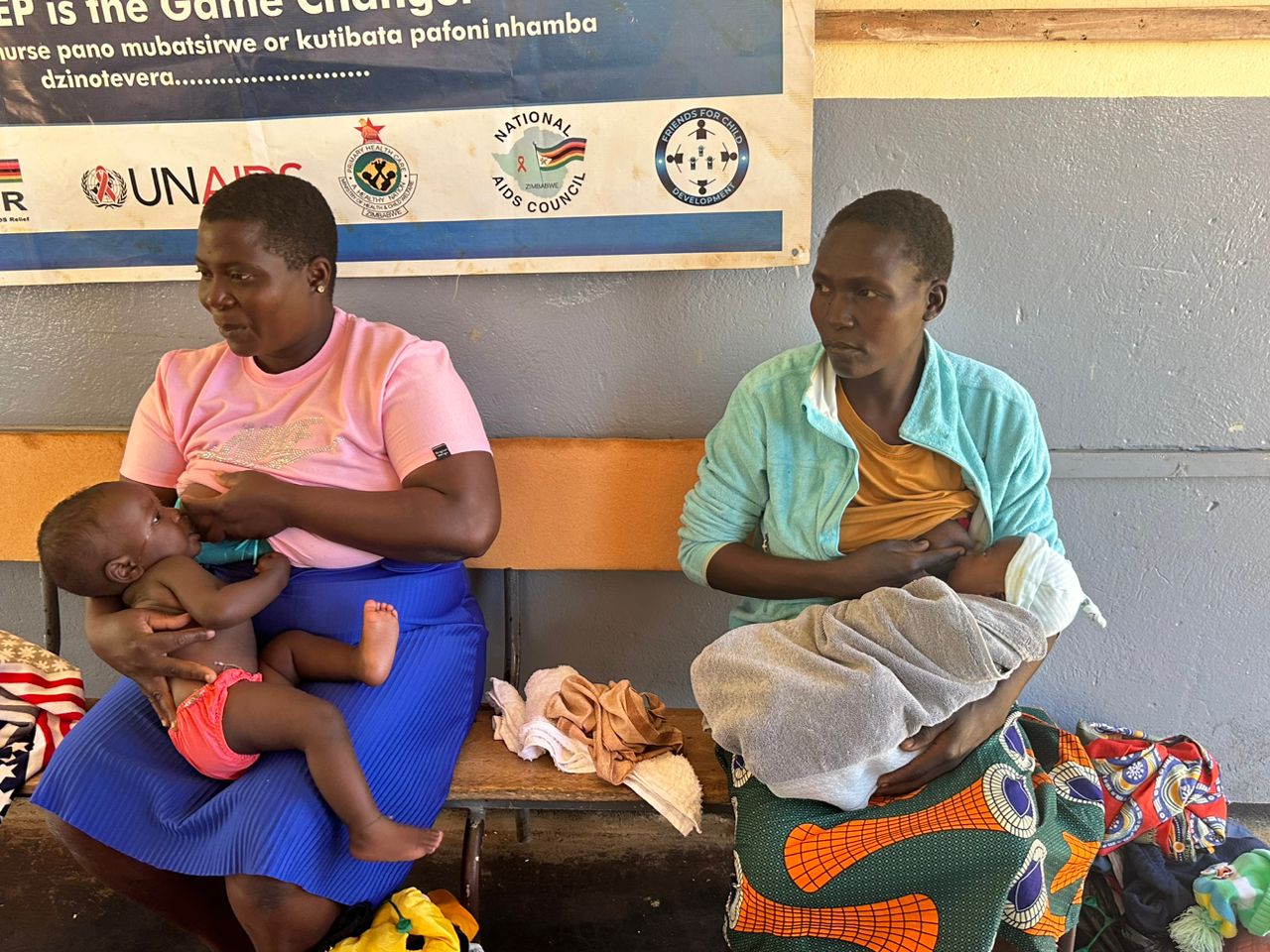
MT DARWIN – AS Zimbabwe joins the globe in marking the World Breastfeeding Week, which runs until August 7, renewed attention has been drawn to how exclusive breastfeeding especially during the first six months, can be deployed to tackle child malnutrition.
Despite almost 90 percent of Zimbabwean infants receiving breast milk at some point, just over 40 percent are exclusively breastfed for six months, falling short of the 50 percent target recommended by the World Health Assembly and the World Health Organisation for meaningful reductions in stunting and under-five mortality.
In Mt Darwin District, health authorities and care‑group programmes co‑sponsored by the Food and Nutrition Council (FNC) and the Ministry of Health and Child Care are leading the charge and have emerged as a cornerstone of change, reinforcing exclusive breastfeeding.
“For me to be a lead mother, I followed what I was taught by the nurses and our health promoter and I practiced exclusive breastfeeding for the first six months and my child is very healthy, even up to this day, she is very healthy,” Plaxedece Chigogo said.
“I struggled with kwashiorkor on all of my children because I would just leave my children and go to the fields and would tell the other children to give the babies sadza and mahewu even before the baby turned 6 months and this resulted in the children being stunted, but with my last child, I followed advise from the nurses and village health workers to the dot and my child is very healthy,” a mother, Alice Sekere noted.
Deputy Director for Nutrition at the Food and Nutrition Council, Ms Sibo Chigova emphasised that while Zimbabwe has strong breastfeeding policies, closing the gap between policy and community practice is imperative.
“As a country, we have been doing so well in policies. We have a very enabling policy environment. However, to scale up, we need to intensify the capacitation of our multi-sectoral platforms to cover the whole country, so that there is incorporation of nutrition-sensitive programming to ensure that we implement the policies that we have set and attain our global targets. We need to support mothers, intensify the community support, and the community health workers so that they give individual support to mothers, so that we do not have defaulters or women who give up breastfeeding in case they are swarmed around by the gatekeepers who discourage them to breastfeed because of certain practices,” Ms Chigova said.
As Zimbabwe advances towards the attainment of Sustainable Development Goal Number Two, which is a commitment to end malnutrition by 2030, this year’s World Breastfeeding Week reinforces that exclusive breastfeeding, when paired with care-supported peer-led networks, can help reduce stunting in children.

