



Story by Oleen Ndori, Foreign Editor
CHINA’S decision to grant full zero-tariff access to 53 African countries reflects Beijing’s commitment to high-level opening-up and its longstanding philosophy of mutually beneficial cooperation with Africa.
The policy, which takes effect on May 1, positions China as the first major economy to offer unilateral, duty-free access to all African countries with which it has diplomatic ties, including Zimbabwe.
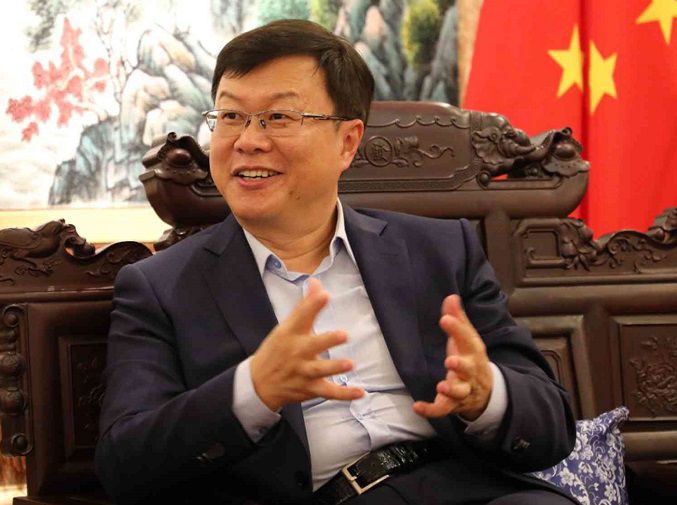
In an exclusive interview with ZBC Foreign Editor, Oleen Ndori, Chinese Ambassador to Zimbabwe, His Excellency Zhou Ding, said the initiative reflects China’s enduring approach to relations with Africa, anchored on sincerity, real results, amity, good faith, mutual benefit and equity.
“This policy carries no political strings and fully aligns with Africa’s development priorities,” he said.
“It strengthens the China-Africa All-Weather Community with a Shared Future for the New Era.”
Ambassador Zhou described the zero-tariff arrangement as a landmark measure embedded in the long-term framework of China-Africa economic and trade cooperation.
He said it is a flagship outcome of the Forum on China-Africa Cooperation and an early-harvest result of negotiations under the China-Africa Economic Partnership Agreement.
The agreement is built around four strategic pillars: trade, supply chains, green development and the digital economy.
“The zero-tariff initiative lays a solid foundation for institutionalised, predictable and long-term cooperation,” Ambassador Zhou said.
He added that the move would further advance high-quality Belt and Road cooperation by linking China’s vast consumer market with Africa’s growth potential.
“This will stimulate two-way trade and investment, help African economies withstand external trade pressures, uphold the multilateral trading system and set a global benchmark for win-win South-South cooperation,” he said.
To ensure Zimbabwe and other African countries fully benefit from the arrangement, China has put in place a comprehensive package of support measures.
These include assistance to strengthen production capacity, industrial upgrading, standards compliance and market readiness.
Ambassador Zhou said China would provide policy guidance, share expertise in agricultural and industrial development, and facilitate investment in key sectors such as agriculture, processing and manufacturing.
“These collaborative efforts will help expand local value addition, improve productivity and translate zero-tariff access into sustained export growth,” he said.
China will also offer tailored training to African trade authorities to help domestic producers meet Chinese regulatory and quality standards.
This includes support on sanitary and phytosanitary requirements, quality inspections and certification procedures.
In addition, customs, inspection and quarantine processes will be streamlined to reduce delays and lower compliance costs for exporters.
To widen market access, China will leverage major trade promotion platforms, including the China International Import Expo, FOCAC events and cross-border e-commerce channels.
“These platforms will actively promote quality African products, expand their market reach and connect exporters directly with Chinese buyers,” Ambassador Zhou said.
He added that China would continue advancing negotiations on the China-Africa Economic Partnership Agreement, with priority given to trade and supply chain modules.
The agreement will address both tariff and non-tariff barriers, providing a stable and predictable framework for long-term bilateral trade growth.
Ambassador Zhou said the zero-tariff initiative is far more than a short-term trade concession.
“It is a strategic commitment to deepening China-Africa economic integration and advancing shared development for years to come,” he said.

