



Story by Tafara Chikumira
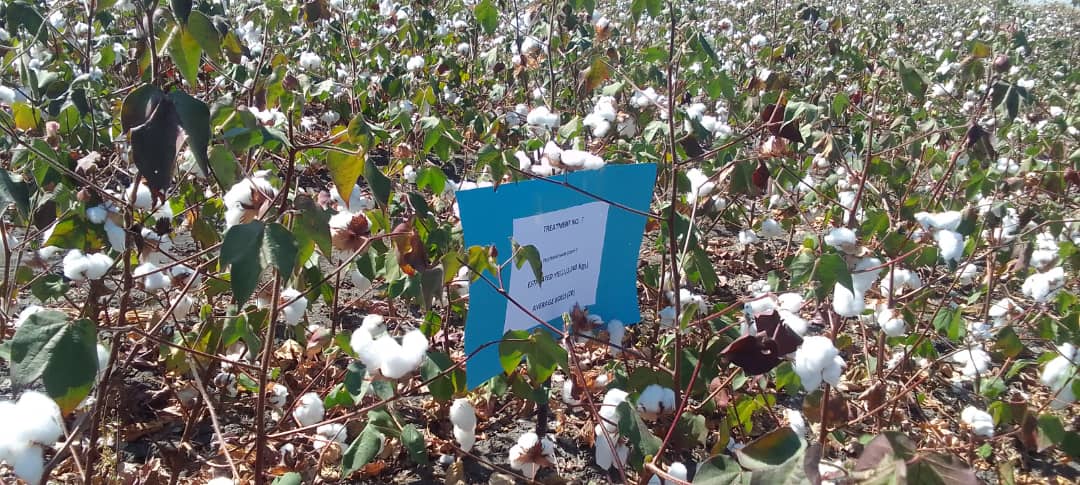
ZIMBABWE is leaving nothing to chance in its quest to ensure the viability of cotton production in the face of climate change, amid a series of trials for various cotton seed varieties in Gokwe.
The Cotton Research Institute has partnered with local farmers in Gokwe to trial new hybrid cotton seed varieties that show promising results in semi-arid conditions.
“One good thing about cotton is that it performs well in semi-arid and arid regions. We have developed several hybrid varieties over the years which are now undergoing market testing. Some of the varieties have shown yields averaging 3 000 kilogrammes per hectare, and even up to 4 000. During ginnery testing, some recorded lint yields as high as 40 percent. This proves why our local varieties are increasingly preferred across the SADC region and beyond,” Mr Washington Mubvereki, Director of the Crops Research Institute said.
He emphasised that the future of Zimbabwe’s cotton industry is promising, provided that farmers adopt best practices to maximise productivity and returns.
Participating farmers expressed appreciation for the hands-on knowledge gained through the trials, noting a shift in mindset towards treating farming as a precise, knowledge-based business.
“Farming has its ups and downs, but it’s important to learn new things. I’ve realised how crucial correct crop spacing is and the importance of replanting in gaps where seeds fail to germinate. These small improvements help make the most out of a small piece of land,” said one farmer.
“This has been an eye-opening experience. I used to go straight into planting without soil testing. Now I understand the importance of preparing properly and using the right pesticides. With such training, we can truly benefit from farming,” added another.
The Second Republic has intensified the country’s cotton revival efforts, with the Presidential input scheme and research on genetically modified cotton varieties expected to lead the way.

