



Story by Memory Chamisa
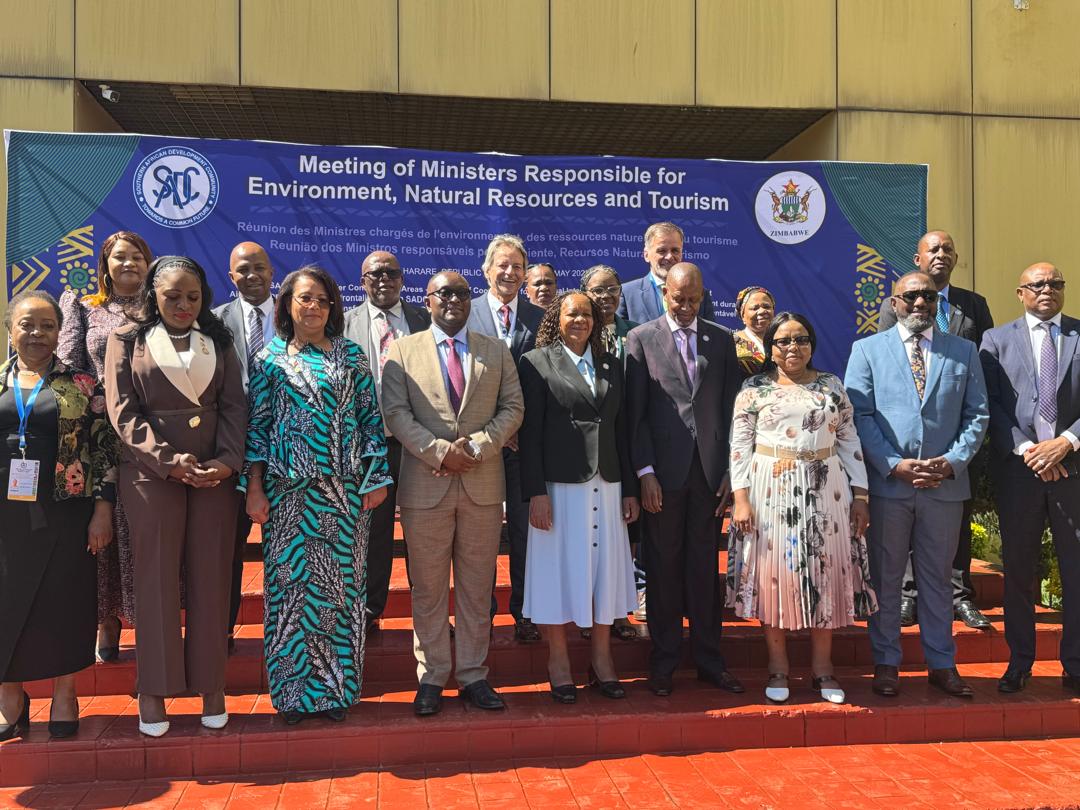
HARARE – SADC Ministers Responsible for Environment, Natural Resources and Tourism have concurred on the need to accelerate sustainable resource management in wildlife conservation in the region.
The high-level meeting drew participation from 12 ministers, alongside international development partners, amid growing calls for resilient ecosystems capable of withstanding the mounting pressures of climate change, poaching, and habitat degradation.
The host, Minister of Environment, Climate and Wildlife, Dr Evelyn Ndhlovu, stressed the importance of regionally coordinated action to safeguard biodiversity and promote sustainable livelihoods.
“Today’s statutory meetings offer a critical platform to evaluate the performance of our key sectors. We are particularly encouraged by the robust discussions underway. From wildlife conservation and sustainable natural resource use to forestry and tourism, each of these sectors plays a pivotal role in building climate resilience and supporting rural development,” said Dr Ndhlovu.
She underscored the importance of focused engagement ahead of the upcoming 20th Conference of Parties (CoP20) to the Convention on International Trade in Endangered Species of Wild Fauna and Flora (CITES), where regional positions will need to balance conservation priorities, community livelihoods, and sustainable development goals.
SADC Executive Secretary, His Excellency Elias Mpedi Magosi, called on member states to remain steadfast in their commitments towards transboundary conservation through TFCAs.
“Africa’s natural ecosystems transcend political boundaries. Elephants, lions, and migratory birds do not recognise borders, they follow food, water, and seasonality. Cross-border conservation, therefore, remains one of the most innovative solutions for preserving our natural heritage while fostering integration from the grassroots,” he said.
The conference also received strong support from international development partners.
Speaking during the session, German Ambassador to Zimbabwe, Ambassador Udo Volz, reaffirmed Germany’s long-standing commitment to conservation across the region.
“Long-term conservation success is built on strong partnerships. Germany is supporting governance structures such as the KAZA Secretariat and promoting inclusive decision-making that bridges conservation with community development.”
Echoing these sentiments, the European Union Ambassador to Zimbabwe, Mr Jobst von Kirchmann, highlighted the socio-economic potential of TFCAs.
“TFCAs not only preserve nature but also improve livelihoods. Through eco-tourism, sustainable agriculture, and community-based conservation, we can uplift communities, create employment, and ensure that conservation is both inclusive and impactful,” he said.
The Ministers’ meeting is expected to set the tone for the Heads of State and Government Summit scheduled for Friday as the outcome of their deliberations is key to the future of TFCAs.

