



Story by Providence Maraneli
MATABELELAND SOUTH – MEN in Matabeleland South are stepping up in the fight against HIV/AIDS, with the identification of illegal mining sites in Gwanda District as hotspots for the disease, prompting urgent action.
According to statistics from the National AIDS Council (NAC), women aged 15-39 are the most affected by HIV/AIDS in the region. However, there is a rising concern over the increasing number of men, particularly those over 40, who are also succumbing to the virus.
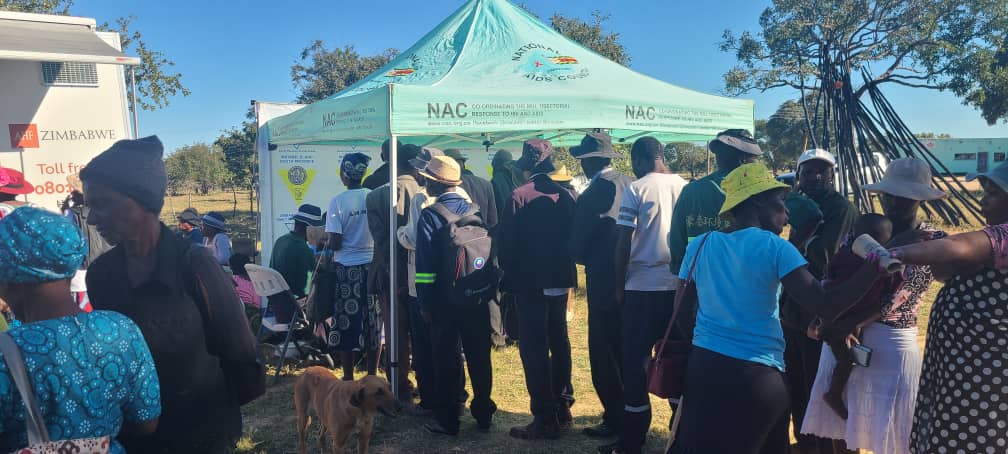
The NAC has noted that men are often reluctant to engage in HIV testing, prevention measures, and seeking treatment. In response, the organisation is ramping up efforts to engage communities, encouraging men to take a more active role in addressing the crisis.
“As men, we have seen a lot of complacency when it comes to testing and treatment. We have learned that we need to take this seriously. Sometimes we assume that because our spouses have tested, we are safe, but we are all responsible for our health, and we must play our part,” a villager said.
Traditional leadership is also playing an essential role in raising awareness within the community with Chief Mathema emphasising the importance of collective responsibility in combating the disease.
“We cannot afford to have these unfortunate statistics in our province. We need everyone on board, and village heads must ensure that we encourage people to test.”
The NAC is rolling out a comprehensive approach to reduce new HIV infections, with a focus on male engagement and community mobilisation.
The NAC District Officer, Alice Moyo highlighted the positive shift in male participation.
“Commonly, men are not forthcoming, but with this campaign, we have seen many more men coming forward to test, prevent, and seek treatment. This is a positive move in our effort to reduce HIV/AIDS prevalence,” said Mrs Moyo.
The National AIDS Council is employing various strategies, including peer education, the male engagement programme, and the sister-to-sister initiative, to curb the epidemic and empower communities to take control of their health.

