



Story by Wellington Makonese
Africa is taking a significant step towards securing its future with the inaugural Africa Peace and Security Dialogue currently underway in South Africa.
This landmark event brings together leaders and experts to strategize on protecting the continent’s sovereignty, advancing economic and political interests.
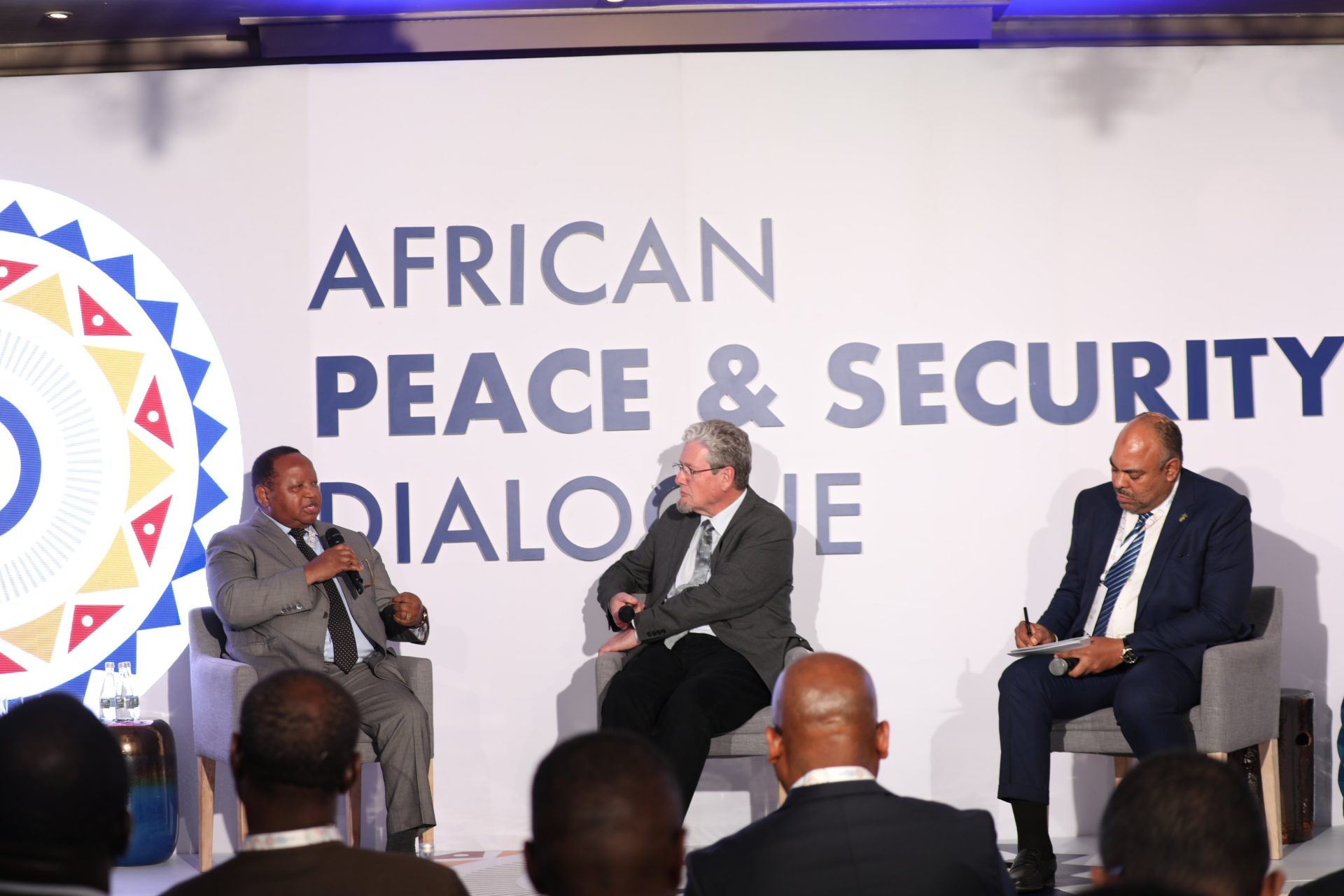
The Minister of Foreign Affairs and International trade Ambassador Frederick Shava was among the panelists discussing peace and security issues at the inaugural event under the Thabo Mbeki foundation.
Ambassador Shava expressed growing concerns over Africa’s push for veto power in the UN Security Cou5ncil, a topic that has been gaining traction globally.
“I want to inform the audience that Africa has been negotiating at the UN for a seat or two seats in the Security Council. This has been on for some time. And the guiding lines in this respect were coming from the Ezulwini Consensus, which was defined by the African leaders themselves. And these guiding lines were helping Africans negotiate for the seats.
“And the Africans in negotiating for these seats, they negotiated for four seats with the power of veto, not a half-baked seat with no veto. If there was going to be no veto, then there would be no veto for every member of the Security Council. If there was going to be no veto, then there would also be a veto for Africa. And this is the position there is. So at the moment, it is gratifying that not only the Secretary General is pronouncing that Africa must have a veto in the Security Council, but even other powers who are already in the Security Council are now also saying, yes, Africa must have a seat. But they are silent on the veto. And we are cautious on how to proceed,” he said.
Tanzania’s Minister of Foreign Minister and the current Chairperson of the Council of Ministers responsible for the Troika, Honorable Mahmoud Thabit Kombo spoke on the need to safeguard African resources to avert conflict.
“We, as Africans, don’t know how much minerals we have. We, as Africans, don’t know the statistics of the resources there is in Africa. So, these other interests will come around once we know those. Maybe other nations outside Africa have got more statistics of the resources in Africa than ourselves.
“So, all these pockets of conflict, be it in Congo, the groups, the three, four groups there, Organ Troika. Developed world, are doing a lot of research on rare earth minerals, they are doing a lot of research from the value that this can provide in energy saving in the future of the mother earth. And also, they are emitting more. In COP28, Africa emitted only 2.4% of the emission globally. It means Africa is like a garbage bin of absorbing other people’s emission,” he explained.
Key concerns addressed at the meeting include the far-reaching impacts of climate change, the debilitating effects of debt crises, the devastating consequences of civil wars, and the destabilizing threat of unconstitutional government changes.
“Today we embark on a new journey, one that’s not merely a gathering of minds, but an active platform for critical engagement, for robust engagement, and most importantly for the generation of African-led solutions to African problems. We are mindful that we gather here tonight, and as we do so, the world is in turmoil. If it’s not genocide we are witnessing in Gaza, it is the extension of this mind less annihilation of the people of Lebanon, or the potential threat of a nuclear disaster.
“For this weekend, whilst we’re not forgetting what’s happening, as I’d indicated, in these parts of the world, we wish to look at our own continent, which continues to suffer immensely because of conflict. We are immensely worried that our continent faces myriads of problems, whether it’s climate, debt crisis, civil wars, military takeovers, with the highest number of countries, six in total, suspended by the African Union as a result thereof,” highlighted Dr. Geraldine Fraser Moleketi, Chancellor of the Nelson Mandela University.
The three-day event is being attended by delegates who are expected to propose strategies for addressing Africa’s pressing security challenges, under the theme, “Towards a Peaceful and Secure Africa: Challenges and Opportunities,”

