



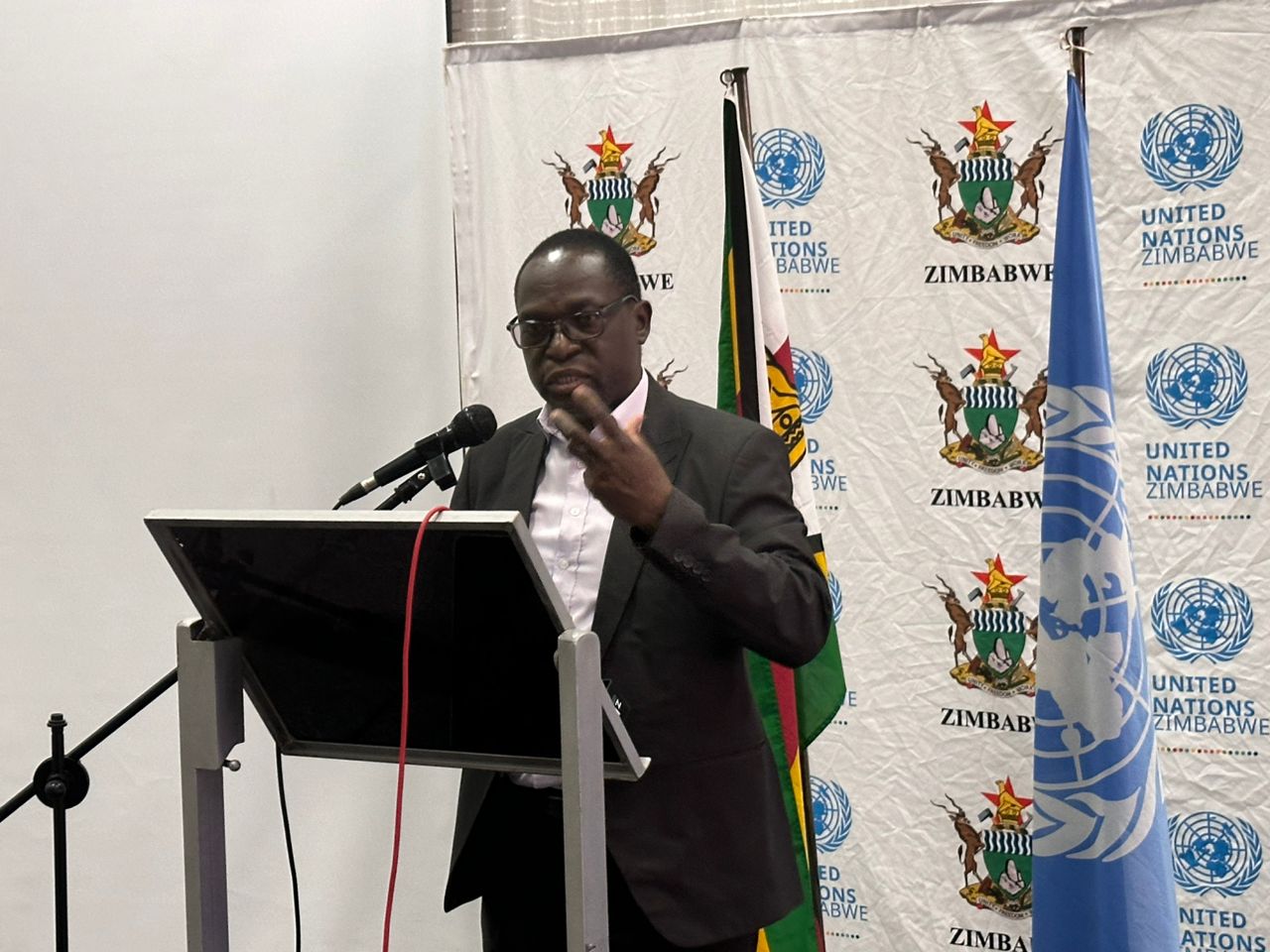
Story by Abigirl Tembo
THE media is poised to play a crucial role in driving Zimbabwe’s sustainable development journey, as government and its development partners leverage on the media industry to educate the public and mobilise support for critical initiatives.
A week-long media workshop organised by the United Nations is underway in Masvingo, focusing on empowering journalists with the skills and knowledge to effectively communicate key development issues.
The issues include Sustainable Development Goals (SDGs) and Africa Agenda 2063, which are crucial for promoting sustainable development values.
Masvingo Minister of State Provincial Affairs and Devolution, Honourable Ezra Chadzamira highlighted the media’s vital role in shaping public opinion and championing sustainable development.
“The media is crucial in promoting sustainable development values by shaping public opinion, raising awareness and influencing individual and collective behaviours. The media serves as a primary source of information for the public. It provides news, analysis and commentaries on various topics shaping public opinion, knowledge and understanding. Therefore, the media has a responsibility to report accurately and objectively to ensure the public is well-informed.
“The media therefore sets the agenda and influences what the public considers significant. I applaud you for helping us cope with climate change and building resilience. The climate shocks that include the El Nino-induced drought could have dealt us worse without your assistance. The Second Republic under the able stewardship of His Excellency, President. Mnangagwa will give you moral and material support in this media initiative to make sure that our citizens are well and factually informed,” Honourable Chadzamira said.
Information, Publicity and Broadcasting Services Permanent Secretary Mr Nick Mangwana, represented by Director Media Services, Mr George Chisoko, emphasised the media’s vital role in promoting the National Development Strategy 1 (NDS1), Zimbabwe’s blueprint for achieving Vision 2030.
He said, “It is the duty of the media to raise awareness on National Development Strategy 1 by informing our people on what it is and to rally the populace behind it. Plans found in NDS1 are the strategies for taking charge and it is the duty of the media to dissect these strategies and carry the people on board as Zimbabwe’s survival through these strategies is hinged on the united and committed force that supports these strategies without an element of sabotage and malice.
“The media has a critical duty of providing platforms for underrepresented groups to be heard. We must remember that development is only development if it is inclusive. Therefore, it is prudent that the media should highlight the challenges of our marginalised communities and concerns if the government is to address them. This is in fulfilment of President Mnangagwa’s call to leave no one and no place behind. In the same vein, I urge the media to promote inclusive and equitable development.”
United Nations Resident and Humanitarian Coordinator, Mr Edward Kallon reaffirmed the UN’s commitment to supporting a robust media landscape in Zimbabwe.
“The United Nations recognises the media as a pivotal tool in shaping public opinion, promoting inclusive and sustainable development, democracy, good governance, and human rights, facilitating nation-building and quality of life advancement. Zimbabweans today have access to a wide range of information channels, including print, electronic media like television and radio, including community radios, and web-based media through the internet and mobile telephony. Used responsibly, these channels provide substantial opportunities for Zimbabwe’s development,” he said.
The 17 Sustainable Development Goals are designed to tackle some of the world’s most pressing challenges, including hunger, poverty, inequality, climate change, environmental degradation, peace, and justice.

