



Story by Aifheli Mudau
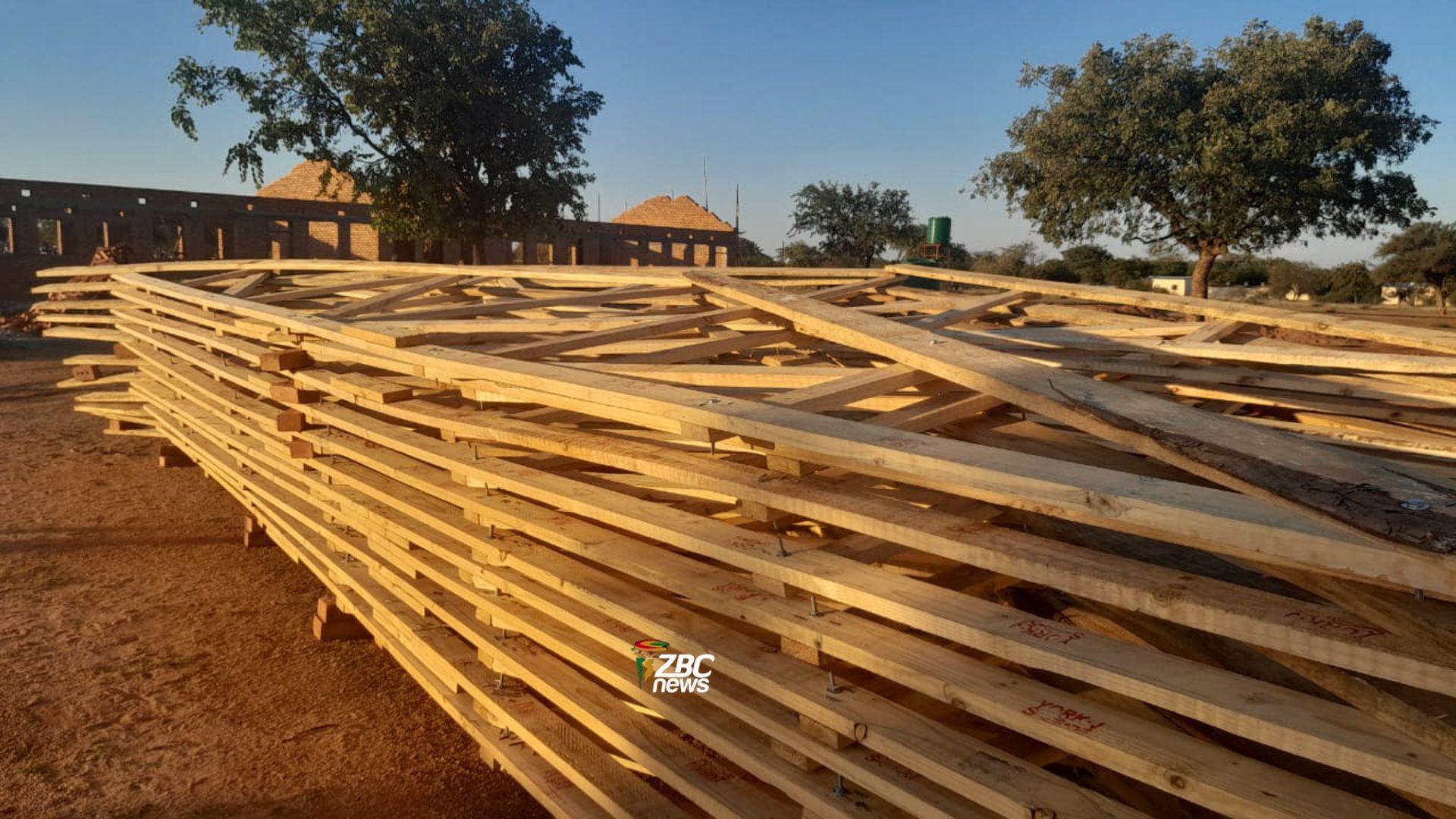
CONSTRUCTION of a science laboratory at Malala Secondary School has reached roofing level, as Government continues expanding access to science education in rural communities.
The project forms part of the Second Republic’s drive to strengthen Science, Technology, Engineering and Mathematics (STEM) learning through improved educational infrastructure.
Parents and community members have welcomed progress on the laboratory, saying Government intervention helped accelerate a project they could not complete on their own.
“We appreciate the assistance we got from the government in constructing this laboratory, as parents alone we were not going to be able to do it. Everything is here now. roofing sheets and timber and what is left is to finish the roofing,” community members said.
Village Head Mr Ephraim Makhwedzhana said the development would transform learning opportunities for children in the area.
“We were really struggling as parents and never thought we would manage to build a laboratory, but through the government’s intervention we now have a very good project that will transform our children’s lives,” he said.
Senior Village Head Mr Emmanuel Phalandwa said the initiative is expected to improve uptake of STEM subjects and raise pass rates at rural schools.
“These laboratories, spearheaded by the Second Republic, mean a lot to learners, including increased uptake of STEM subjects and improved pass rates, leading them to pursue more pure science subjects,” he said.
Government has been scaling up education modernisation projects since 2017 in a bid to narrow the gap between urban and rural schools.
In Beitbridge District alone, more than nine secondary schools, including Siyoka Secondary School, Tshitulipasi Secondary School and Swereki Secondary School, have benefited from the programme.

