



Story by Abigirl Tembo, Health Editor
SOUTHERN African Development Community (SADC) finance ministers have called for stronger regional cooperation, innovative financing and faster implementation of regional programmes to shield member states from mounting global economic challenges.
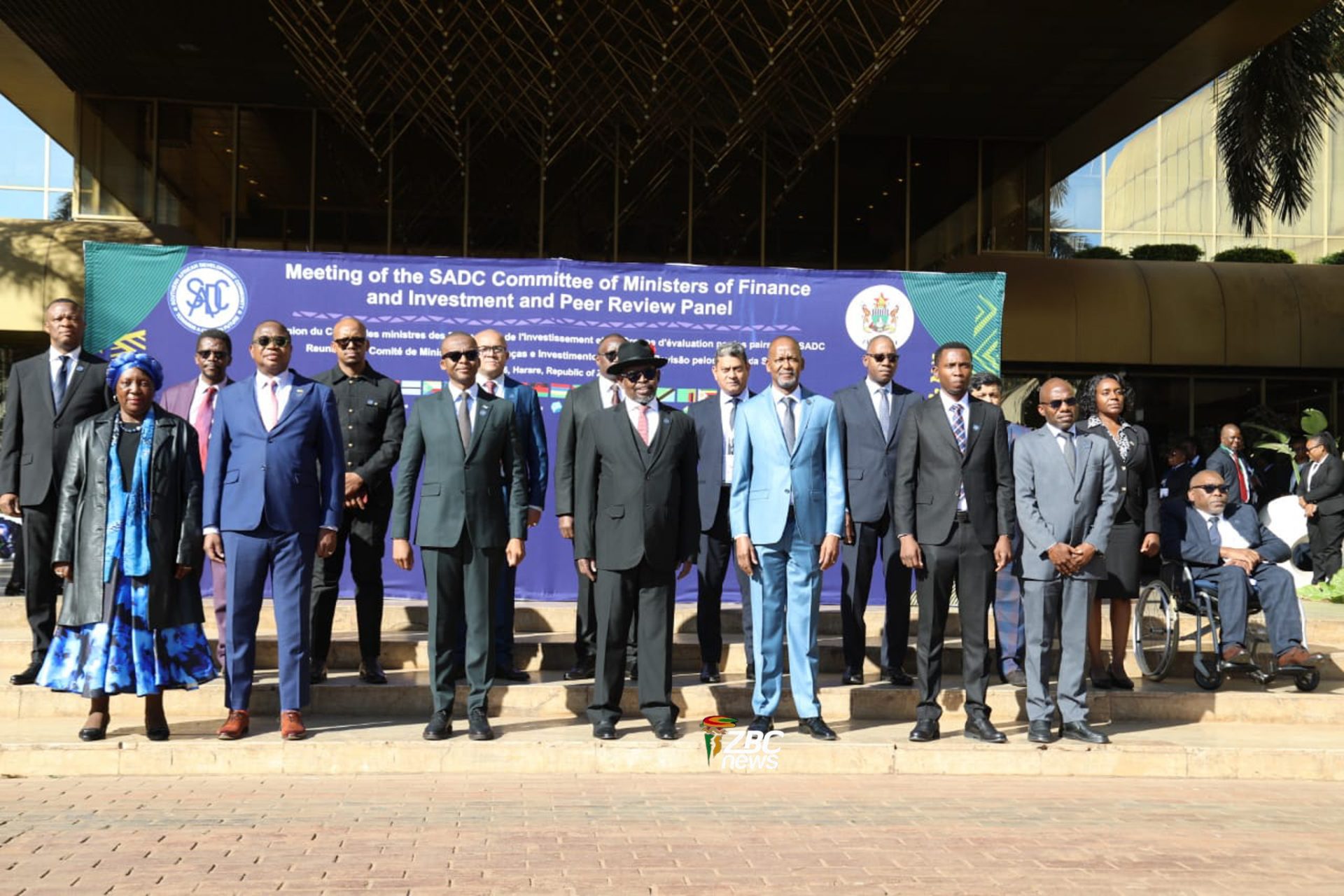
The call was made at the official opening of the SADC Committee of Ministers of Finance and Investment, the Peer Review Panel and the Joint Meeting of Ministers of Finance and Health in Harare on Thursday.
The meetings are focusing on accelerating the operationalisation of the SADC Regional Development Fund, strengthening macroeconomic convergence, enhancing regional payment systems, deepening financial integration and mobilising investment to support infrastructure development and sustainable economic growth.
Opening the meeting, Zimbabwe’s Minister of Finance, Economic Development and Investment Promotion, Professor Mthuli Ncube, said the region was navigating an increasingly uncertain global economic environment characterised by inflation, climate change, debt pressures, geopolitical tensions and disruptions to international trade.
“We meet at a time when the global economic environment continues to test the resilience of our economies.”
Professor Ncube said closer regional cooperation was essential to building resilient economies and urged member states to expedite the operationalisation of the SADC Regional Development Fund.
“These challenges remind us that regional cooperation is not optional. It is the surest path to resilience, self-reliance and shared prosperity. The success of these meetings will be measured not only by the quality of our discussions, but by the extent to which our decisions unlock investment, improve policy coordination and accelerate tangible development outcomes.”
SADC Executive Secretary Elias Magosi said Africa’s economies continue to demonstrate resilience despite global uncertainties, with average economic growth projected at 4.4 percent. However, he cautioned that the gains remain vulnerable to external pressures.
“While these gains are positive and encouraging, we must continue to tread cautiously as we move forward.”
Magosi said widening fiscal deficits, declining development finance, rising debt vulnerabilities and recurring external shocks continue to threaten sustainable growth. He called for stronger policy coordination, value addition, modernised agriculture, improved energy security and increased investment in regional value chains.
“Strengthening regional integration, resilience, domestic resource mobilisation and public expenditure efficiency is essential to reduce vulnerabilities.”
He also urged member states to accelerate ratification of the SADC Regional Development Fund Agreement, noting that while 10 countries have signed the agreement, only Angola, Botswana, Zambia and Zimbabwe have ratified it.
Chairperson of the SADC Committee of Ministers of Finance and Investment and South Africa’s Finance Minister, Honourable Enoch Godongwana, said Southern Africa faces growing economic risks arising from trade disruptions, geopolitical conflicts and declining development assistance.
“We are therefore meeting at a particularly challenging time. All these developments are likely to have spillover effects across our economies, affecting agriculture, energy, food security, inflation and many other sectors.”
Godongwana said reduced donor funding underscored the need for SADC countries to strengthen domestic resource mobilisation, expand blended finance and promote public-private partnerships to support sustainable development.
The outcomes of the meetings are expected to inform the implementation of SADC Vision 2050 and the Regional Indicative Strategic Development Plan (RISDP) 2020–2030, as member states work towards building more resilient, integrated and competitive regional economies.

