



Story by Tichaona Kurewa
SENIOR government officials from five Southern African countries have convened in Victoria Falls to advance the regional conservation agenda under the Kavango Zambezi Transfrontier Conservation Area (KAZA TFCA), one of the world’s largest conservation landscapes.
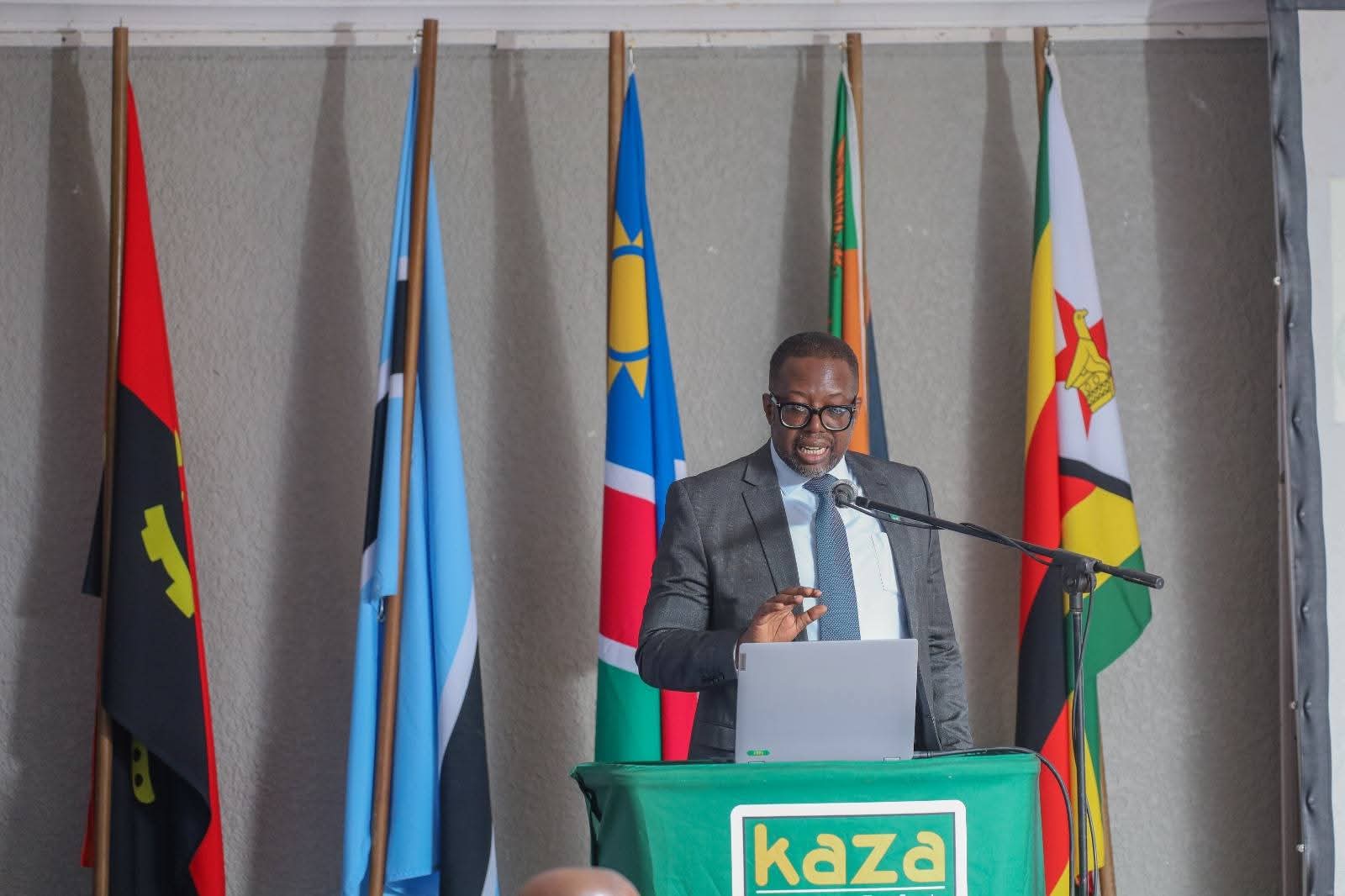
The Committee of Senior Officials meeting, chaired by Zimbabwe’s Permanent Secretary for Environment, Climate and Wildlife, Mr Simon Masanga follows the successful conclusion of the Joint Management Committee deliberations held earlier this week.
The high-level gathering brings together permanent secretaries and senior government representatives from Angola, Botswana, Namibia, Zambia and Zimbabwe, who are reviewing progress on major conservation, environmental and community development programmes across the KAZA region.
Central to the discussions are efforts to address transboundary environmental challenges, strengthen regional cooperation and enhance financial sustainability mechanisms to support long-term conservation goals.
Delegates are also assessing progress made in implementing resolutions adopted at the 2024 KAZA Summit in Zambia, with a focus on protecting biodiversity, preserving ecological corridors and improving livelihoods for communities living alongside wildlife.
The outcomes of the senior officials’ meeting will inform recommendations to be presented at the KAZA Ministerial Committee Meeting scheduled for Friday.
The ministerial session will be chaired by Zimbabwe’s Minister of Environment, Climate and Wildlife, Honourable Evelyn Ndlovu, and is expected to chart the next phase of regional collaboration on conservation and sustainable development.
Spanning approximately 520 000 square kilometres, the KAZA TFCA covers parts of five countries and is regarded as one of Africa’s most ambitious conservation initiatives, promoting cross-border wildlife management while creating economic opportunities for local communities.
The ongoing meetings in Victoria Falls underscore the region’s determination to safeguard its rich natural heritage through coordinated action, shared responsibility and sustainable use of natural resources.

