



Story by Tobias Mudzingwa
BEFORE dawn breaks across Zimbabwe’s cities, thousands of schoolchildren begin a daily ritual that has become so common it is often overlooked.
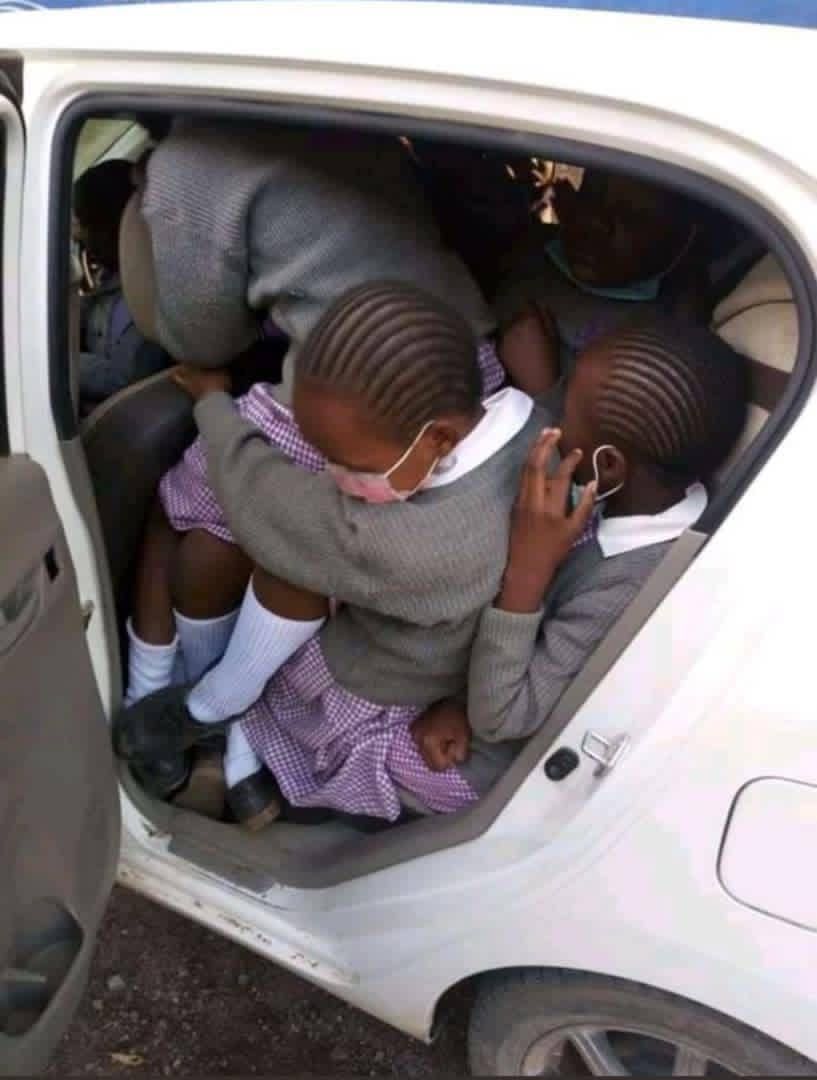
Some are crammed into small vehicles designed for far fewer passengers. Others are squeezed into overloaded commuter omnibuses, school bags balanced on their laps or wedged beneath their feet. Along the way, they endure long waits, crowded ranks and at times, harsh treatment from transport operators more concerned with filling seats than safeguarding young passengers.
For many learners, the school day begins not in the classroom but on the road.
The growing number of primary and secondary school pupils travelling more than 20 kilometres to and from school in urban areas has sparked concern among parents, educators and child welfare advocates, who warn that lengthy commutes are taking a toll on children’s wellbeing, safety and academic performance.
The concerns come as increasing numbers of learners travel across towns and cities, often passing through congested urban centres to attend schools far from their homes.
Parents who spoke to ZBC News said the physical and emotional strain associated with daily travel can affect children in ways that are not always immediately visible.
“Even for adults who wake up early to commute to work, the toll on the body can be overwhelming. When fatigue sets in, it comes with negative effects. For children, it may reduce their concentration levels at school,” said one parent.
Others pointed to the safety risks that children face during their journeys.
“Some of these children are abused while using public transport, especially the girl child. In an effort to save money, some begin to befriend kombi operators and conductors, which can expose them to various forms of abuse,” another parent said.
Teachers say the solution may be simpler than many parents realise.
“It is better for parents to enrol their children at schools close to home rather than having them commute long distances. If you cannot afford reliable transport to a faraway school, it is advisable to register them at the nearest school where they can walk,” said one teacher.
The Ministry of Primary and Secondary Education has also weighed in on the issue.
Director for Communications and Advocacy, Mr Taungana Ndoro said parents should prioritise schools located within a five-kilometre radius of their homes.
“We have seen learners travelling from Chitungwiza to Belvedere and from Epworth to Mabelreign, as if there are no schools in their respective areas,” said Mr Ndoro.
“We encourage parents to ensure that children get adequate rest and to minimise the risks associated with travelling long distances to school.”
Education experts argue that the consequences extend beyond fatigue.
ONTECH Learning Institution director Mr Onwell Vhudzi warned that lengthy journeys can undermine academic performance by reducing the time and energy available for learning.
“A tired body results in an equally tired mind, which negatively affects a child’s concentration levels in class. Poor academic performance may follow,” he said.
“The time spent travelling is time that could otherwise be devoted to learning and schoolwork.”
For Director of the Female Students Network Trust, Mrs Evernice Munando the debate also challenges assumptions about educational quality.
“Schools generally follow the same curriculum, so parents should not be misled into believing that travelling long distances necessarily guarantees a better education,” she said.
Her remarks speak to a growing question confronting many urban families: whether the perceived prestige of distant schools justifies the daily sacrifices children must make to attend them.
As traffic congestion worsens and urban populations continue to grow, the journey to school is becoming an increasingly demanding part of childhood for many learners.
For some, it means waking before sunrise. For others, it means spending hours each day navigating crowded roads and packed public transport before they even open a textbook.
Education officials, parents and experts are now united on one point: when choosing a school, the distance from home matters.
Because while education may open doors, many believe the journey to obtain it should not come at the expense of a child’s safety, wellbeing and ability to learn.

