



Story by Oleen Ndori, Foreign Editor
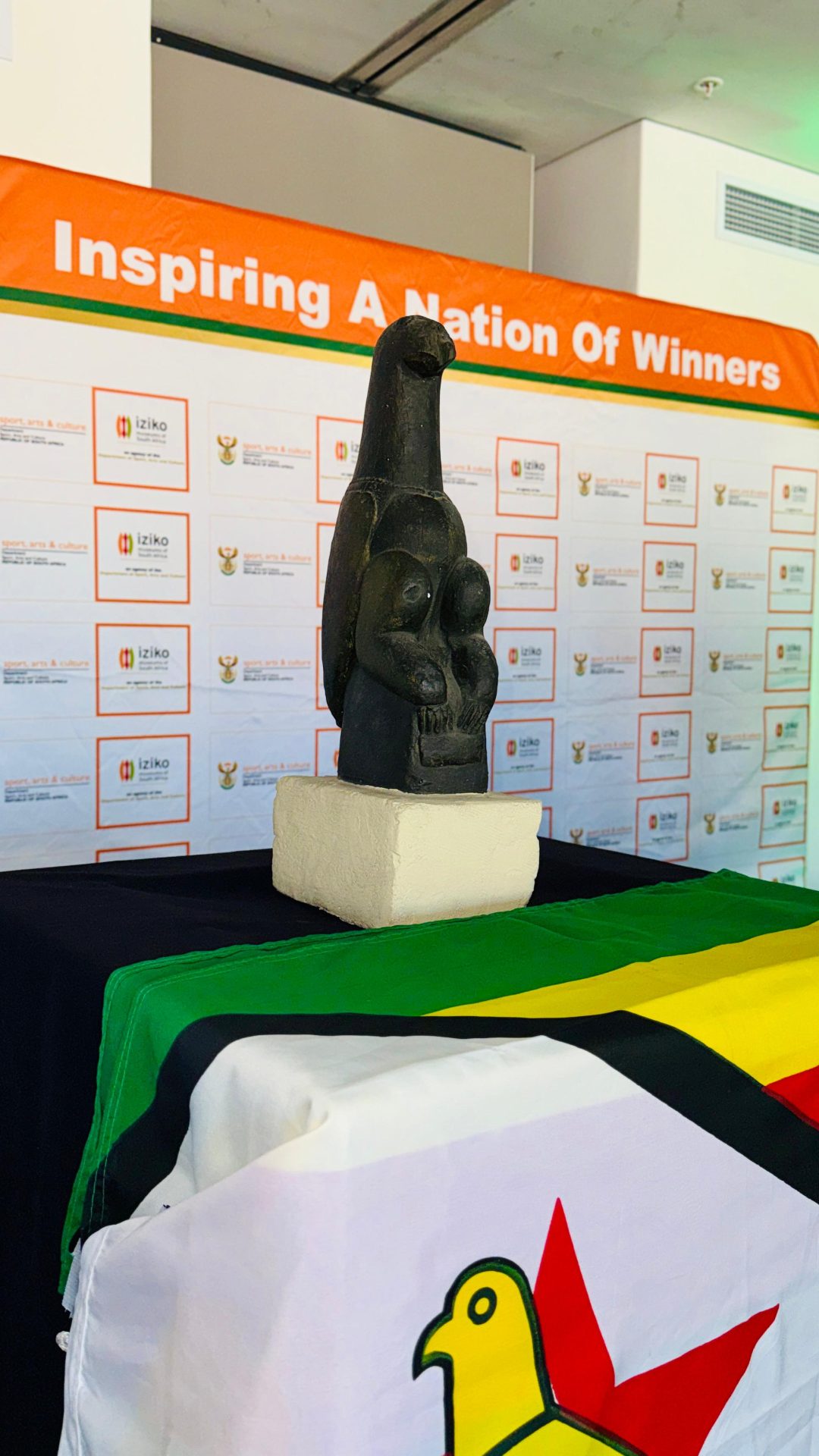
ZIMBABWE has received the last Zimbabwe Soapstone Bird of national significance from South Africa, along with eight ancestral human remains, in a historic act of cultural restitution that underscores strengthening bilateral relations.
The return of the artefacts marks a significant milestone in the preservation and restoration of Zimbabwe’s cultural heritage.
The repatriation, undertaken at the instruction of South African President Cyril Ramaphosa, comes as Zimbabwe marks 46 years of Independence, adding symbolic weight to ongoing efforts to reclaim heritage lost during the colonial era.
The Zimbabwe Bird, carved from soapstone centuries ago at the ancient city of Great Zimbabwe, is widely regarded as a powerful emblem of the country’s rich cultural heritage and identity.
Historians note that the sculptures, dating back to between the 11th and 15th centuries, once stood as guardians of a thriving African civilisation.
However, during the late 19th century, several of these artefacts were taken from Zimbabwe amid colonial plunder and dispersed across the globe. Since attaining independence in 1980, Zimbabwe has engaged in sustained diplomatic efforts to recover these national treasures, with many of the soapstone birds gradually returning home.
The latest repatriation is seen as the final and most significant of the eight birds, arriving more than four decades after independence and nearly 140 years since the first bird was taken and sold to colonial figure Cecil John Rhodes.
South Africa’s Minister of Sport, Arts and Culture, Honourable Gayton McKenzie, described the repatriation as a moment of justice, memory, and healing. He highlighted the painful history surrounding the removal of ancestral remains, some of which were taken from graves and stored in institutions for over a century without regard for cultural or spiritual significance.
Honourable McKenzie underscored that the return of the remains is a restoration of dignity to families and communities, noting that some of the individuals were leaders and ancestors whose identities were erased during colonial documentation.
Deputy Chief Secretary in the Office of the President and Cabinet Reverend Paul Damasane said the occasion reflects the deep historical ties between Zimbabwe and South Africa, rooted in a shared past of struggle and solidarity.
He emphasised that the repatriation aligns with international and continental frameworks, including those of UNESCO and the African Union’s Agenda 2063, which advocate for the preservation and return of African cultural heritage.
Reverend Damasane further noted that the initiative highlights the commitment by President Dr Emmerson Mnangagwa and President Ramaphosa to address historical injustices through strengthened diplomatic and cultural cooperation.
The South African government says the gesture reaffirms its resolve to work closely with African nations to ensure heritage removed during colonial times is returned to its rightful communities, contributing to healing and the restoration of African identity.

