



Story by Wellington Makonese
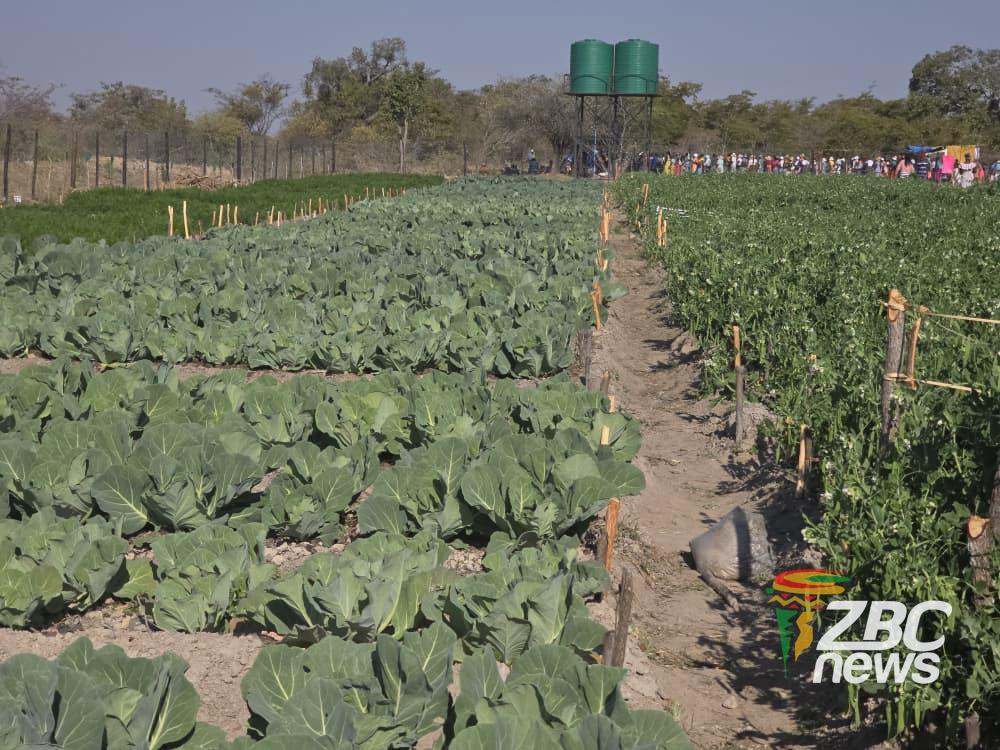
ZIMBABWE’S rural industrialisation drive is gathering pace under the Rural Development 8.0 Model and the National Development Strategy Two (NDS2), with one-hectare, solar-powered Village Business Units (VBUs) linking smallholder farmers to formal markets.
The production hubs are enabling year-round farming, strengthening food security and creating sustainable income opportunities for rural communities.
In Midlands Province, Chiwundura now has 16 Village Business Units, bringing the provincial total to more than 200 as Government works towards establishing 35 000 VBUs nationwide.
Communities that once relied largely on subsistence farming are increasingly embracing commercial agriculture, with the VBU model emerging as a key pillar of the Food Security, Climate Resilience and Rural Transformation Cluster under NDS2.
Beneficiaries say the initiative has transformed livelihoods and local economies.
“We want to thank the President for this initiative. With solar-powered boreholes, we farm all year round, and within a week I can collect up to US$40 in profit,” one villager said.
Another beneficiary said the programme had shifted communities towards market-oriented production.
“We are no longer just farming to feed our households; we are producing directly for the market, earning a steady weekly income and creating local jobs for local youths.”
A third beneficiary added:
“This has transformed our entire community model, shifting us permanently from subsistence agriculture to running an actual business.”
Each Village Business Unit combines horticulture, grain production, nutrition gardens and access to clean water, creating diversified production systems that enable communities to retain greater value from their produce.
Agriculture Extension Officer Mrs Beauty Maguneyi said the strategic positioning of the units near major roads has improved market access.
“On these one-hectare standardised plots, the strategic location near major roads gives our farmers direct access to buyers. Farmers are consistently cashing out upwards of US$40 a week per household, turning what used to be informal gardens into fully registerable, profitable micro-enterprises.”
The programme is also being expanded beyond crop production to position rural households as active participants in Zimbabwe’s agricultural economy.
Chiwundura legislator Honourable Sleiman Kwidini said the initiative reflects President Dr Emmerson Mnangagwa’s vision of commercialising rural agriculture.
“This is President Mnangagwa’s vision: transforming nutrition gardens into viable commercial business entities. From high-yield horticulture to clean water points, this is about ensuring development reaches all 35 000 villages. When communities produce, process and market locally, capital stays in the village and fuels our national growth.”
President Dr Emmerson Mnangagwa said rural industrialisation remains central to inclusive national development.
“The Second Republic is accelerating the rollout of the rural industrialisation agenda as a key pillar for inclusive national development. Through Village Business Units and promoting the ‘Dam as an Economy’ concept, we are taking opportunities, industries and markets directly to our communities. We will continue to implement programmes to equip women and youth with knowledge and competencies required for them to meaningfully participate in the modern local and global economy.”
The Village Business Unit programme has become a cornerstone of the Second Republic’s decentralisation agenda, supporting rural industrialisation while advancing Zimbabwe’s Vision 2030.

