



Story by Abigirl Tembo
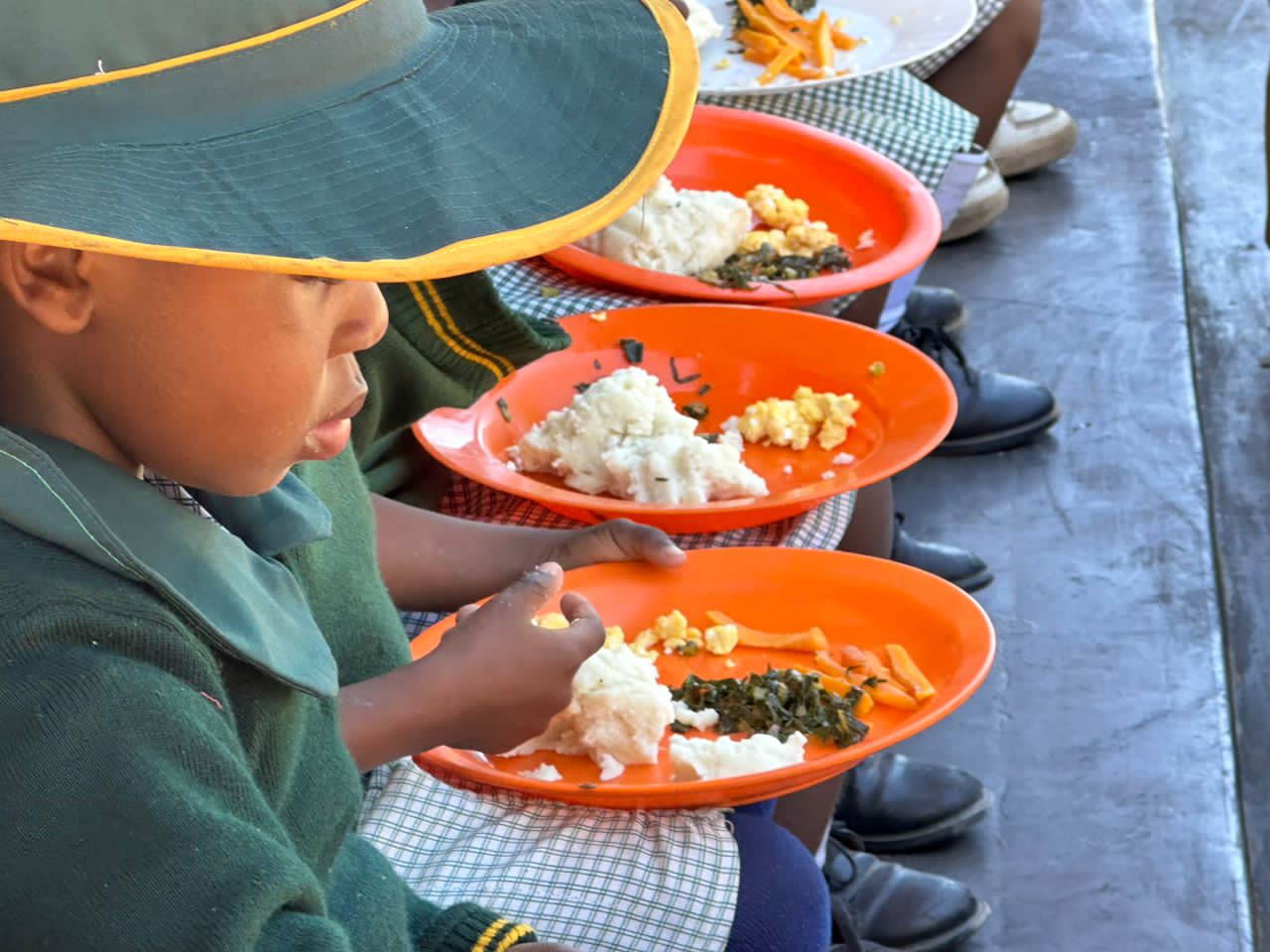
Government’s school feeding programme is providing critical support to vulnerable learners across the country, shielding them from malnutrition and the devastating impact of the El Nino-induced drought.
In a post-cabinet media briefing this Tuesday, government announced a cumulative total of 3 859.15 metric tonnes of maize have been collected under the Emergency School Feeding Programme.
The far-reaching initiative will ensure thousands of children receive nutritious meals, mitigating the impact of drought on education.
Among the beneficiaries is Nyamhuka Primary School in Nyanga, where the programme has been a resounding success since 2021.
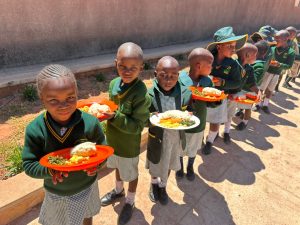
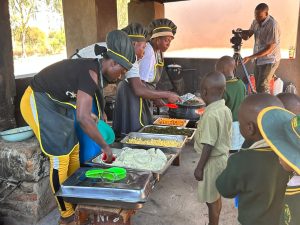
Nyamhuka Primary school Principal, Dr. Doit Chikanyau told the ZBC News, “We have been doing the schools feeding programme since 2021. We are feeding ECDA to Grade 3 at the moment, but we intend to feed the whole school provided we have enough grain of which we have already been given the allocation for grain from Social Welfare. So we will be feeding the whole school. For now, we are feeding 664 learners.:
She added, “We embarked on a number of projects since we learnt from our district schools inspectors that we are supposed to embark on what we call the Brazilian Model, whereby we need to produce our own food in the school environment, so in this school we have got a nutritional garden where we are growing a lot of vegetables. We also practice smart farming where we are producing vegetables as well we also have rabbitry. We also do layers and broilers. Also parents chip in. We have been able to sell from the garden and the money from there is sustaining the school feeding programme. The feeding programme helps to prevent absenteeism, it has also improved their general outlook. A child who is well-fed can be seen from the skin and how they perform.”
Recent statistics from the Zimbabwe Livelihoods Assessment Committee Report, reveal a concerning nutritional imbalance among children in Nyanga District.
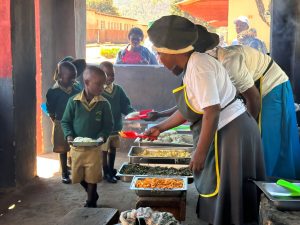
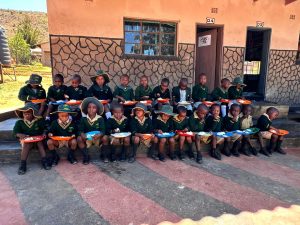
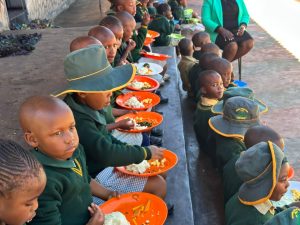
While 11% are overweight, a significant 5% are underweight, and thousands more suffer from micronutrient deficiencies, thus the school feeding programme aims to curb malnutrition rates.
Nyanga district nutritionist, Ms Ennesy Makaure said, “In Nyanga district we just started rolling out the school nutrition programme with 34 schools that are implementing thats 10 secondary schools and 24 Primary schools. We have sadza on the menu, but then the relish alternates from vegetables to beans and sometimes meat sources when they do get them and we are hoping that every child gets a hot balanced meal every other day at school, but because of resources, you find that some schools can actually only manage two or three meals a week.
“We have a triple burden in Nyanga – we have overweight children, we have underweight children and some with micronutrient deficiencies, but according to the Zimbabwe livelihood assessment of 2024, our overweight is around 11%, underweight is around 5%. So we are aiming at producing meals so that we curb the undernutrition rates, where we want to make sure that children get enough starches, the pulses at least they get a four star diet at school and then for overweight, we have physical activity embedded in the school nutrition programme so that every other child gets some activity so that they get normal BMIs at the end of the day,” she said.
Guided by the National Development Strategy One, government has since put in place Food and Nutrition Security Committees to address challenges of malnutrition in each district.
National Food and Nutrition Security Committee Chair, Mrs Nesta Gumbo noted, “We have the National Food and Nutrition Security Committee at the top and we have the sub-national committees starting from the provincial committees and then the district committees. So these committees, the District Food and Nutrition Security committees were put in place across the country and their main mandate is to drive the Food and Nutrition Security Agenda and through implementing food and nutrition interventions.
“I have been to Nyamhuka School where I also saw very good projects which are being done by the school, which speak to the nutrition security. And I have also seen that they are inculcating business skills, life skills in kids. And this is all what we want. And this is what we expect these committees to be doing. And the presence of different members from the different ministries in these committees, like when we went to that school yesterday. It shows the people are working together.
“There is a multi-sectoral approach to doing things and this what we call multi-sectoral planning, multi-sectoral implementation, multi-sectoral monitoring, multi-sectoral evaluation and trying then to look at the gaps and try to close the gaps as a team. So the district food and nutrition security committees, I think they’re doing a great job and we are happy as a national committee that what we are pushing for is being done at the grassroots level.”
From rural Nyanga to urban Harare, Bulawayo, and beyond, the programme’s reach extends to all 10 provinces, demonstrating government’s commitment to food security, education and the well-being of Zimbabwe’s most vulnerable populations.

