



Story by Oleen Ndori
President Emmerson Mnangagwa says government will continue to provide a conducive environment to promote innovation that drives industrialisation to achieve the goals of the National Development Strategy One.
This is buttressed by the introduction of the heritage-based Education 5.0 model, which seeks to promote home grown solutions to various challenges and influence the socio-economic growth of the country towards vision 2030.
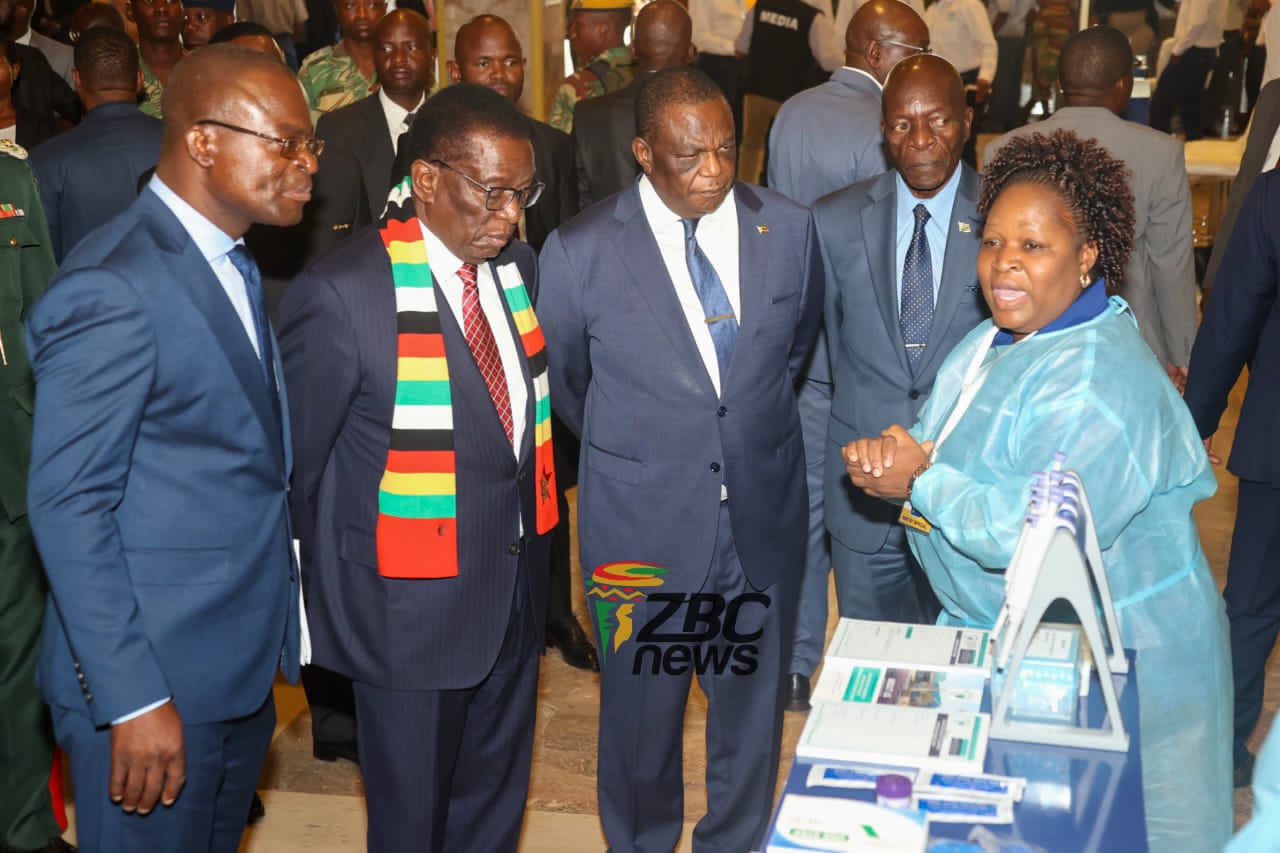
The inventions are being showcased at the second 2024 Presidential Innovation Fair in Harare, where President Mnangagwa toured stands that include institutions of higher and tertiary education, secondary schools and private sector stands.


He was accompanied by Vice President General (Retired) Dr Constantino Chiwenga.
The President witnessed various innovations being undertaken that range from medical, mining and agricultural technological innovations.
As he addressed delegates, President Mnangagwa said government is committed to providing an accommodating environment and a regulatory framework that promotes innovation.
“As Zimbabwe, we are running our own race for the benefit of none but ourselves, the people of this great nation. This is the rich legacy bequeathed to us by our forefathers and the great emperor, Munhumutapa. Ladies and gentlemen, comrades and friends, my government will continue to provide a conducive cooperative environment for start-ups and industry in general through fostering a vibrant innovation ecosystem. This includes supportive legislation as well as support for venture capital through stimulating venture capital markets. I am enthused that our universities and colleges are playing their part in the development of rural industry systems.
“Congratulations. Our communities are now benefiting from supplying a deficit feedstock for processing plants for various new industries such as marula. Going forward, ideas and products being produced at our various innovation hubs and industrial parks should graduate from the concept and the prototype stage to fully commercial products which are readily available in our local shops and those in the region,” he said.
The President also spoke on the benefits the country has accrued since the introduction of Innovation Hubs.
“This innovation flow, therefore, allows us to keep stock of the progress we are making. The competition associated with national fairness celebrates and rewards innovations spanning across a broad spectrum of society from all 10 provinces of our country. These include universities, tertiary institutions and government agencies and the private sector as well as individuals and students. The physical infrastructure supporting innovation, such as innovation arms, industrial parks, agro-innovation parks, centres of excellence and factory plants at state universities, colleges and scientific agencies across the country’s 10 provinces have proved invaluable in innovations registered to date.


“I am pleased that the products, goods and services being developed are answering to the needs of our communities and the economy as a whole. Well done, well done, students. This is commendable. Through the innovations we are witnessing, you have distilled the meaning of Nyika Inovakwa Nevene Vayo. Well done. These must help the nation to unlock value from our abundant natural resources. Additionally, we still need to enhance value chains in marketing, agriculture, drug discovery and advanced technologies among other areas, including in the social service delivery. If not, is the increasing number of businesses and state-owned enterprises that are seeking solutions from universities and colleges,” he said.
With government pushing towards public private partnerships, President Mnangagwa called on private players to contribute towards Zimbabwe’s innovation drive.
“The private sector is welcome to take advantage of the supportive environment and networks offered by the innovation hubs and industrial parks. It is in the best interest of the industry to continually innovate for increased competitiveness in the provided environment. Further, partnerships with other higher learning institutions and industries from the region and beyond should be strengthened towards expanding our horizons and learning best practices.”
The establishment of innovation hubs and agro industrial hubs has resulted in not only the incubation of the best ideas in the country, but has witnessed institutions of higher learning creating synergies with industry towards not only urban, but rural industrialisation.

