



Story by Abigirl Tembo, Health Editor
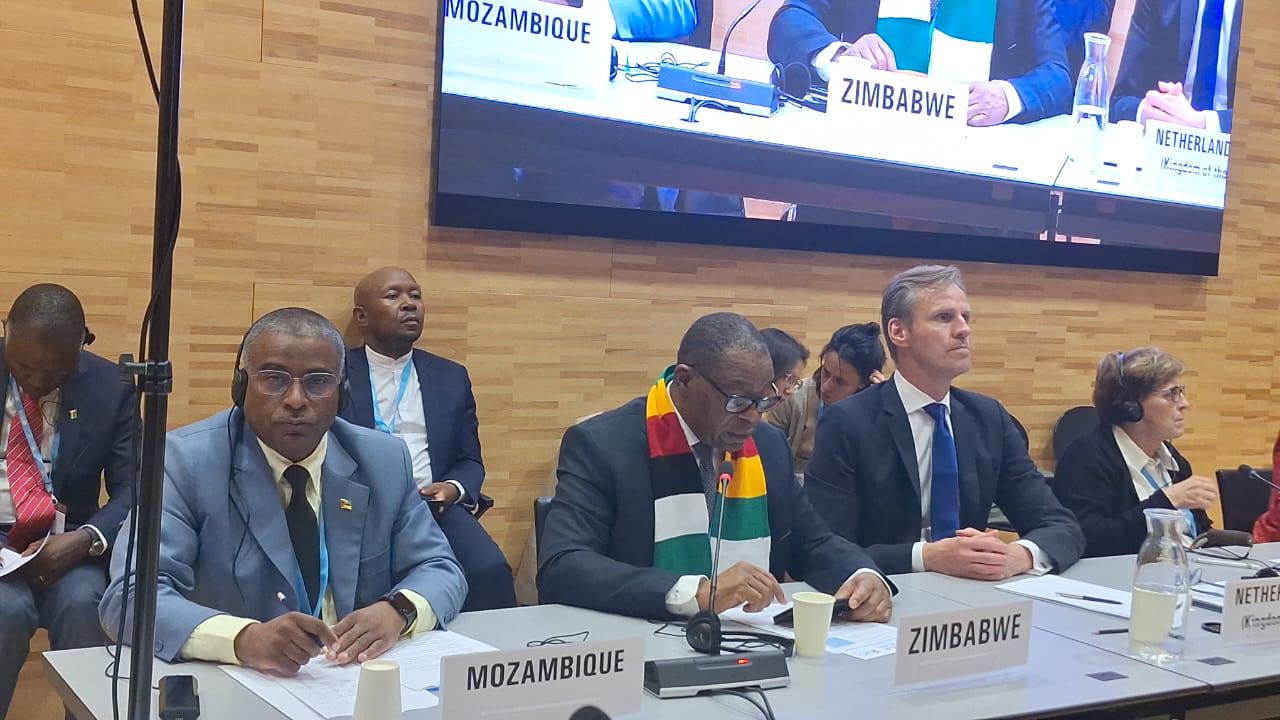
GENEVA – GLOBAL leaders convened a high-level multi-sectoral dialogue to discuss accelerating access to long-acting HIV prevention methods on the sidelines of the World Health Assembly in Geneva.
The session, titled “Accelerating Access to Long-Acting Prevention Options through Sustainable Prevention Systems and Financing,” brought together ministers of health, global health institutions, pharmaceutical companies, and community representatives, all united by a singular goal, to end AIDS.
Among the keynote speakers was Minister of Health and Child Care, Dr Douglas Mombeshora, who shared significant progress from Zimbabwe in the rollout of next-generation HIV prevention and treatment strategies.
“Zimbabwe has introduced new HIV prevention methods, such as the injectable cabotegravir (CAB-LA) which provides a long-acting injectable prevention option for people at high risk of HIV. The country has also improved treatment adherence, particularly among children living with HIV, through the rollout of child-friendly, ritual-based paediatrics, and fixed-dose combination therapies.
We have integrated family planning services, sexually transmitted infections testing and treatment, and HIV prevention and treatment at health facilities, making it easier for individuals to access comprehensive care,” Dr Mombeshora said.
“Long-acting HIV prevention methods are expected to play a significant role in sustaining reductions in new HIV infections, particularly among high-risk populations, such as adolescent girls and young women. These methods offer several advantages, such as the ability to reduce the risk of HIV infection.
“There are also many advantages over traditional daily oral pre-exposure prophylaxis, and these advantages include improved adherence, increased effectiveness, and discrete and convenient long-acting methods can be administered via injection or implant, providing a discrete risk reduction of the disease.”
These advancements are expected to reduce new infections significantly if scaled equitably and sustainably, but the road to global access according to UNAIDS Executive Director Winnie Byanyima, remains fraught with challenges.
“The HIV response is in crisis. Donors are walking away at a crucial moment. If we continue down this path, we could see an additional 6 million HIV infections and 4 million AIDS-related deaths by 2029. Put simply, we will lose control of the AIDS pandemic. I am old enough to remember the darkest days of this pandemic, I do not want to go back. We have new, long-acting HIV prevention tools that could fundamentally reshape the HIV response, putting us back on the right path. If we take a moon-shot approach to scale-up long-acting medicines, and make them available and affordable to people in every country, including middle-income countries, where there is currently a huge access gap. We should make full use of the whole prevention toolkit alongside it, from education, harm reduction and condoms to oral PrEP.”
Zimbabwe has made significant strides in its HIV response, reducing new infections by nearly 40% from 40 900 in 2016 to 24 900 in 2020.
Moreover, the country has surpassed the UNAIDS 95-95-95 targets, achieving impressive milestones: 97% of people living with HIV know their status, 99% of those diagnosed are receiving treatment, and 96% of those on treatment have achieved viral suppression.

