



Story by Abigirl Tembo, Health Editor
SPEAKERS at the Climate and Health Africa Conference underway in Harare have sounded the alarm on climate change’s deadly impact on African health, calling for a united front to tackle the crisis.
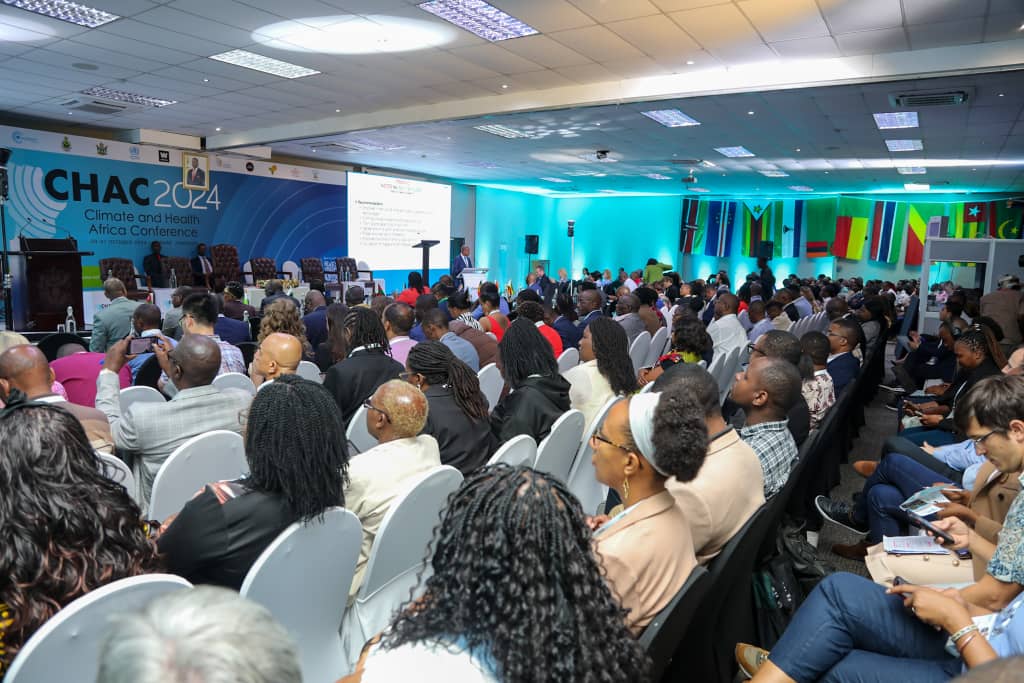
The inaugural Climate and Health Africa Conference, which officially opened in Harare this Wednesday, brought together over 500 individuals from 47 countries to address the devastating impact of climate change on Africa’s health and survival, with several speakers emphasizing Africa’s vulnerability to climate change.
“Africa is the continent hardest hit by climate change. Yet, it has the fewest resources to cope, and has received minimal support from those responsible for this crisis. Africa has limited power globally to aspect itself, with little representation in international forums on climate change and health. But we have faced such a negative war. The same dynamics marked colonialism, slavery, and human apartheid.
“Today, we convene here in Harare with a united resolve to address the climate crisis that strikes at the very core of health and survival across Africa. This conference signifies not just a gathering of minds, but a bold march toward knowledge and resilience in an African freedom agenda. The great Zimbabwean civilization, calls upon us to channel the strength of our ancestors, who thrived, trained, and mastered the very land we now strive to preserve against the ravages of climate change. Today, we stand not in desperation, but in determination. Just as our ancestors confronted plagues, droughts, and pandemics, we now rally to confront this global crisis,” said Climate and Health Africa Conference chairperson,
Dr Fortunate Machingura.
“The climate crisis threatens to undo Africa’s progress made in the past 50years. Your presence today represents a testament to the high level of political engagement and leadership that will ensure Africa’s voice is heard in the climate forum. African nations contribute less than 4% to global carbon dioxide emissions.
“But our content bears much negative impact. We need urgent action to build resilience and reduce the volatility of our systems in order to save the African continent and key priority actions include translating international agreements on climate change and health into national policies, strategies and actions. And mobilizing resources to implement holistic and coordinated solutions to help children, but also and especially in the sectors where the determines on how to do it,” explained Director Healthier Populations Cluster, WHO Regional Office for Africa, Dr Adelheid Onyango.
The Minister of Health and Child Care Dr Douglas Mombeshora and Acting Minister of Environment, Climate and Wildlife Professor Paul Mavima described climate change as the world’s greatest threat to humanity, posing a fundamental threat to human health.
“Climate change is the world’s greatest threat to humanity. Threatening to reverse the economic progress and improve our people’s health and prosperity. It poses a fundamental threat to human health. Through extreme weather events, such as droughts, floods, spread of infectious diseases, pose insecurity and is a threat for people, significantly impacting the function of their homes. We are the guardians of Africa’s future.
“We charge you with the commission of safeguarding the health, prosperity, and dignity of our people, who are already enduring the reluctance and the consequences of climate change. Today, we are not here merely to build our nation, but to ease the hundreds of millions in this struggle. Let us not lose weight. Our mandate is urgent and our responsibility is paramount, said Dr Mombeshora.
“Africa is experiencing significant changes in climate patterns characterised by increased temperatures, erratic rainfall, and extreme weather events such as droughts, tropical cyclones, and flooding. The impact of climate change is a threat to our beloved motherland. Zimbabwe and much of southern Africa are affected with the recent 2023-2024 El-Nino induced drought trap that has resulted in food insecurity and loss of livestock This is a clear testimony of the real threat to our meeting socio-economic development aspirations. While efforts are in various stages in the global regional and national levels, I am excited about their proactiveness of the health sector to which we embrace climate change.
“I am excited to share that Zimbabwe launched its National Climate Change Adaptation Plan for 2024-2030, earlier this month. This action plan embodies our commitment to building resilience and reducing the vulnerability to climate impacts at both key socio-economic levels,” noted Professor Mavima.
The conference is expected to produce the Harare Declaration on Climate and Health in Africa, a call to action and commitment to a legacy that will guide policy action and engagement beyond the conference.

