



Story by Kenias Chivuzhe
PUBLIC-PRIVATE partnerships are accelerating school infrastructure development in Zimbabwe, with the government expressing confidence that the country’s school infrastructure deficit will be eliminated by 2030.
Authorities say continued collaboration between the public and private sectors is expanding access to quality learning facilities while addressing infrastructure gaps nationwide.
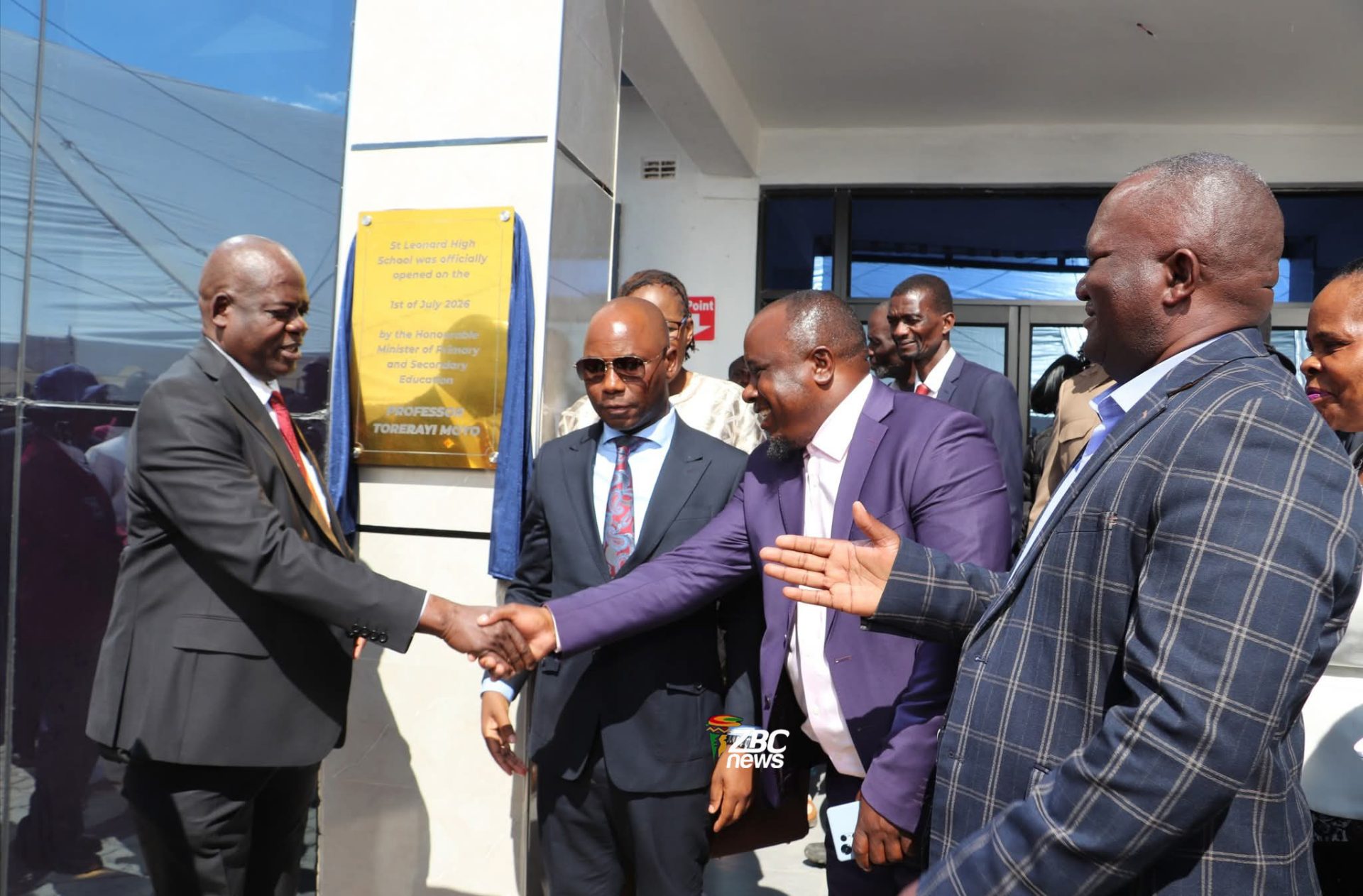
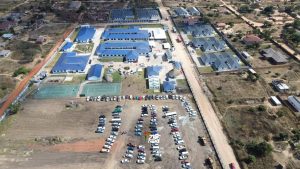
The latest milestone is the commissioning of St Leonard Academy in Goromonzi on Wednesday, where parents and community members welcomed the establishment of a modern learning institution.
Residents praised the school’s infrastructure, highlighting its technology-driven classrooms and on-site health facilities.
“We appreciate the quality of infrastructure here. The school infrastructure is in line with the global technological advancements,” a community member said.
“The school has a state-of-the-art health facility. This has brought health services closer to the people and students,” a resident said.
“We are moved by the quality of the infrastructure. The school has interactive boards in their classrooms which are loaded with textbooks needed by teachers and students,” a parent said.
St Leonard Group of Schools Principal Professor Golden Makaka said the institution was designed to meet international standards, with modern classrooms, boarding facilities and digital learning technologies.
“The infrastructure we have is unique. It takes into account the international standard of classes, dormitories and even the kitchen facilities. Our classrooms are designed to cater for 25 students, and each classroom has a smart board. The smart board makes it possible for students to attend lessons remotely if the student is not able to attend the school physically,” he said.
St Leonard Academy proprietor Dr Leonard Mukumba said the project forms part of a broader vision to establish modern schools across the country.
“My vision is to construct a lot of schools in the provinces. I want to construct state-of-the-art and second-from-none in the country,” he said.
Government said growing private sector participation is complementing national efforts to expand access to education infrastructure.
Mashonaland East Minister of State for Provincial Affairs and Devolution, Advocate Itayi Ndudzo, said the Second Republic’s development agenda had encouraged wider participation in infrastructure development.
“Long back, the construction of schools was a preserve of the government and churches. When President Mnangagwa took office, he spoke of the need for all Zimbabweans to contribute towards the growth of the country. These include schools, health facilities and roads, and Dr Mukumba took heed of the clarion call,” he said.
Minister of Primary and Secondary Education, Honourable Torerai Moyo, said government was scaling up school construction to address a deficit of about 1 800 schools.
“In 2025, we built 120 schools; in 2026 our target is to build a minimum of 150 schools. We are building many schools because we have a deficit of 1 800 schools. Whilst we are targeting 150 schools, we got a partner who is going to contribute towards the establishment of 1 000 schools starting this year. By the time we get to 2030, we will not speak of any deficit.”
The commissioning ceremony was attended by several Cabinet ministers, including Honourable Lovemore Matuke, Engineer Ezra Chadzamira, Dr Jenfan Muswere and Advocate Itayi Ndudzo.

