



Story by Gay Matambo
CLIMATE-smart irrigation schemes are transforming livelihoods in Chimanimani District, with farmers in Nyanyadzi now recording increased agricultural production and improved incomes despite recurring droughts and unpredictable weather patterns.
Government has identified irrigation development as a key strategy in mitigating the effects of climate change in arid regions, where reliance on rain-fed agriculture has often resulted in poor harvests and food insecurity.
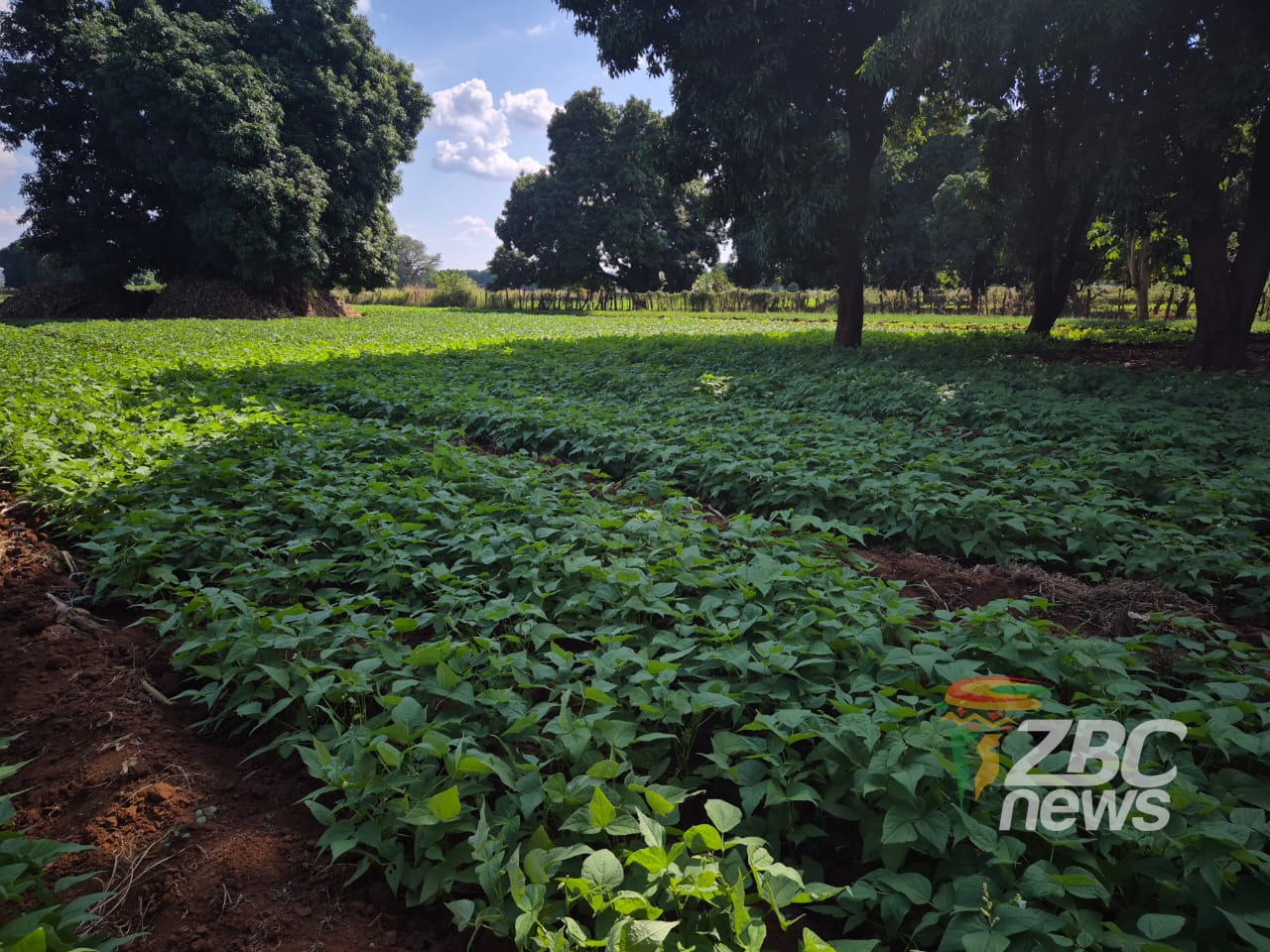
In Nyanyadzi, however, irrigation infrastructure has turned the area into a thriving production hub for sugar beans and tomatoes, providing sustainable income for hundreds of households.
Farmers say the shift to climate-smart agriculture has enabled them to farm throughout the year, strengthening resilience against prolonged dry spells while improving household livelihoods.
“In the past, once the rains stopped, everything stopped, and we would spend months just staring at dry fields waiting for the next season. Now, with climate-smart irrigation, winter is no longer a dead season for us. We are planting and harvesting all year round, ensuring there is always food on the table and money in our pockets,” a farmer said.
Another farmer said the irrigation scheme had transformed agriculture from a subsistence activity into a viable business venture.
“We used to struggle just to pay school fees for our children, but this year’s tomato crop has given us real financial freedom. We are no longer just farming to survive; we are running viable businesses right here in Nyanyadzi. This irrigation system is our shield against climate change; it has given us the power to control our own harvest regardless of the weather outside,” the farmer said.
Reliable water supplies have also opened new market opportunities for smallholder farmers, including cross-border trade.
Tomato farmer Mr Gudyanga said the scheme has enabled farmers to target lucrative export markets in neighbouring Mozambique.
“Instead of just growing for local roadside markets, we are now producing high-quality tomatoes targeted directly at cross-border buyers from Mozambique. The demand over the border is huge, and because we have reliable irrigation, we can supply them consistently when prices are at their peak,” he said.
Government is currently implementing an aggressive irrigation rehabilitation programme aimed at reducing the country’s dependence on erratic rainfall patterns.
The initiative includes the rehabilitation of more than 400 smallholder irrigation schemes nationwide, while authorities are targeting the expansion of irrigated land to nearly 496 000 hectares by 2030.
Permanent Secretary in the Ministry of Agriculture, Mechanisation and Water Resources Development, Professor Obert Jiri said improved dam water levels following a good rainy season have strengthened the country’s irrigation capacity.
“Our dams are currently holding healthy water volumes owing to the excellent rains from last season, which have directly injected life into our nationwide irrigation infrastructure. This is a game-changer for our rural industrialisation drive. With guaranteed water security, the government is stepping up its accelerated resuscitation programme to bring more idle schemes back into full, commercial production,” he said.
Government says irrigation development remains central to its rural industrialisation agenda and broader efforts to enhance national food security in the face of climate change.

