



Story by Oleen Ndori
ZIMBABWE’S significant progress in enhancing water and sanitation across the country has garnered global attention at this year’s Sector Ministers’ Meeting in Madrid, Spain.
The Sector Ministers Meeting in Madrid has highlighted the urgent need to address the negative impact of climate change.
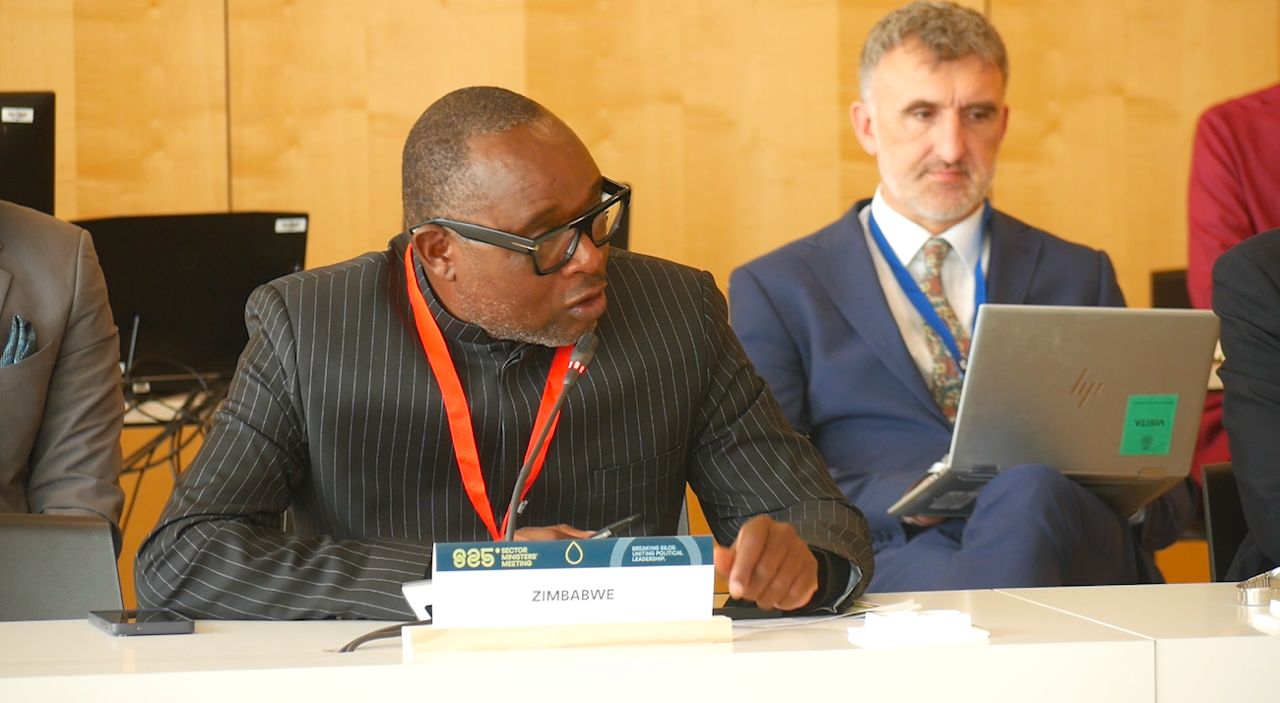
Representing Zimbabwe, Deputy Minister of Agriculture, Lands, Water, Fisheries, and Rural Development, Honourable Davis Marapira, outlined how Zimbabwe has made significant strides in improving water availability with initiatives such as large-scale dam construction, borehole sinking, and village business units, positively impacting many lives at the grassroots level.
“A good example which was key on the projects in Zimbabwe under the leadership of H.E Mnangagwa is the Presidential Borehole Drilling, which has transformed the lives of many rural and vulnerable communities, here in Madrid fellow government official commended such interventions and we believe the engagements here will help buttress what the government is currently implementing to improve water and sanitation in Zimbabwe,” he said.
Fellow ministers from Nigeria, Uganda, Croatia and Brazil applauded Zimbabwe’s interventions.
Former President of Chile, Dr Michaell Bachlet and UNICEF’s Director for Water, Sanitation, and Hygiene, Dr Cecilia Sharp, stressed the importance of enhancing water and sanitation as a critical strategy for combating poverty worldwide.
“At this meeting we are doing something essential, embracing integration not as a mere slogan but as a way of working, our commitment to human rights only gain coherence when we act in an integrated way,” he said.
UNICEF Director for Water, Sanitation, and Hygiene, Dr. Cecilia Sharp, noted, “When a disaster occurs globally, vulnerable groups in communities tend to suffer the worst. Ministers here present are at the centre of this needed transformation; interventions must be driven by government anchored national policies for sustainable implementation.”
The plenary emphasised that integration across water, sanitation, hygiene services, and climate resilience is not only an operational necessity, but a political imperative that must be reinforced with robust policies for sustainability.

