



Story by Oleen Ndori, Foreign Desk Editor
HARARE-THE Southern African Development Community (SADC) has called for the intensification of conservation efforts as a means of advancing regional integration, sustainable development, and environmental protection.
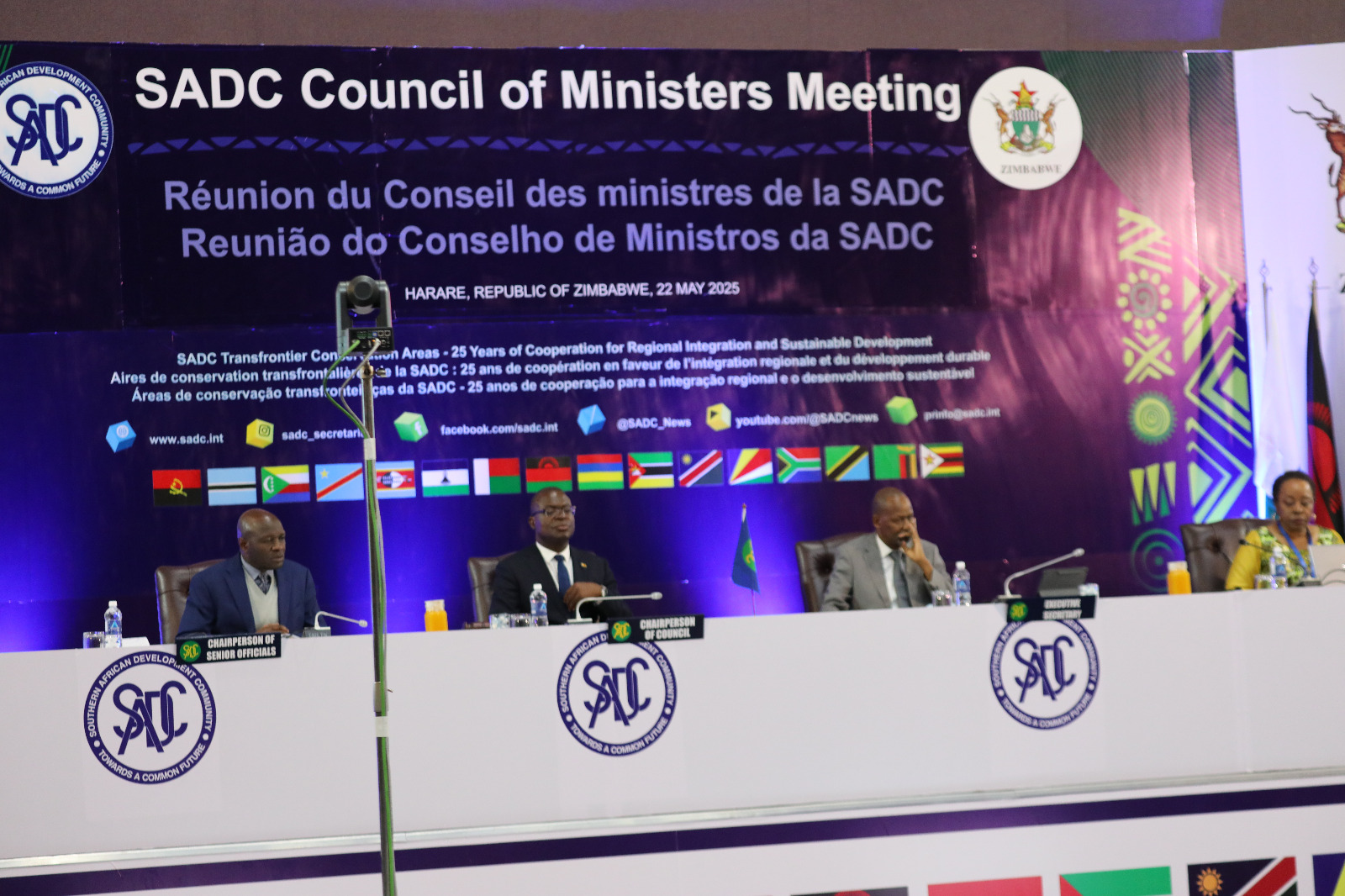
This call was made during the Ministerial Meeting on Transfrontier Conservation Areas (TFCAs) in Harare ahead of the Heads of State and Government Summit scheduled for this Friday.
The gathering also commemorates 25 years since the inception of the SADC Transfrontier Conservation Areas Programme an initiative widely regarded as a landmark in collaborative environmental stewardship across borders.
SADC Executive Secretary, His Excellency Elias Magosi, addressed delegates during the Council of Ministers meeting on Thursday, underscoring the regional benefits derived from joint natural resource management.
“Over the past 25 years, the TFCAs have proven to be a transformative approach in addressing conservation challenges whilst boosting the socio-economic contribution of natural resources at both national and regional levels. The concept recognises that joint management of shared resources fosters peace and stability, ensures sustainable utilisation, and creates economic opportunities for local communities enhancing food security, nutrition, job creation and ultimately livelihoods,” he said.
Chairperson of the SADC Council of Ministers, Professor Amon Murwira, highlighted the TFCAs as a shining example of regional cooperation in action, calling it a legacy that member states are duty-bound to protect and strengthen.
“The Trans-Frontier Conservation Areas Program stands as a monument to regional solidarity in action. It is a testament to what can be accomplished when nations unite in purpose and vision for a common well-being. When we choose collaboration over competition and sustainability over short-term gains, this is a long game. It’s not a short game. It tells a story of ecosystems restored, ecosystems managed, ecosystems sustained, livelihoods transformed, and borders reimagined as conduits for prosperity and peace.
“It is a legacy we are duty-bound to safeguard and to strengthen. Distinguished delegates, we are honoured to host this summit, a reflection of our steadfast commitment to the regional agenda, regional integration agenda, regional agenda for sustainable development and environmental cooperation,” he said.
He further emphasised that the summit and its conservation agenda are in alignment with Zimbabwe’s Vision 2030, which seeks to transform the nation into an upper-middle-income economy through innovation, environmental stewardship, and inclusive growth.
Meanwhile, Zimbabwe has reinforced its conservation credentials by signing the Memorandum of Understanding on the Conservation of Migratory Birds of Prey in Africa and Eurasia (Raptors MOU) in partnership with the Secretariat of the Convention on the Conservation of Migratory Species of Wild Animals.
This strategic development reflects the country’s commitment to global conservation efforts and the safeguarding of biodiversity across continents.

