



Online Reporter
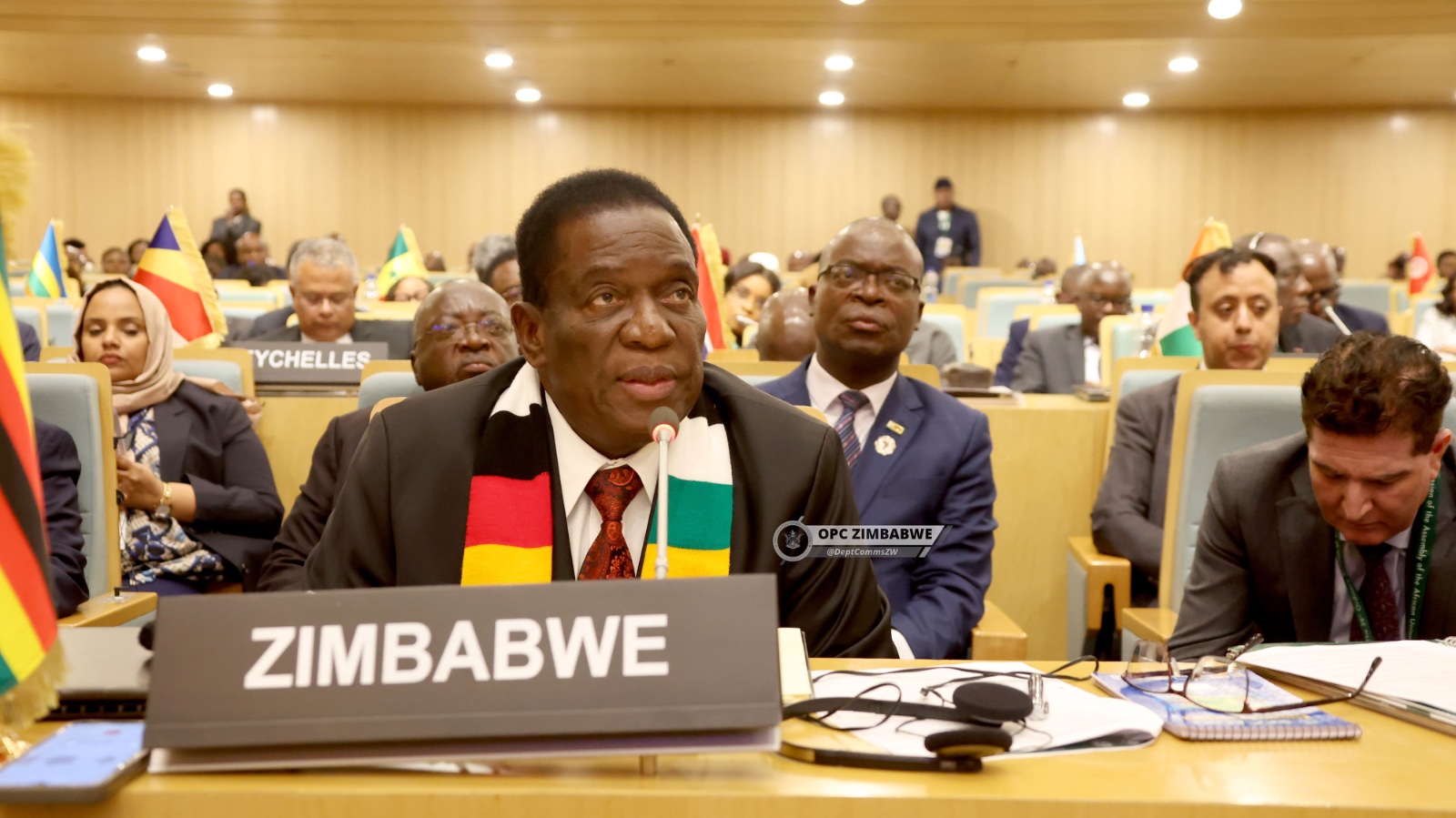
ZIMBABWE has reaffirmed its commitment to international and continental governance standards, transparency and inclusive development at the 35th Ordinary Session of the African Peer Review Mechanism (APRM) Forum of Heads of State and Government in Addis Ababa, Ethiopia.
Addressing the session, President Emmerson Mnangagwa highlighted Zimbabwe remains committed to strengthening fiscal discipline, enhancing transparency in public finance management and promoting inclusive growth that leave no one and no place behind.
“We take note of the detailed recommendations contained in the review report and reaffirm our resolve to strengthen fiscal discipline, enhance transparency in public finance management, promote inclusive growth that leaves no citizen and no place behind and align national policies with continental and global best practices,” President Mnangagwa said.
The President acknowledged the role of Ambassador Aly Houssam El-Din El-Hefny Mahmoud, Lead APRM Panelist for Zimbabwe, in supporting the country-led self-assessment on economic governance and management. He also commended the APRM Review Team for producing an objective, professional and balanced report.
He stressed that Zimbabwe’s development philosophy, “Nyika inovakwa nevene vayo”; a country is built by its own people, combined with the “Zimbabwe is Open for Business” initiative, has accelerated industrialisation, modernisation and economic growth.
On education, he highlighted the Heritage-Based Education 5.0 Model, which integrates local heritage, resources and indigenous knowledge to drive innovation, rural industrialisation, value addition and digital transformation.
The President also addressed historical economic constraints, citing over two decades of sanctions from some Western countries following the land reform programme. He noted that these unilateral coercive measures had “undermined policy effectiveness, restricted access to investment, technology, and international credit markets, and negatively affected ordinary citizens.” Zimbabwe, he said, “deeply appreciates the solidarity shown by SADC and African Union member states in calling for their unconditional removal.”
President Mnangagwa detailed sectoral achievements aligned with APRM objectives:
- Economic Policy and Sustainable Development: Mining reforms have formalised artisanal and small-scale miners, improved access to finance and technology, enhanced safety standards and strengthened environmental stewardship.
- Participatory Governance: Expanded dialogue platforms and digital tools are promoting citizen engagement, evidence-based decision-making and national cohesion.
- Public Financial Management: Implementation of an Integrated Financial Management Information System and enhanced audits have improved fiscal transparency.
- Combatting Financial Crime: Zimbabwe now complies with 37 of 40 Financial Action Task Force recommendations, demonstrating robust measures against money laundering and terrorist financing.
- Regional Economic Integration: Collaboration with SADC, the African Union, the UN, and international financial institutions is being strengthened to drive industrialisation and sustainable development.
- Investment Policy Framework: The Zimbabwe Investment and Development Act (ZIDA) ensures a balance between foreign direct investment, domestic investor empowerment, and community development.
Concluding his address, President Mnangagwa emphasised Zimbabwe’s unwavering commitment to the APRM framework. “We are committed to implementing the recommendations of the review to advance transparency, inclusivity, and sustainable development for the benefit of our people. The APRM embodies African solidarity, peer learning, and mutual accountability,” he said.

