



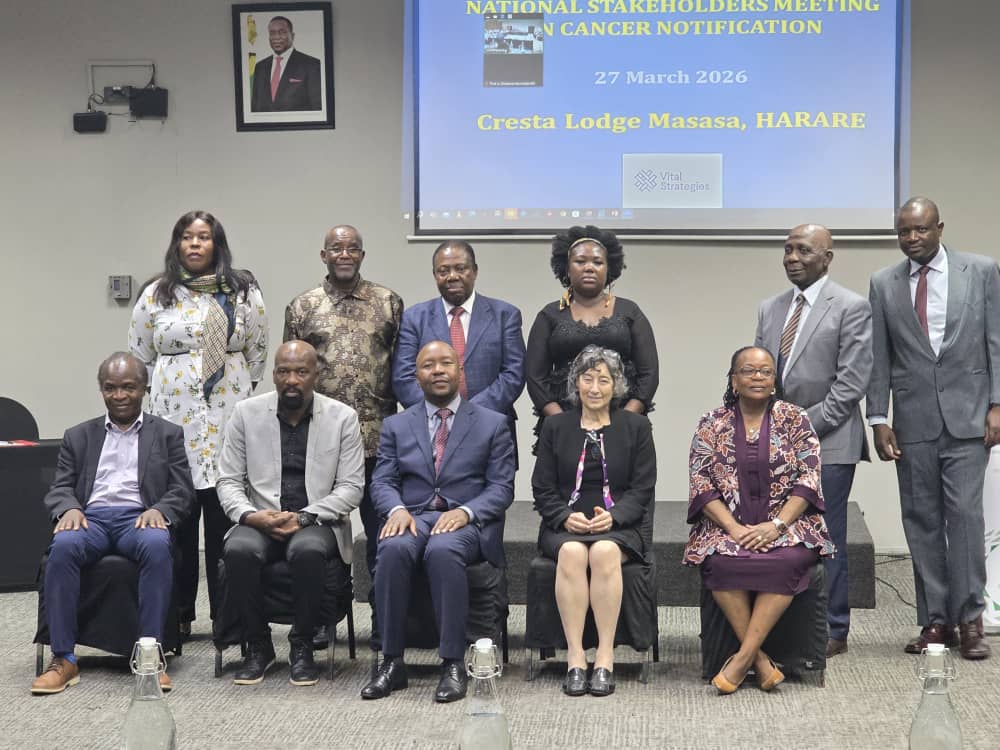
Story by Abigirl Tembo, Health Editor
ZIMBABWE is considering a major policy shift to classify cancer as a notifiable disease, as authorities intensify efforts to respond to a sharp rise in cases.
Health experts say the move will strengthen data collection systems and improve the national response, amid concerns that thousands of cases remain unrecorded due to voluntary reporting.
The National Cancer Registry of Zimbabwe is leading calls for mandatory reporting, warning that current data gaps are limiting effective planning and intervention.
Registrar of the National Cancer Registry, Mr Eric Chokunanga, said making cancer notifiable will enhance compliance across both public and private health institutions.
“We want cancer to be included among the notifiable diseases… once it is legislated that cancer is now a notifiable disease, it makes reporting mandatory… We are seeing a huge rise in new cases of cancer after COVID19. In 2022, we had more than 8 000 new cases, and that is the highest figure that we have recorded in the registry,” he said.
Zimbabwe recorded over 8 000 new cancer cases in 2022, the highest on record with prostate cancer accounting for about 35 percent of cases among men, while cervical cancer remains the most prevalent among women, contributing over 40 percent, followed by breast cancer.
Permanent Secretary in the Ministry of Health and Child Care, Dr Aspect Maunganidze said underreporting is weakening the country’s ability to respond effectively.
“There are still many Zimbabweans, particularly in remote and underserved areas, whose cancer cases are never captured in our national systems. When cases go unrecorded, they become invisible, and invisible problems cannot be adequately addressed.”
Dr Maunganidze said strengthening reporting systems aligns with national priorities under the National Health Strategy and National Development Strategy Two, which emphasise data-driven planning and improved management of non-communicable diseases.
He added that government is exploring formal designation of cancer as a notifiable disease, in line with international best practice, to ensure consistent reporting across all health institutions.
Authorities are also working to integrate a cancer registry module into the District Health Information System (DHIS2) to enhance real-time data collection and coordination.
Health officials say accurate and timely data is critical for improving diagnosis, treatment and patient outcomes, noting that incomplete data undermines effective intervention.
Stakeholders believe making cancer notifiable will improve surveillance, support early detection and guide resource allocation, ultimately saving lives.

