



Story by Fairstars Mukungurutse
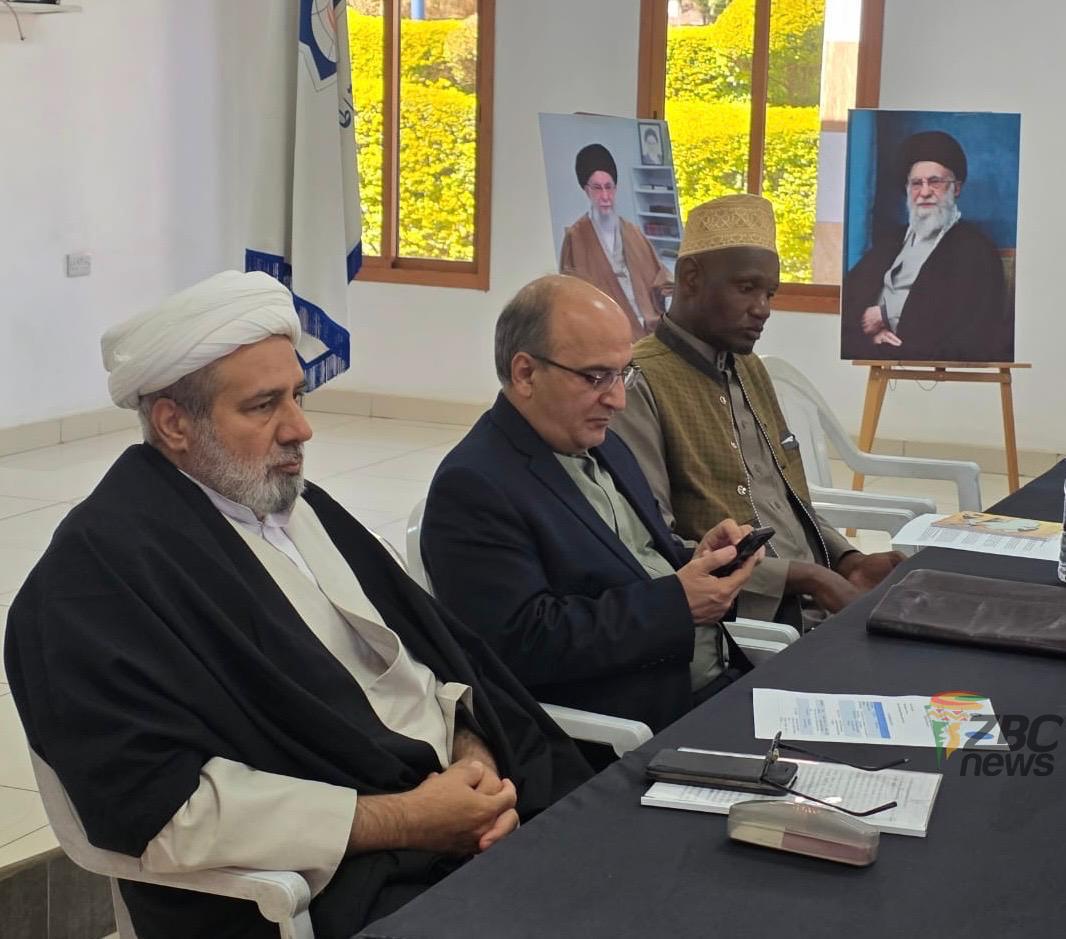
ISLAMIC and Christian scholars gathered in Harare this Thursday for an interfaith conference commemorating the 37th anniversary of the death of Imam Ruhollah Ayatollah Khomeini, founder of the Islamic Republic of Iran.
The event formed part of global commemorations reflecting on Imam Khomeini’s legacy of national independence, resistance to oppression and service to humanity.
Speaking at the conference, Iranian Ambassador to Zimbabwe, His Excellency Amir Hosseini Hosseini, said the dialogue centred on the theme Faith Against Arrogance, highlighting common perspectives within Islamic and Christian theology on global power dynamics.
“The main theme of the dialogue was faith against arrogance, and we sought to explore the common views of Islamic and Christian theology regarding hegemonic powers in the world. The conference was also held to commemorate the 37th anniversary of the passing of Imam Khomeini, the founder of the Islamic Republic of Iran.
“We sought to elaborate on his thoughts and enduring legacy, particularly regarding national self-reliance and confidence in the face of hegemonic powers,” he said.
The Cultural Counsellor at the Embassy of the Islamic Republic of Iran, Dr Ahmad Ali Ghane, said the commemoration served as a reminder of Imam Khomeini’s values and contributions.
“The main purpose of holding this commemoration is to remind us of the noble thoughts and exemplary conduct of a prominent divine leader. By the grace of God and through the efforts of people around the world, his legacy continues to endure long after his passing,” he said.
Islamic scholars at the conference highlighted Imam Khomeini’s contribution to Islamic thought and leadership.
Dr Hamzeh Ali Sheikhtabar Aziz of the International Institute for Islamic Studies said Imam Khomeini’s message transcended religious and national boundaries.
“His message was never exclusive. It was a universal appeal to all who believe in the divine to form a united front against arrogance. He sought to restore identity and dignity to nations that had been made to feel inferior for generations.
“The resilience demonstrated in the face of immense global pressure, and the ability of a nation to stand firm against powerful military and economic forces without capitulating, is a direct result of this spiritual transformation,” he said.
Zimbabwe’s Grand Mufti, Sheikh Yusuf Binali, said Imam Khomeini championed a model of leadership grounded in justice, accountability and service to the people.
“Imam Khomeini promoted a just, responsible and God-fearing leadership based on serving the people. This exemplary style of leadership has earned respect across the world,” he noted.
Christian representatives at the conference emphasised the importance of shared values and collective responsibility in national development.
Chaplain Moses Chipendo of the Interreligious Association for Peace and Development in Zimbabwe said the engagement reinforced the role of faith communities in nation-building.
“We have learnt that each one of us, as Zimbabweans, has a role to play in national development and building a prosperous society,” he said.
The conference also provided an opportunity for participants to express solidarity with the people of Iran amid ongoing regional tensions.
Delegates concluded the gathering by calling for continued engagement between faith communities as a means of strengthening peace, fostering unity and promoting social cohesion.

