



Story by Abigirl Tembo,Health Editor
ZIMBABWE has launched Lenacapavir, a long-acting HIV prevention injection administered twice a year, marking a major shift from daily oral pre-exposure prophylaxis (PrEP) to a six-monthly regimen.
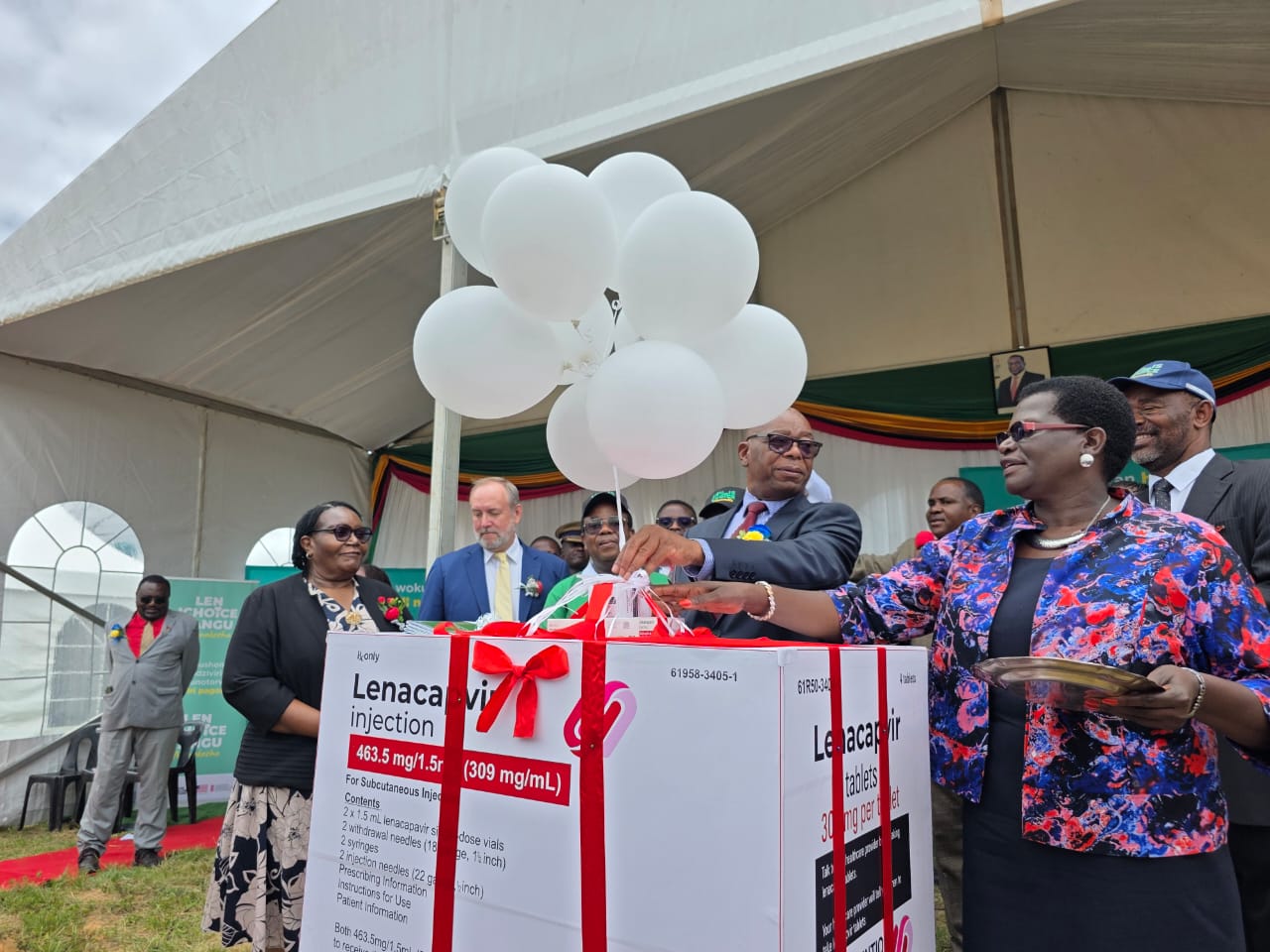
The drug was officially launched at Epworth Poly Clinic on Thursday, with health authorities describing it as a significant boost to the country’s HIV response.
Lenacapavir provides six months of protection per dose, meaning two injections offer year-round coverage. The first phase of the rollout will target vulnerable populations, including adolescent girls and young women, sex workers, pregnant and breastfeeding mothers and other groups at high risk of new infections.
Beneficiaries welcomed the development, citing convenience and privacy.
“Sometimes it is difficult to rely on taking pills every day because of our schedules and the stigma we face. This injection gives us peace of mind. Knowing that I am protected for six months gives me confidence and reduces my fear,” one beneficiary said.
“Taking tablets every day was not easy. Sometimes you forget, sometimes you hide them. But coming to the clinic twice a year is manageable. It is private, it is simple, and it protects my future.”
Members of the TB survivors network also praised the rollout, while others highlighted its importance for breastfeeding mothers.
“We welcome this development, especially when it comes to breastfeeding mothers, because they are at high risk of contracting HIV from their partners and transmitting it to their unborn and breastfeeding babies,” beneficiaries said.
Speaking at the launch, U.S. Deputy Chief of Mission Phil Nervig described Lenacapavir as a breakthrough.
“LEN represents the cutting edge of HIV prevention science. Already in use in the United States, Zambia, and Eswatini, LEN offers Zimbabwe a historic opportunity to sustain its remarkable progress in controlling the HIV epidemic by reducing new HIV infections. And that progress has been extraordinary. I congratulate the Ministry of Health and Childcare for leading these programs and achieving HIV epidemic control,” he said.
The National AIDS Council said the injection adds a powerful new tool to the country’s prevention strategy.
“The introduction of the long-acting injectable for prevention of HIV, the Lenacapavir, which we have done today in Epworth, is a significant step in terms of the prevention program. What it means is that we now have a method where people who are at risk and who are vulnerable… now have a way of accessing prevention methods without necessarily being stigmatized and without also suffering the burden of having to take pills every day.
“This injection is only given twice a year at a health facility. So, as far as the HIV program is concerned, we think that this is a game-changer. And as a country, we need to quickly embrace and have resources available to make sure that we quickly roll out this prevention strategy to the rest of the country,” said the Council’s chief executive, Dr Benard Madzima.
Guest of Honour and Minister of Health and Child Care Douglas Mombeshora said the innovation responds to persistent new infections, particularly among young women.
“New HIV infections continue to occur, especially among adolescent girls and young women and other populations at increased risk. This tells us something important: prevention must fit into real life. If a health solution is too complicated, too demanding, or too visible, people simply won’t use it. That is why innovation in prevention matters. Lenacapavir represents a new way of doing things,” he said.
“It responds to a simple reality: not everyone finds it easy to take a pill every day. Life gets busy. Sometimes people forget- handiti tinokanganwa tese? Sometimes stigma makes it even harder to be seen taking pills.
“I am pleased to announce that Zimbabwe has received its first supply of Lenacapavir and has already begun implementation, with the first clients receiving the injection earlier this month. This shows that our health system is not only responding to today’s challenges but preparing for tomorrow. The rollout is being done in phases. This is intentional, we want to do it properly, safely, and fairly.”
Health authorities say about 46 000 people have been identified in the initial phase, with the rollout beginning in 12 high-burden districts.
Zimbabwe was selected in 2025 as one of the first countries in the region to introduce Lenacapavir under a global early access programme, a move officials say strengthens efforts to eliminate new HIV infections and sustain gains made in controlling the epidemic.

