



Story by Silence Mugadzaweta, Online Editor
PRESIDENT Dr Emmerson Mnangagwa says reforms to improve the ease of doing business are positioning Zimbabwe as a favourable investment destination, with the Government reviewing taxes, fees, and levies across key sectors of the economy.
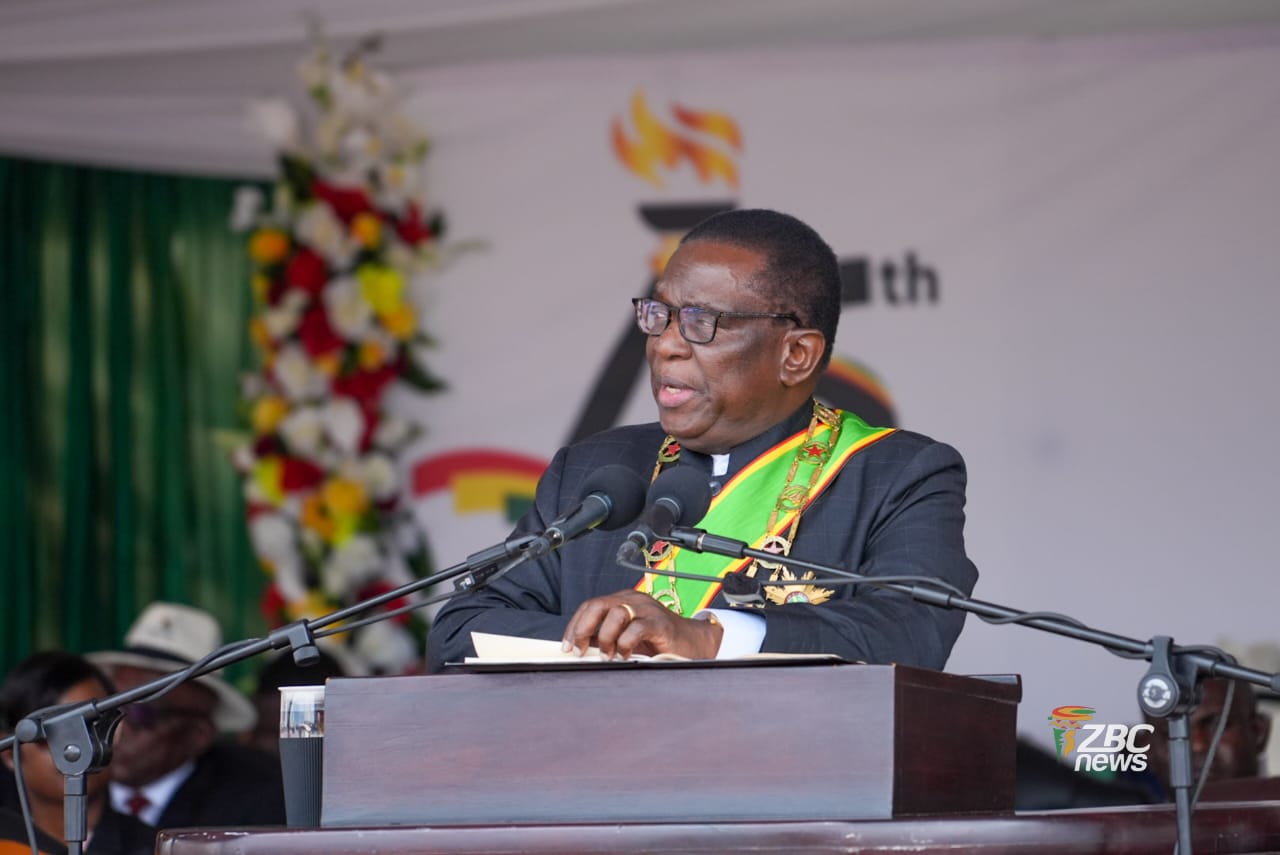
The President was speaking at the 46th Independence Day celebrations held in Maphisa under the theme “Zimbabwe at 46; Unity and Development towards Vision 2030.”
With regard to the ease of doing business and enhancing Zimbabwe as a favourable investment destination, the review of taxes, fees, and levies has been effected across critical sectors of the economy. I commend our banking sector for reverting to its core business. However, more must be done to ensure full financial inclusivity,” he said.
He said the economy is registering steady growth anchored on macro-economic stability, with foreign currency reserves exceeding US$1.2 billion and annual inflation declining to 4.1 percent in January 2026.
Exchange rate stability, he noted, has been supported by foreign currency inflows surpassing US$16 billion, driven by exports of gold, tobacco, and platinum group metals, as well as diaspora remittances.
Turning to agriculture, President Mnangagwa said Zimbabwe recorded a successful season, with maize output reaching 2.4 million tonnes and traditional grains close to 635 000 tonnes, exceeding national requirements.
Similarly, the winter wheat harvest surpassed 640 000 tonnes against a national requirement of 550 000 tonnes, while the Strategic Grain Reserve continues to guarantee national food security.
“This year’s celebrations are being held in the midst of yet another successful agricultural season. The 2024/2025 summer season produced 2.4 million tons of maize and close to 635 000 tons of traditional grains, exceeding the national annual grain requirement,” he said.
The President highlighted ongoing investments in modern grain storage infrastructure, including Artificial Intelligence-enabled silos under construction across several provinces.
He said Government is also advancing climate-proofing measures in agriculture, including initiatives to reduce reliance on rainfall, while support mechanisms remain in place for communities affected by climate change.
“As per tradition, measures are in place, including the Isiphala seNkosi/Zunde raMambo, to avail food assistance to affected communities and households. No one and no region will starve,” he said.
President Mnangagwa noted that agriculture is increasingly becoming export-oriented, contributing to industrial growth and foreign currency earnings, with tobacco production reaching 355 million kilogrammes and generating over US$1.2 billion.
He added that rural development initiatives under the Rural Development 8.0 Model are transforming livelihoods through village and school-based business units, while programmes such as the Presidential Household Tick Grease Management Scheme have reduced cattle deaths by over 60 percent.
The Head of State paid tribute to liberation war heroes and reaffirmed the Government’s commitment to inclusive development, unity, and economic transformation as Zimbabwe advances towards Vision 2030.

