



Story by Aifheli Mudau
BULILIMA – THE Ministry of Primary and Secondary Education is set to roll out a national training programme aimed at equipping teachers with critical digital skills, as part of broader efforts to integrate Information and Communication Technologies (ICTs) into Zimbabwe’s education system.
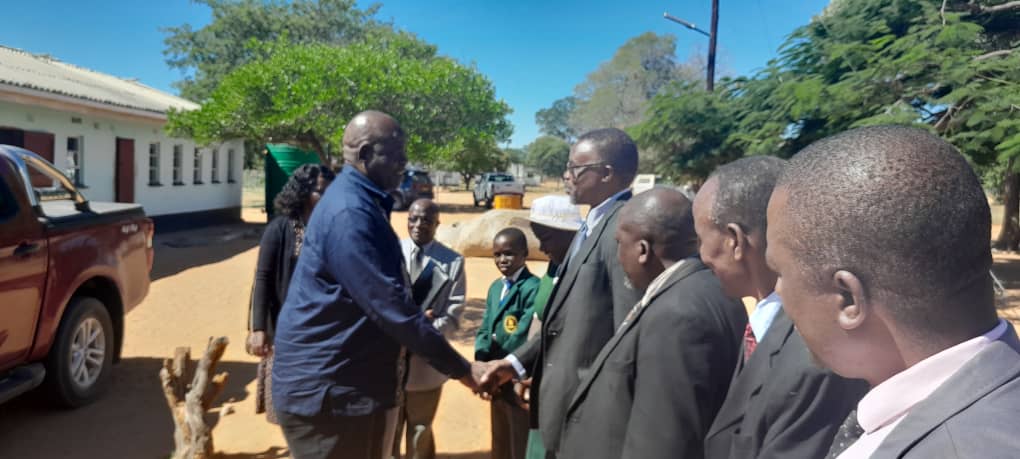
Speaking during a visit to Bulilima District, Minister of Primary and Secondary Education, Honourable Torerayi Moyo, affirmed government’s commitment to fostering a digitally empowered teaching workforce as a vital pillar in achieving the country’s Vision 2030 targets.
“As we move towards Vision 2030, digital transformation is no longer a luxury but a necessity. We are actively collaborating with the Ministry of ICT, POTRAZ and other partners to enhance the digitisation of education. A digitally empowered teacher cultivates a digitally prepared learner, which is essential in today’s evolving educational landscape,” he said.
Teachers across the district welcomed the development, acknowledging that digital proficiency is essential for effective teaching and learning in the 21st century.
“This is a bold and timely initiative by the Ministry. Being computer literate enables us to better support learners with research and interactive content,” one teacher said.
“It gives us greater flexibility and confidence in lesson delivery. It is important not only for our professional growth but for improving learner outcomes as well,” added another teacher.
The initiative has also received support from young leaders, including Honourable Vikani Mtsamayi, Junior Member of Parliament for Bulilima Constituency, who underscored the significance of digital skills in classrooms.
“This programme will benefit both teachers and pupils, especially in rural constituencies like ours. When teachers are trained in ICT, they can impart vital digital skills to learners, better preparing us for the future,” he said.
The digital literacy programme is part of a broader national push to bridge the rural-urban digital divide, with government investing in school computerisation projects under the Second Republic. These efforts align with Zimbabwe’s aspiration to transition into a knowledge-based, digital economy by 2030.
The Ministry reiterated that through ongoing partnerships and capacity building, the future of education will be more inclusive, modernised, and tailored to meet both local and global demands.

