



Story by Owen Mandovha
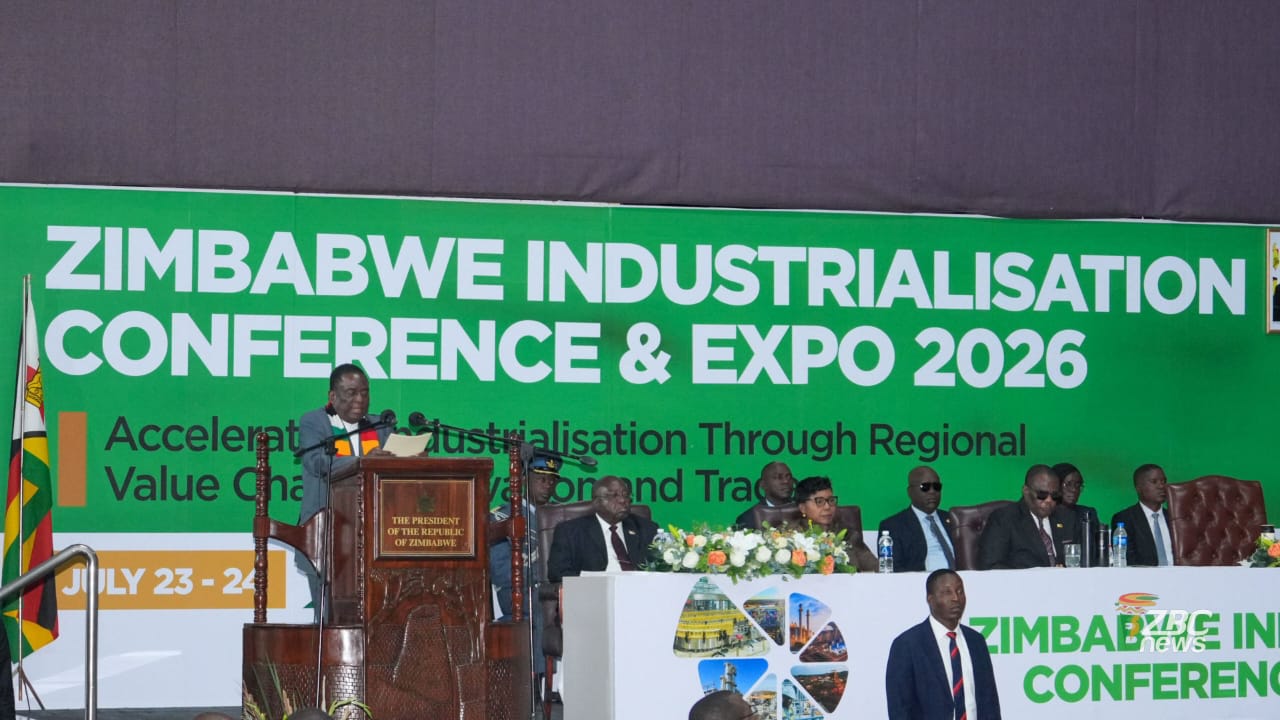
THE inaugural Zimbabwe Industrialisation Conference and Expo (ZICE) has brought together Government, industry leaders and policymakers to chart strategies for accelerating the country’s industrialisation agenda in line with the National Development Strategy 2 (NDS2) and Vision 2030.
Held as a platform for collaboration between key economic stakeholders, the conference focused on policy interventions needed to sustain industrial growth, drawing on findings from the latest State of Industry Survey conducted by development policy think tank Africa Economic Development Strategies (AEDS).
The survey found that Zimbabwe’s economy remains on a growth trajectory, with Gross Domestic Product expanding from US$18 billion to US$54 billion in just under seven years.
AEDS Executive Director Professor Gift Mugano said the findings provided evidence to support policy refinement aimed at sustaining economic transformation.
“The survey has given us the confidence that the economy is on a growth trajectory measured by various metrics that include export growth, GDP growth, industrial capacity growth and jobs,” he said.
“The survey conducted across all provinces has given us facts and evidence on policy areas that need to be fine-tuned to spearhead economic growth to attain Vision 2030.”
Minister of Industry and Commerce Mangaliso Ndlovu said the conference created an important platform for policymakers to address challenges identified in the survey.
“The ZICE brings together policy actors that will sustain the industrial trajectory by way of finding solutions to the challenges identified in the survey,” he said.
More than a dozen Cabinet ministers representing the finance, agriculture, mining, industry and small and medium enterprises portfolios outlined how their respective sectors will contribute to industrial expansion.
Finance, Economic Development and Investment Promotion Minister Professor Mthuli Ncube said Zimbabwe’s planned membership of the BRICS Bank and the launch of the Zimbabwe Entrepreneurial Exchange would unlock new sources of capital for businesses.
“Zimbabwe will join the BRICS Bank to help us mobilise capital, while the launch of the Zimbabwe Entrepreneurial Exchange is set to boost the growth of MSMEs,” he said.
Minister of Mines and Mining Development Dr Polite Kambamura said Government’s mineral beneficiation policies were designed to increase value addition and strengthen industrial growth.
“We have imposed a ban on exports of raw minerals, and this will help grow the country’s export growth to accelerate the industrialisation of the economy,” he said.
Lands, Agriculture, Fisheries, Water and Rural Development Minister Dr Anxious Masuka said agricultural transformation was providing industries with a more reliable supply of raw materials.
“Zimbabwe is now food self-sufficient due to positive policy, and our agricultural transformation across all crop categories will provide the much-needed raw materials for industry,” he said.
Women Affairs, Community, Small and Medium Enterprise Development Minister Senator Monica Mutsvangwa said Government continued to expand financial support for small businesses.
“SMEs are an integral part of the growth of our economy, and we are providing several lines of credit to SMEs to help them grow,” she said.
The conference also featured exhibitions showcasing locally manufactured products and industrial innovations, with participants describing ZICE as an evidence-based platform that will help shape policies to accelerate industrialisation and support Zimbabwe’s goal of attaining upper middle-income status by 2030.

