



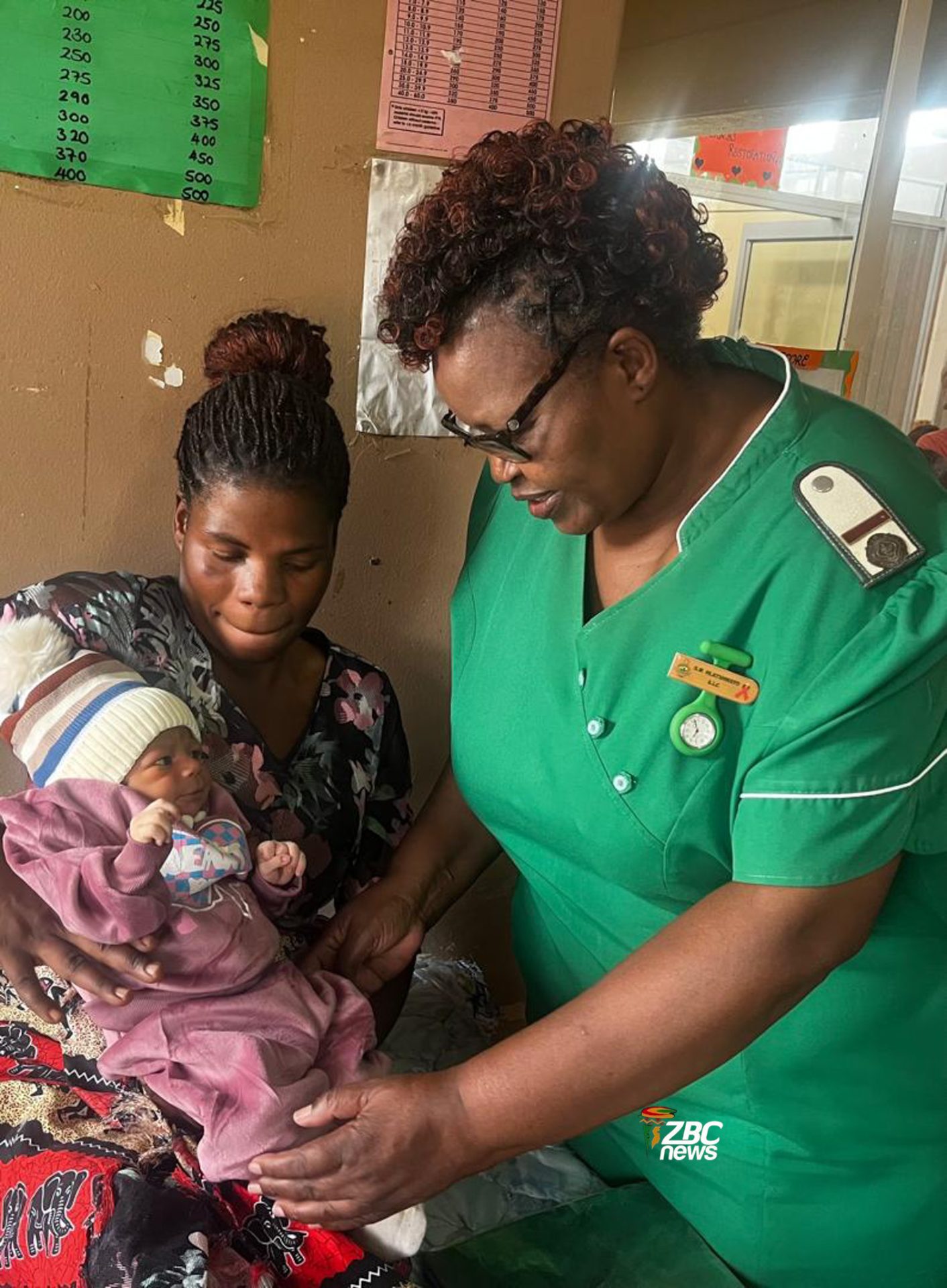
THE first cries of a newborn usually signal relief, joy and the beginning of new life. But for 34-year-old Anna Beta of Chitungwiza, those precious moments quickly turned into fear and uncertainty after doctors discovered her baby boy had been born without a functional anal opening.
Within hours of entering the world, the infant’s survival depended on a highly delicate emergency operation, one rarely performed on a child so young in Zimbabwe.
In a landmark achievement for the country’s healthcare system, surgeons at Chitungwiza Central Hospital successfully carried out corrective surgery for an anorectal malformation, including a colostomy procedure, on the day-old baby, giving him a chance at a normal life.
The procedure, performed on Wednesday, marks a major milestone in neonatal and paediatric surgery in Zimbabwe, highlighting the growing capacity of local hospitals to handle complex life-saving operations once considered beyond reach.
Wrapped in blankets inside the neonatal unit, the 3.5 kilogram baby is now recovering well and feeding normally, a quiet but powerful symbol of medical progress and resilience.
For his mother, the journey from celebration to terror unfolded in a matter of moments.
“I was blessed with a baby boy on May 5. In my happiness, little did I know that the baby had this condition,” Anna Beta said.
“We were transferred to Chitungwiza Central Hospital, where doctors told me surgery was needed to save the baby. I was hesitant at first because I could not imagine a day-old baby being operated on. I thought I would never see my baby again, but God had a plan.”
Inside the operating theatre, every second mattered.
Led by paediatric and neonatal surgeon Dr Precious Mutambanengwe, the medical team moved swiftly to prevent a fatal intestinal obstruction that can occur when a newborn is unable to pass stool.
The operation demanded precision, calmness and extraordinary teamwork.
“It was not an easy task. Many people have never seen or heard of anything like this, and there were misconceptions about whether the procedure would be safe,” Dr Mutambanengwe said.
“But we had a reliable team, from the anaesthetic unit to the nursing staff, and we managed to carry out the procedure safely. This was a life-or-death situation, so we had to operate on the day the baby was born.”
Dr Mutambanengwe explained that anorectal malformation is a congenital condition in which babies are born without a normal anal opening.
“The children are unable to pass stool, which causes intestinal obstruction. The condition occurs in about one in every 2 000 to 5 000 births, so it is not uncommon,” she said.
“There is usually a malfunction during foetal development, and in some cases it can be associated with conditions affecting the heart, kidneys or limbs. Without urgent treatment, it becomes life-threatening within the first few days of life.”
Corrective treatment is typically carried out in stages, beginning shortly after birth, with further reconstructive surgery done months later.
For Chitungwiza Central Hospital, the successful operation reflects far more than a single medical case. It signals the strengthening of Zimbabwe’s specialised healthcare services and the growing confidence of local medical professionals to tackle highly complex neonatal procedures.
In a country working to modernise its public health system and expand specialist care, the tiny patient lying peacefully in a neonatal ward represents something much bigger, hope.

