



Story by Tapiwa Machemedze
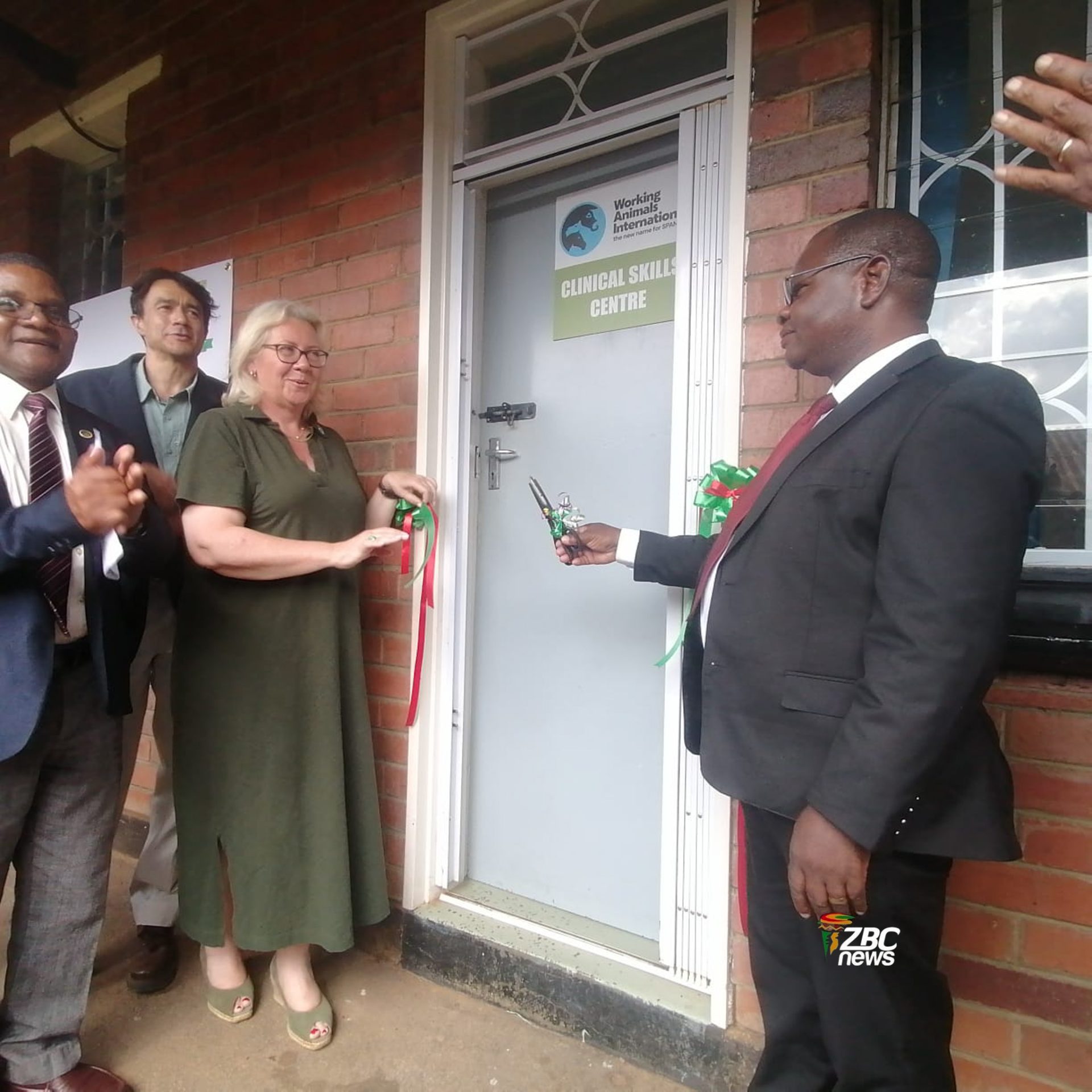
GOVERNMENT and its development partners have intensified efforts to safeguard Zimbabwe’s national herd through the commissioning of a fully equipped clinical skills centre at Mazowe Veterinary College this Thursday.
The facility is expected to strengthen veterinary training, improve practical learning and enhance the country’s capacity to protect livestock health and productivity at a time when animal diseases continue to threaten the sector.
Students and lecturers welcomed the development, describing it as a major boost to practical veterinary education and agricultural transformation under the Agriculture 5.0 framework.
“I am doing a diploma in animal production now, we have microscopes and a whole dummy animal to work with, so going foward, our studies will be more practical and meaningful,” a student said.
“The clinical skills laboratory was donated by Working Animals International and it is very good in our training programme and fulfilment of Agric 5. 0. It allows hands on exposure in mostly handling field samples,” Dr Munyangani said.
The laboratory was built with funding from Working Animals International with a special focus on improving welfare.
“Even though we are donating it, we are not leaving you alone. We will help you maintain it. We hope to expand its scope. We work with vet extension officials daily all over the country. This is what moved us to be involved with the training here. We hope you will leave here confident and capable of improving the lives of animals in Zimbabwe. Regarding welfare, we want the quality of life for animals to improve. Strong animals that are looked after well are capable of doing good work,” Working Animals International Country Director, Dr Keith Dutlow said.
Government highlighted that the clinical skills centre is a timely strategic intervention to protect the national herd and secure regional animal health at a time when diseases are threatening viability for livestock farmers.
“This donation comes at a critical time in our region. We are aware of the situation of FMD. It has disrupted livestock movement. We need not only fences and medicines, but we also need trained personnel to conduct research. We must depend on frontline veterinary skills,” the Permanent Secretary in Ministry of Agriculture, Mechanisation and Water Resources Development Professor Obert Jiri said.
Working animals, estimated at 200 million globally, are key in helping people, particularly farmers, to improve their lives by increasing agricultural productivity.

