



Story by Patience Nyagato
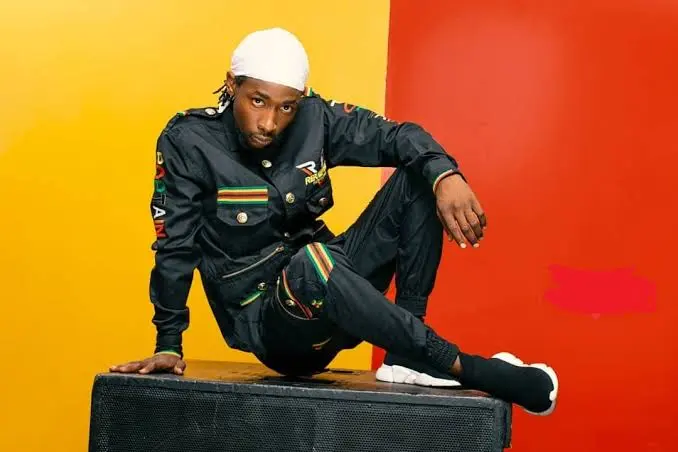
The past week has seen Zimbabwe’s entertainment industry stirred like a pot left too long on the flame and at the centre of the simmer stands dancehall musician Poptain. His string of online rants, some calling them exposés, others dismissing them as erratic tirades, has ignited a conversation that refuses to quieten.
Born Ameen Jaleel Yaseen, Poptain startled fans when he publicly distanced himself from his 2020 hit Fadza Mutengi, a collaboration with Allanah produced by Nash Nation. The track, once crowned Best Collaboration at the Zimbabwe Music Awards in 2021, was a celebratory anthem in its day. Now, six years on, he has branded it a source of “evil” and “enslavement”, scrubbing it from his YouTube catalogue as though erasing a chapter he no longer wishes to read.
A lot has unfolded in the entertainment industry over the past week, but one of the biggest talking points has been dancehall musician, Poptain’s string of online rants, posts that some view as exposes, while others dismiss them as random outbursts.
The musician, born Ameen Jaleel Yaseen, recently stunned fans by distancing himself from his 2020 hit “Fadza Mutengi”, a collaboration with Allanah produced by Nash Nation.
Yet this is no isolated eruption. In 2022, around the release of his album Redemption, he claimed that his alleged romance with fellow musician Anita Jackson was little more than a publicity ploy. That same season marked a far more sobering revelation: his admission of childhood abuse, disclosures that reshaped his public persona and added shadows where once there was only stage light.
His recent live sessions and emotionally charged posts have reignited the debate. Are these digital confessions a strategic drumroll in an industry where controversy often masquerades as currency? Or is social media, for this artist, less a stage and more a therapist’s couch?
The timing, undeniably, sharpens suspicion. On Friday, February 20, Poptain released Money Before Love, captioned with reflective musings on regret and maternal wisdom, promising the nation answers to lingering questions about his love life. Another offering, Money Power Respect, is poised for release on the 27th, barely a week later. The sequence feels almost choreographed outrage, reflection, release a rhythm not unfamiliar to the music business.
And yet, to dismiss it all as mere promotion would be to ignore the quieter, heavier undercurrent of mental health. Survivors of childhood abuse often carry invisible fractures into adulthood; trauma does not expire neatly. It lingers, resurfaces, demands retelling. Anxiety, emotional turbulence and the compulsive revisiting of pain are not theatrics but symptoms. Whether we are witnessing unresolved wounds or razor-sharp branding is a truth only he can articulate.
What cannot be contested is his gift. With multiple hits to his name, Poptain has carved himself into Zimbabwe’s dancehall landscape with unmistakable authority. His voice is not a whisper in the chorus; it is one of its leading notes.
Intriguingly, he bears a striking resemblance to the late American rapper Tupac Shakur. Beyond the aesthetic echo, the angular features, the intense gaze, there is a shared defiance, a refusal to soften edges for comfort’s sake.
Tupac, famously unfiltered, wielded words as weapons, publicly confronting those he deemed inauthentic.
His bitter feud with The Notorious B.I.G. and figures at Bad Boy Records birthed some of hip-hop’s most incendiary diss tracks, including Hit ’Em Up and Against All Odds. Yet he insisted his aim was to “spark the brain”, to provoke thought rather than appease.
Is Poptain drawing from that same well of rebellious candour, stepping into the archetype of the outspoken prophet? Or is he navigating a far more private tempest, with the internet as both witness and accomplice?
In an age where vulnerability can be monetised and meltdowns can trend by the hour, the boundary between authenticity and artifice grows ever thinner. Perhaps that is the real story: not simply whether Poptain is spiralling or strategising, but how effortlessly the digital world blurs the two.
For now, the audience is left to interpret the performance, if performance it is, and to decide whether they are watching a masterclass in publicity, a man wrestling with his past, or an artist practising radical honesty in a world that rarely rewards it.

