



Story by Online Reporter
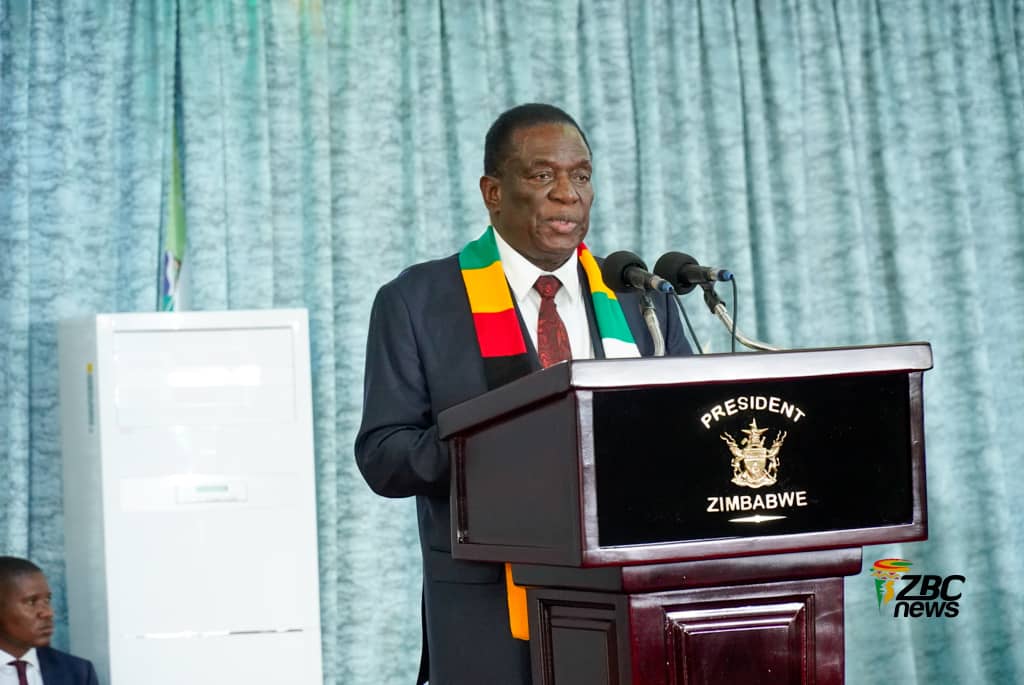
PRESIDENT Emmerson Mnangagwa has launched the National Development Strategy 2 (NDS2), a five-year economic blueprint for the period 2026-2030, declaring it a renewed commitment to fast-tracking Zimbabwe’s transformation into an empowered upper-middle-income society by 2030.
Speaking at the launch ceremony held at State House in Harare on Thursday, President Mnangagwa said the strategy marks a decisive phase in consolidating past achievements while intensifying reforms across all sectors of the economy.
“This occasion marks the presentation and launch of the National Development Strategy 2. The development blueprint will guide the implementation of our programmes and projects for the period 2026 to 2030. It further signifies our resolve and determination to accelerate our transition towards a prosperous and empowered upper middle-income society as enunciated in Vision 2030,” he said.
The President commended Ministries, Departments and Agencies for the unity of purpose they exhibited during the strategy’s formulation, noting that NDS2 was shaped through broad-based national consultations and reflects the aspirations of citizens across the country.
“Let me at the outset, congratulate all our stakeholders, Ministries, Departments and Agencies for the unity of purpose and focus you demonstrated during the conceptualisation and subsequent formulation of this Strategy. In doing so, it is pleasing that you executed the task guided by the principle of inclusivity and our mantra of “leaving no one and no place behind,” the President said.
The strategy identifies ten major national priority areas, including macroeconomic stability, inclusive economic growth, infrastructural development, food and nutrition security, scientific innovation, devolution, job creation, social services improvement, international engagement and strong governance systems.
President Mnangagwa said NDS2 will deepen economic reforms under the “Zimbabwe is Open for Business” policy, with a focus on boosting competitiveness, reducing the cost of doing business and driving investment-led growth.
The strategy also prioritises transitioning the economy from dependence on primary commodities to value addition and beneficiation, enhancing human capital development, strengthening climate resilience and accelerating youth entrepreneurship.
“NDS2 encapsulates the voices, hopes and aspirations of our people from across the country. The various perspectives of the private sector, faith-based organisations, development partners and the diaspora, were also taken into account. It is a document that embodies unity, self-reliance and shared responsibility, in line with our national development philosophy; Nyika inovakwa, inotongwa, inonamatigwa nevene vayo/Ilizwe lakhiwa, libuswe, likhu-le-ke-lwe ngabanikazi balo. The National Development Strategy 2 seeks to consolidate the gains achieved to date,” he said.
NDS2 succeeds the National Development Strategy 1 (2021-2025), which made notable progress across multiple thematic areas including infrastructure development, agriculture, mining and social services.
With NDS2 now operational, the Second Republic is positioning the framework as the final major policy vehicle steering Zimbabwe toward achieving Vision 2030.

