



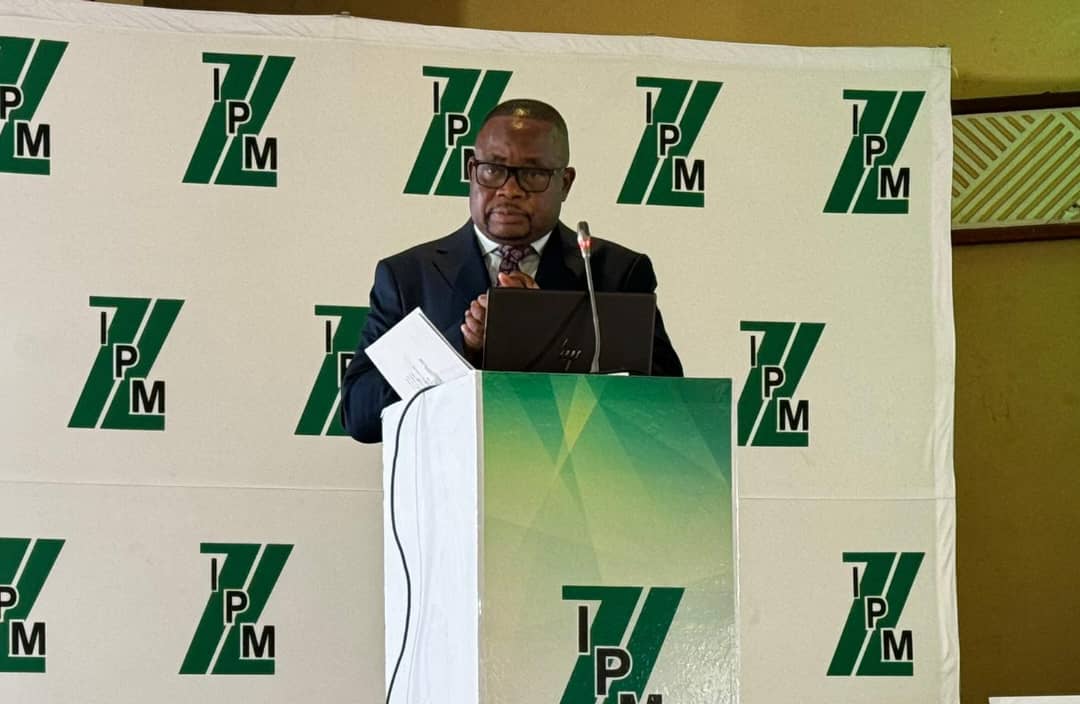
Story by Justin Mahlahla
The rapid adoption of the augmented workforce is critical in the country’s efforts to combat the negative impacts of skills shortage and the skills gap Zimbabwe currently faces, the Minister of Skills Audit and Development, Professor Paul Mavima has said.
Professor Mavima was speaking at the 2024 IPMZ Annual Human Resource Convention, happening under the theme ‘Empowering human-centric HR Professionals to Lead the Emergence of an Augmented Workforce’ in Victoria Falls.
He said the Annual HR Convention theme perfectly matches the Second Republic’s aspirations of “An Empowered and Prosperous Upper Middle-Income Society by 2030” as pronounced by President Emmerson Mnangagwa.
“Therefore, the HR ecosystem’s contributions are integral to our collective success as a nation (to the achievement of the Zimbabwean Dream). You have a crucial role in this emerging augmented workforce to ensure that the adoption of disruptive technology is translating into economic growth and development while the general standard of living of our people is improving as we take care of the planet earth which is our only habitat,” he said.
Professor Mavima added, “It is my fervent belief that the rapid adoption of the augmented workforce will be a game changer in our efforts to combat the negative impacts of skills shortage and skills gap we are currently faced with as highlighted by the 2018 National Critical Skill Audit Report. The findings of the 2018 Audit highlighted a skills deficit of about 62% in key sectors of the economy. The obtaining skills gap and shortages were affirmed through the extensive stakeholder consultations my Ministry has undertaken since February this year.”
He said embracing the concept of augmented workforce to address some of the skills shortages and retention challenges in Zimbabwe calls for a commitment to empower people with high-end skills such as AI, machine learning, and intelligent automation to create a digitally enabled and efficient workforce, adding, “In addition, an augmented workforce can increase employee satisfaction by automating repetitive tasks and allowing more time for imaginative thinking and innovation.”
The Minister said he hoped the convention would facilitate discussions on how AI can help companies improve human capital management, close the tech talent gap and achieve mutual digital transformation goals.
The debate should also focus on the common pitfalls related with the deployment of AI and explore strategies to overcome them, he added.
“I do not need to overemphasize the need for a fully integrated AI into the labour market, increased corporate investment in national digital infrastructure, more collaborative research, and a critical mass that is able to compete globally. More training and support in AI should be provided to help all sectors to catch up with this necessary disruptive technology,” he noted.
“To successfully adopt and adapt AI in the workspace, Ladies and Gentlemen, I emphasise the need for collaboration among the HR ecosystems and decision-makers for ethical AI deployment and usage. This collaboration is not just a suggestion but a necessity. Let us not forget that, despite presenting significant opportunities, AI may also pose some challenges which I highlighted earlier in my presentation. HR practitioners should lobby the authorities to establish a framework and a set of human-centred rules that provide strong human oversight, minimise risks, and promote reaping benefits of advanced technologies,” Professor Mavima said.
He said a skills revolution is necessary as skills development is at the core of any meaningful socio-economic transformation of any country.
Zimbabwe will reap the benefits of augmented workforce if people acquire the right skills needed to integrate human effort with AI, he added.
“We also need to be cognizant of the fact that reskilling and upskilling must remain at the core of HR as AI may not replace specific skills like emotional intelligence, empathy and creativity, which are more critical in HR roles.”

