



Story by Courage Bushe
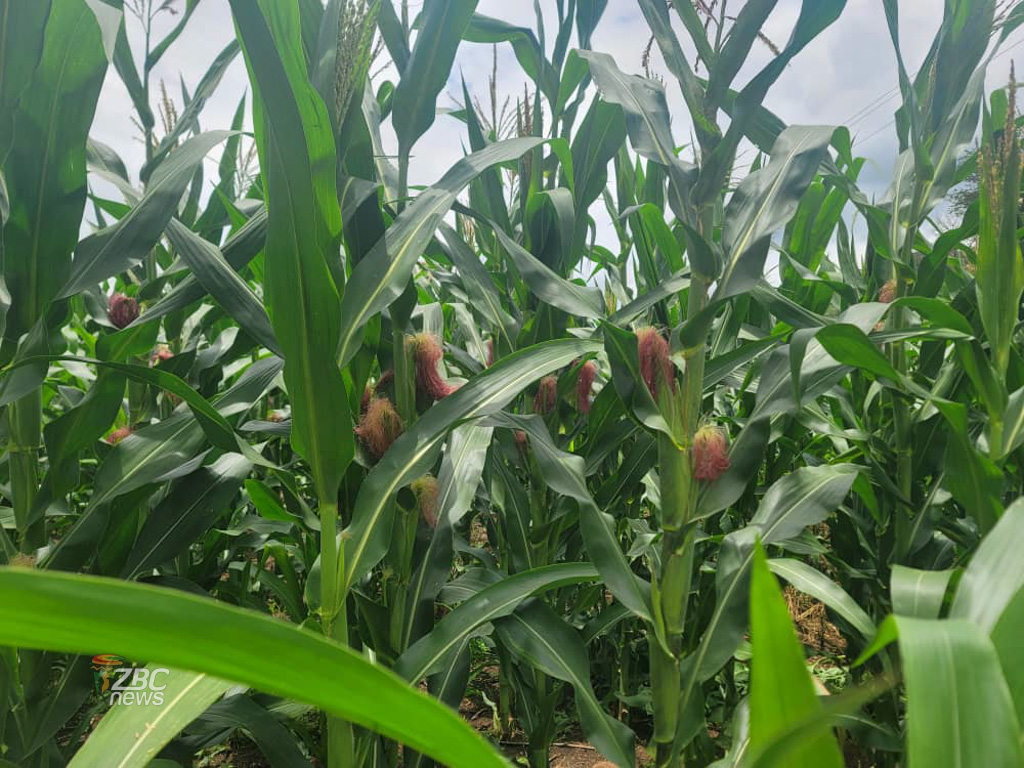
THE Zimbabwe Prisons and Correctional Service (ZPCS) in Zvishavane District has scaled up maize production at Ruchanyu Farm after adopting the Pfumvudza/Intwasa farming programme, in a move aimed at strengthening food security and reducing reliance on Treasury support.
Under the programme, the prison has expanded its maize hectarage from five to eight hectares this season, with officials expressing confidence that the initiative will significantly improve self-sufficiency at the correctional facility.
Zvishavane Prison Officer in Charge, Superintendent Majaya Fundo, said the expansion marks a strategic shift towards productivity and sustainability within the prison system.
“Unlike last season, we have expanded the maize field from five hectares to at least eight, and we are confident that this will change the prison face in so many ways. For instance, we are not going to wait for the government to disburse funds, but we will help and ease the burden on the government through our farm. This will thwart food shortages at our centre and also generate cash from the surplus,” Superintendent Fundo said.
The farm recorded strong yields last season, harvesting more than 30 tonnes of maize, and is now targeting between 50 and 60 tonnes following the expansion and collaboration with other agricultural cooperatives.
Zvishavane Prison Farm Manager, Mr Fraison Madyangove, said the Pfumvudza/Intwasa model has proven effective in boosting yields through climate-smart practices.
“The introduction of the Pfumvudza/Intwasa concept by the Second Republic has proved to be a game-changer for us. Last year we managed to get more than 30 tonnes of maize, but this time around, with the help of other cooperatives, we are targeting at least between 50 to 60 tonnes of maize,” Mr Fraison Madyangove said.
Agronomist, Mr Prosper Chinyakata, said the impact of the programme extends beyond the prison walls, benefiting surrounding communities through knowledge-sharing and exchange programmes.
“We want to thank our president for coming up with programmes like these. We are confident that from what we are seeing here, there will be a change in GDP, and even rural communities around this community are benefiting from this farm. They are benefiting from exchange programmes here, and this will improve yields in this area,” Mr Chinyakata said.
The Pfumvudza/Intwasa programme has become a central pillar of Zimbabwe’s climate-proofed agriculture strategy, with its success prompting interest and replication in other African countries.

