



Story by Courage Bushe
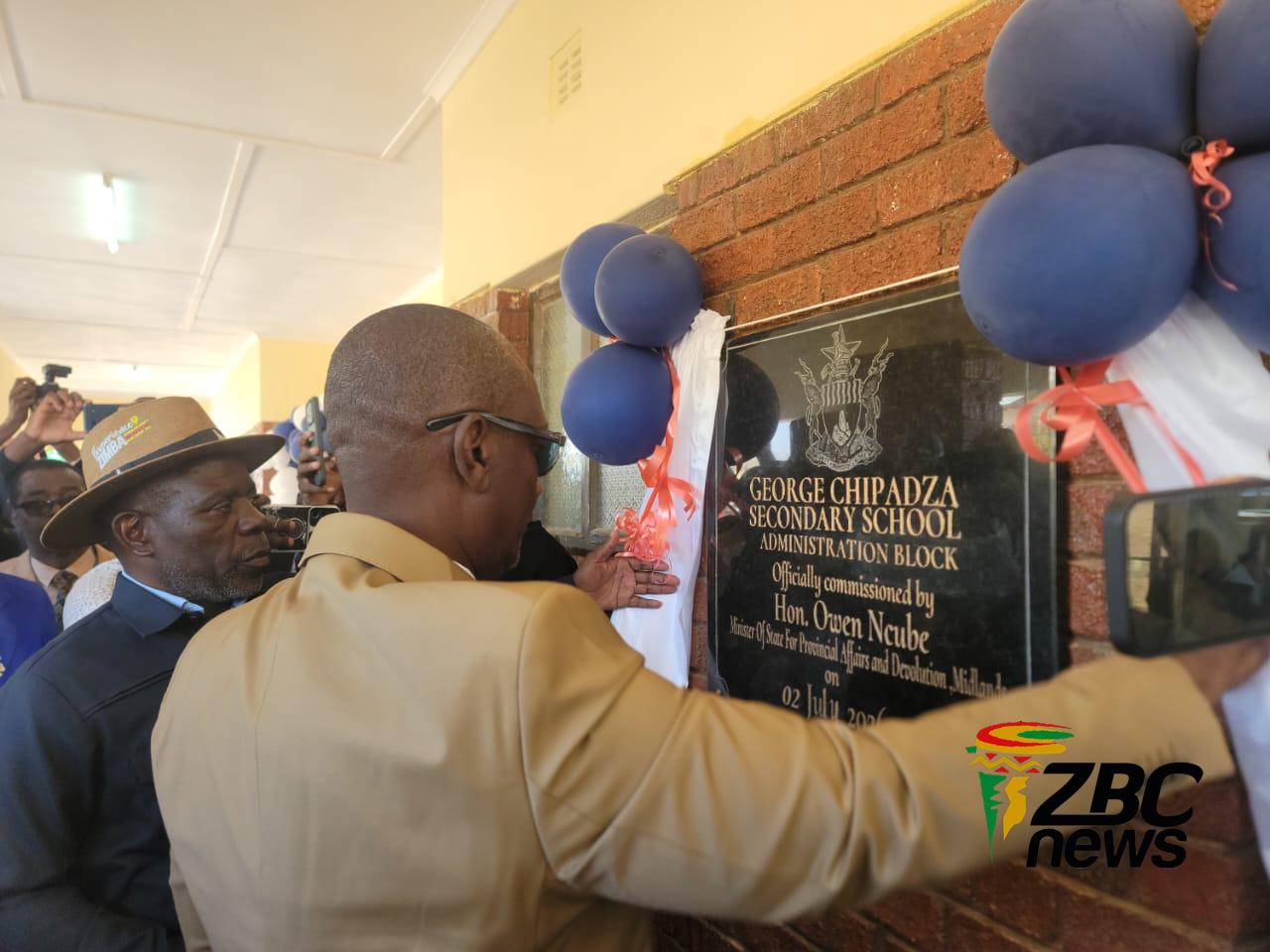
A NEW administration block has been commissioned at George Chipadze Secondary School in Zvishavane District following a joint effort by the school and the local community to improve learning infrastructure.
The US$64 000 project, funded by parents and the school, is expected to enhance the learning environment by providing improved administrative facilities and easing pressure on existing infrastructure.
Parents and community members welcomed the development, saying it would improve teaching and learning conditions.
A school representative said the new block would help address challenges that had affected learning.
“We are very grateful to our parents who helped with the financing towards the construction of these facilities. We have been grappling with hot-sitting, which meant fewer hours of learning for our learners.”
A community member described the project as part of the country’s ongoing development.
“Want to thank the good works of our hardworking President Dr Mnangagwa. Since the coming on board of the Second Republic, the country has been experiencing some massive developments. This is part of the good efforts by our principled leaders.”
The project contributes to national efforts to expand education infrastructure and aligns with the objectives of the National Development Strategy 2 (NDS2).
Zvishavane-Ngezi legislator, Honourable Mecky Jaravaza said the project reflects the government’s commitment to improving access to quality education.
“By building this school classroom block, you have directly encompassed loudly and vibrantly the Vision of our President’s call for inclusive and quality education for all to ensure no one and no place is left behind in terms of access and quality education provision.”
Midlands Minister of State for Provincial Affairs and Devolution, Honourable Owen Ncube said the infrastructure development supports the Second Republic’s focus on education and human capital development.
“Today’s event dovetails with the Second Republic’s NDS2 Pillar on Science, Technology, Digital, Innovation and Human Capital Development, which entrenches a quality education system, builds a knowledge-driven economy through modern education infrastructure and development of a highly skilled and adaptable workforce as we gravitate towards attainment of a prosperous and empowered upper-middle income society by 2030.”
The new infrastructure also supports the government’s Heritage-Based Education model, which promotes technology, innovation and industrialisation as pillars of national development.

